
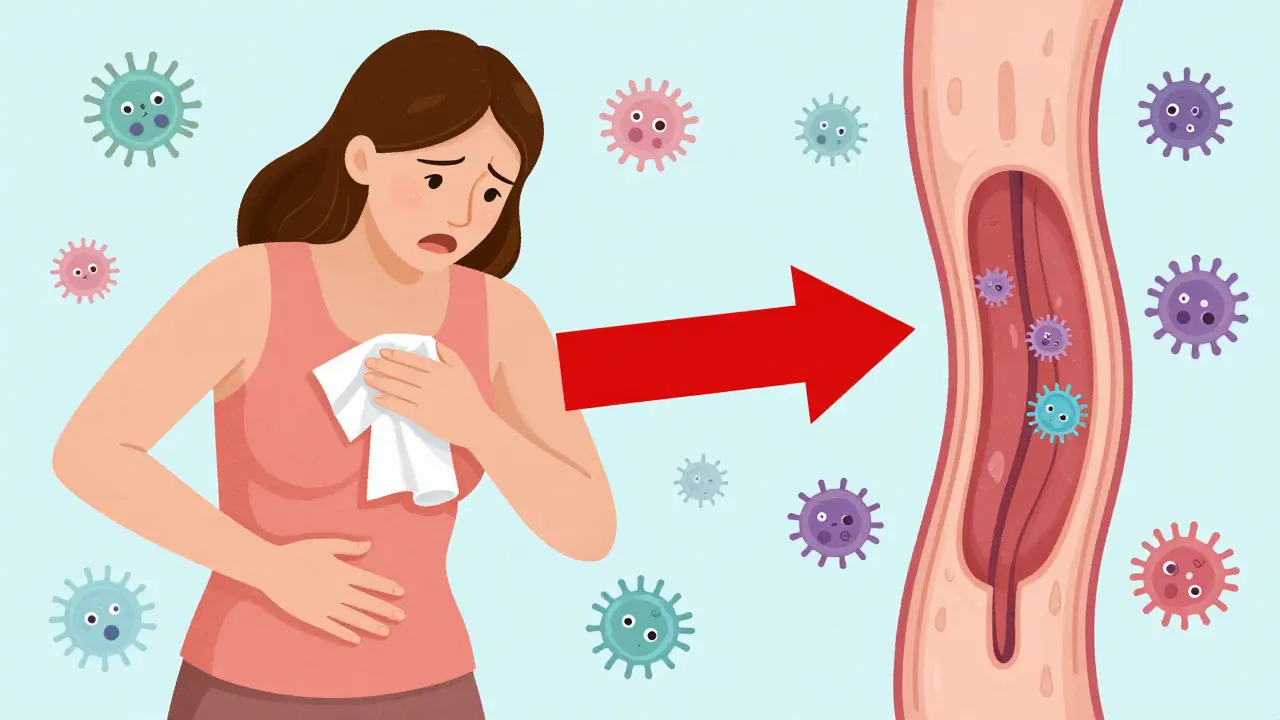
Every year, millions of people - mostly women - wake up with a burning sensation when they pee, a constant urge to go, and a dull ache low in their belly. It’s not just inconvenient. It’s painful. And if left untreated, it can turn into something much worse. Urinary tract infections, or UTIs, are one of the most common bacterial infections in the world. In fact, about 1 in 2 women will get at least one in their lifetime. But here’s the thing: most people don’t know what’s really causing them, which antibiotics actually work, or how to stop them from coming back.
What Exactly Is a UTI?
A urinary tract infection happens when bacteria, most often Escherichia coli (E. coli), sneak into the urinary system and start multiplying. This can happen anywhere along the chain: the urethra, bladder, ureters, or even the kidneys. The most common type is cystitis - an infection of the bladder. It’s uncomfortable, but usually not dangerous. The real concern is pyelonephritis, when the infection climbs up to the kidneys. That’s when you get fever, chills, back pain, and nausea. It’s serious. And it can lead to sepsis if ignored.
Why are women so much more likely to get UTIs? It’s anatomy. A woman’s urethra is about 4 centimeters long. A man’s is 20. That means bacteria have a much shorter trip to reach the bladder. Plus, the urethra is close to the anus, where E. coli lives. A single wipe from back to front can transfer those bacteria. That’s why front-to-back wiping isn’t just good advice - it’s a medical necessity.
What Are the Real Symptoms?
Not every urge to pee means you have a UTI. But if you’re experiencing a combination of these, it’s likely:
- Burning or stinging when you urinate (reported by 92% of patients)
- Needing to go all the time, even when little comes out
- Feeling like you can’t fully empty your bladder
- Cloudy, strong-smelling, or bloody urine
- Pressure or cramping in the lower belly
If you’re also running a fever above 38.3°C, shaking, or have pain in your sides or back, that’s not just a bladder infection. That’s a kidney infection. Don’t wait. Go to a doctor immediately.
And here’s something most people don’t realize: you can have a UTI without all the classic signs. Especially older adults. Sometimes the only symptom is confusion or fatigue. That’s why UTIs in seniors are often missed - and why they’re so dangerous.
Which Antibiotics Actually Work?
Not all antibiotics are created equal when it comes to UTIs. The right one depends on where you live, your medical history, and whether the infection is simple or complicated.
For a straightforward bladder infection in a healthy woman, here’s what doctors recommend:
- Nitrofurantoin (100 mg twice a day for 5 days) - works in 90% of cases. It’s cheap, effective, and stays in the urine. But don’t use it if you think your kidneys are involved - it doesn’t reach them well.
- Trimethoprim-sulfamethoxazole (Bactrim, 160/800 mg twice daily for 3 days) - used to be the gold standard. But resistance has climbed. In some parts of the U.S., more than 30% of E. coli strains won’t respond to it anymore.
- Fosfomycin (a single 3-gram dose) - convenient. Takes one pill. Works in 86% of cases. Good if you can’t take other antibiotics or hate taking pills for days.
For kidney infections or complicated UTIs (like in men, pregnant women, diabetics, or people with catheters), treatment is stronger and longer:
- Ciprofloxacin (500 mg twice daily for 7-14 days)
- Ceftriaxone (given as an injection, then switched to oral)
Here’s the catch: fluoroquinolones like ciprofloxacin are being used less now. They carry risks - tendon tears, nerve damage, and they’ve helped fuel antibiotic resistance. In Southern Europe, more than 25% of E. coli strains are now resistant to them. Doctors are trying to save these for when they’re truly needed.

Why Antibiotics Sometimes Don’t Work
Antibiotic resistance is no longer a future threat. It’s happening now. The CDC reports that over 30% of E. coli causing UTIs in the U.S. are resistant to trimethoprim-sulfamethoxazole. In some areas, it’s higher. That’s why your doctor might ask for a urine test before prescribing. It’s not just to confirm the infection - it’s to check what bacteria are there and what drugs they’re resistant to.
And here’s a big mistake people make: stopping antibiotics early because they feel better. That’s how resistant strains survive. You have to finish the full course, even if the burning stops after 24 hours.
There’s also a problem with misdiagnosis. Many people think they have a UTI when they actually have interstitial cystitis - a chronic bladder condition that mimics infection symptoms. About 41% of patients surveyed said they were wrongly treated for UTIs at least once. If you keep getting UTIs with no bacteria found in your urine, ask about this.
How to Stop UTIs From Coming Back
One in three women who get a UTI will have another within six months. That’s not normal. And it’s not inevitable.
Here’s what actually works, backed by studies:
- Drink water - a lot. A 2022 study found that women who drank at least 1.5 liters (about 6 cups) of water daily cut their UTI risk by 48%. It’s not magic. It’s physics. More fluid means more frequent urination, which flushes bacteria out before they can stick.
- Pee after sex. Bacteria can get pushed into the urethra during intercourse. Going to the bathroom within 15 minutes afterward cuts recurrence risk by half.
- Avoid spermicides. Nonoxynol-9, found in many condoms and jellies, kills good bacteria and irritates the urethra. Women who use them are 2.5 times more likely to get UTIs.
- Try D-mannose. This natural sugar binds to E. coli and stops it from sticking to the bladder wall. A 2021 study showed it was 83% effective at preventing recurrence - better than antibiotics in some cases. Take 2 grams daily.
- Use cranberry - the right kind. Most cranberry juice you buy has almost no active ingredient. You need a supplement with at least 36 mg of proanthocyanidins (PACs) daily. Studies show a 39% reduction in UTIs with this dose.
- For postmenopausal women: vaginal estrogen. After menopause, the lining of the urethra and vagina thins. Estrogen cream or tablets (0.5g twice a week) restore that lining and reduce UTIs by 70%. It’s safe, simple, and often overlooked.
For women who get UTIs every few months, doctors may prescribe low-dose antibiotics as a preventive - like nitrofurantoin 50 mg at bedtime. It’s not ideal long-term, but for some, it’s the only way to stay infection-free.
What About Home Tests and Natural Remedies?
At-home UTI test strips - like AZO - are popular. They detect nitrites and white blood cells in urine. But they’re not perfect. About 20-30% of the time, they give false negatives. If you feel like you have a UTI but the test is negative, don’t ignore it. See a doctor.
Some people swear by apple cider vinegar, garlic, or tea tree oil. There’s no solid evidence these work. And putting anything inside the vagina - oils, douches, baking soda - can make things worse. Stick to what’s been tested: water, D-mannose, cranberry (with PACs), and estrogen for postmenopausal women.

What’s New in UTI Treatment?
The last new antibiotic approved for UTIs in the U.S. was over 20 years ago. That changed in 2024 with the FDA’s approval of gepotidacin. It’s a new class of drug that works against resistant strains, with 92% effectiveness in trials. It’s not yet widely available, but it’s a sign that change is coming.
Another exciting development is FimH adhesin inhibitors like EB8018. These block bacteria from attaching to the bladder wall - like a shield. In trials, they cut recurrence by 75% compared to placebo. They’re already approved in Europe and could be available in the U.S. soon.
Researchers are also testing vaginal probiotics with Lactobacillus crispatus. In a 2024 study, women who used suppositories with this specific strain saw a 55% drop in UTIs. The idea? Restore the healthy bacteria that keep E. coli out.
When to Worry - And When Not To
Most UTIs are not emergencies. But some situations need immediate care:
- Fever, chills, vomiting, or back pain
- Pregnancy
- Diabetes or a weakened immune system
- Male with UTI symptoms (they’re rare and often signal something deeper)
- Recurrent UTIs (three or more in a year)
If you’re a healthy woman with classic symptoms and no risk factors, you might get better without antibiotics. One study found that 25-43% of uncomplicated UTIs resolve on their own. But the CDC warns: untreated UTIs can turn into kidney infections - and those can be life-threatening, especially in older adults. So don’t gamble. If symptoms last more than 48 hours, get tested.
Bottom Line
UTIs are common, but they’re not normal. You shouldn’t have to live with them. The good news? We know what causes them. We know which antibiotics work - and which ones to avoid. And we know how to stop them from coming back. Drink water. Pee after sex. Skip spermicides. Try D-mannose. If you’re postmenopausal, ask about estrogen. And if you’re getting UTIs often, don’t just keep taking antibiotics - find out why.
It’s not about being perfect. It’s about being smart. Your bladder doesn’t need to be a battlefield.
Can you get a UTI from poor hygiene?
Poor hygiene alone doesn’t cause UTIs, but certain habits can increase your risk. Wiping from back to front after using the toilet is the biggest culprit - it transfers E. coli from the anus to the urethra. Also, using harsh soaps, douches, or scented products around the genital area can irritate the skin and make it easier for bacteria to invade. The key is gentle, front-to-back cleaning and avoiding products that disrupt the natural balance of bacteria.
Is cranberry juice good for UTIs?
Most store-bought cranberry juice is mostly sugar and water, with too little of the active ingredient - proanthocyanidins (PACs) - to help. You need a supplement with at least 36 mg of PACs daily to see a benefit. Studies show this reduces UTIs by 39% in women with recurrent infections. Juice, even 100% pure, won’t cut it. Stick to capsules or tablets with verified PAC content.
Can men get UTIs?
Yes, but it’s rare. Men have longer urethras, which naturally protect them. When they do get UTIs, it’s often a sign of something else - like an enlarged prostate, kidney stones, or a urinary catheter. A UTI in a man should always be evaluated thoroughly. It’s rarely just a simple bladder infection.
Do I need a urine test for every UTI?
Not always. For healthy women with classic symptoms of a first-time, uncomplicated UTI, doctors may prescribe treatment without a test - especially in areas where resistance is low. But if you’re a man, pregnant, diabetic, have recurrent infections, or your symptoms don’t improve, a urine culture is essential. It tells you exactly what bacteria you have and which antibiotics will work.
Can D-mannose replace antibiotics?
D-mannose is excellent for prevention - and some studies show it can help treat mild, early UTIs. But if you have a confirmed infection with fever, back pain, or blood in your urine, antibiotics are still the standard. D-mannose works by preventing bacteria from sticking - it doesn’t kill them. For active infections, especially in high-risk groups, don’t delay antibiotics. Use D-mannose to stop them from coming back.
Why do I keep getting UTIs after sex?
Sexual activity is a top trigger for UTIs in women. It physically pushes bacteria into the urethra. The best solution? Pee within 15 minutes after sex. Also, avoid spermicides and consider taking a single low-dose antibiotic (like nitrofurantoin or trimethoprim) right after intercourse - this cuts recurrence by up to 95%. Talk to your doctor about postcoital prophylaxis if this keeps happening.
Is it safe to take antibiotics every month to prevent UTIs?
Taking antibiotics monthly long-term isn’t ideal - it increases the risk of resistance and side effects like yeast infections or C. diff. But for women with very frequent UTIs (three or more a year), low-dose nightly antibiotics (like nitrofurantoin 50 mg) are often the safest option for 6-12 months. After that, doctors usually try to switch to non-antibiotic prevention like D-mannose or vaginal estrogen. It’s a balance between quality of life and antibiotic stewardship.


11 Comments