When you take more than one sedating medication at the same time, the effects don’t just add up-they multiply. This isn’t just a theoretical concern. It’s happening in homes, clinics, and emergency rooms across the country. People aren’t trying to overdose. They’re following prescriptions, taking what their doctor told them to, and maybe adding a glass of wine at night or an over-the-counter sleep aid because they’re still not sleeping. But when these drugs mix, the result can be deadly.
What Happens When Sedatives Combine?
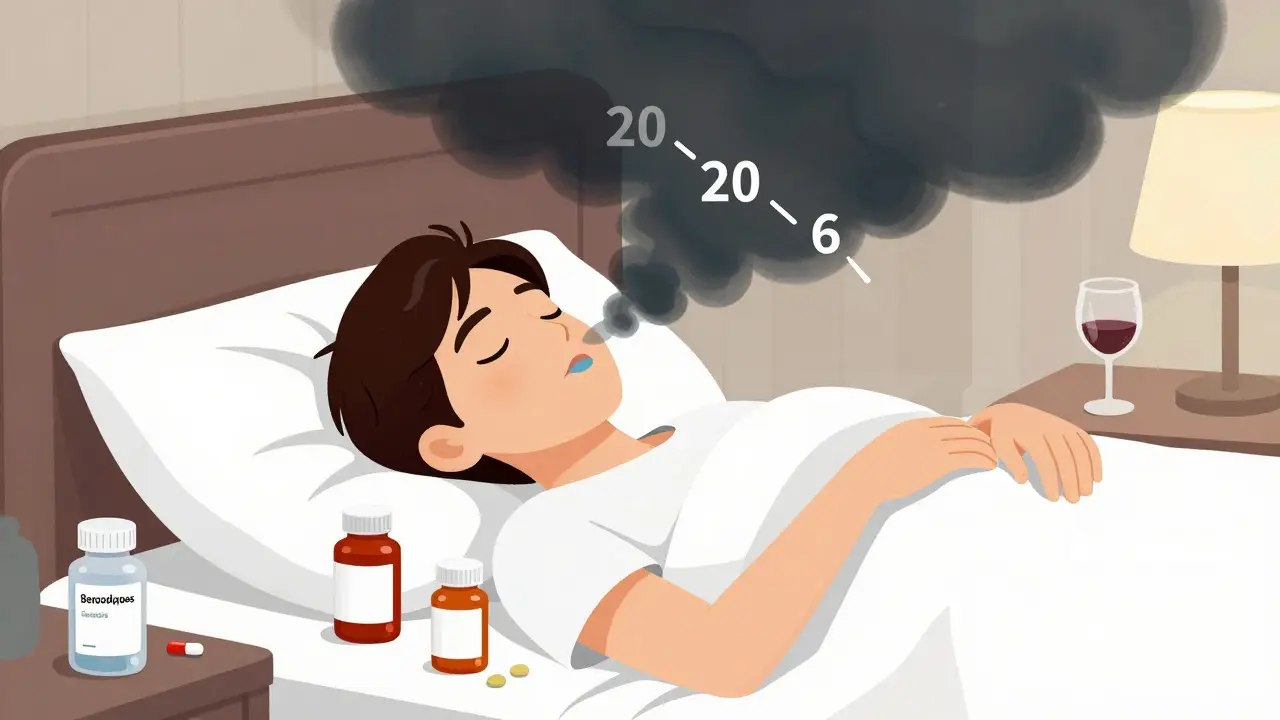
Sedating medications work by slowing down your brain. They boost the effect of a natural brain chemical called GABA, which tells your nervous system to relax. Opioids, benzodiazepines, sleep pills, muscle relaxers, and even some antidepressants all do this. When you take just one, your body can usually handle it. But when you take two or more, your brain gets overwhelmed. The result? A dangerous drop in breathing, confusion, loss of coordination, and sometimes, no breathing at all.The most dangerous mix is opioids and benzodiazepines. Opioids like oxycodone or hydrocodone calm pain but also suppress the part of your brain that controls breathing. Benzodiazepines like Xanax or Valium calm anxiety but also deepen that suppression. Together, they can push your breathing rate below 8 breaths per minute. Normal is 12 to 20. Below 8, your blood oxygen drops. Below 6, your organs start shutting down. And you might not even realize it’s happening.
According to the CDC, in 2020, 16% of opioid-related overdose deaths also involved benzodiazepines. A study in JAMA Internal Medicine found that people taking both had more than double the risk of overdose compared to those taking opioids alone. The risk doesn’t stop there. Alcohol, even just one or two drinks, can make the same combination four to five times more dangerous. It’s not about how much you drink-it’s about how little it takes to tip the balance.
Warning Signs You Can’t Ignore
Most people don’t realize they’re in danger until it’s too late. But there are clear, early signs that something’s wrong. If you or someone you know is taking multiple sedating drugs, watch for:- Slowed or shallow breathing-so slow you can’t count it easily
- Blue lips or fingertips-signs your body isn’t getting enough oxygen
- Unresponsiveness-no reaction to your name being called or a gentle shake
- Extreme drowsiness-even after a nap, you can’t stay awake
- Gurgling or snoring sounds while sleeping-this isn’t normal snoring; it’s air struggling to pass
- Confusion or slurred speech that’s worse than usual
These aren’t side effects. They’re red flags. If you see any of these, call emergency services immediately. Don’t wait. Don’t try to wake them up with coffee or cold water. That won’t work. This is a medical emergency that needs oxygen and possibly naloxone.
Other Dangerous Combinations
It’s not just opioids and benzodiazepines. Other mixes are just as risky:- SSRIs + MAOIs: These antidepressants can cause serotonin syndrome, a condition where your brain gets flooded with serotonin. Symptoms include high fever, rapid heartbeat, muscle rigidity, and seizures. It can kill within hours.
- Alcohol + sleep meds (like Ambien or Lunesta): This combo can cause blackouts, memory loss, and falls. One study found people on this mix had a 70% slower reaction time compared to 40% with either alone.
- Benzodiazepines + antihistamines (like Benadryl): Many people take Benadryl for sleep or allergies. But combined with a sedative, it can cause extreme dizziness, confusion, and urinary retention.
Even if you’re not taking opioids, any combination of two or more sedating drugs raises your risk. The more drugs you take that make you drowsy, the higher your chance of an accident, fall, or overdose.
Who’s at Highest Risk?
Older adults are especially vulnerable. As we age, our bodies process drugs slower. Liver and kidney function decline. That means even normal doses can build up. The American Geriatrics Society Beers Criteria lists 19 dangerous sedating combinations specifically for people over 65. One in three older adults still takes at least one medication on that list.Women are more likely than men to be prescribed sedatives, especially for anxiety or insomnia. A 2023 study found 41% of older women were on potentially inappropriate sedating meds, compared to 27% of men. And because women often take multiple prescriptions, the risk of interaction climbs.
People who see multiple doctors are also at risk. A 2022 report from Recovery Village found that 42% of those who overdosed on combined sedatives had gotten prescriptions from three or more doctors in just six months. This isn’t always intentional-it’s often because no one doctor has the full picture.
Why Do Doctors Prescribe These Combos?
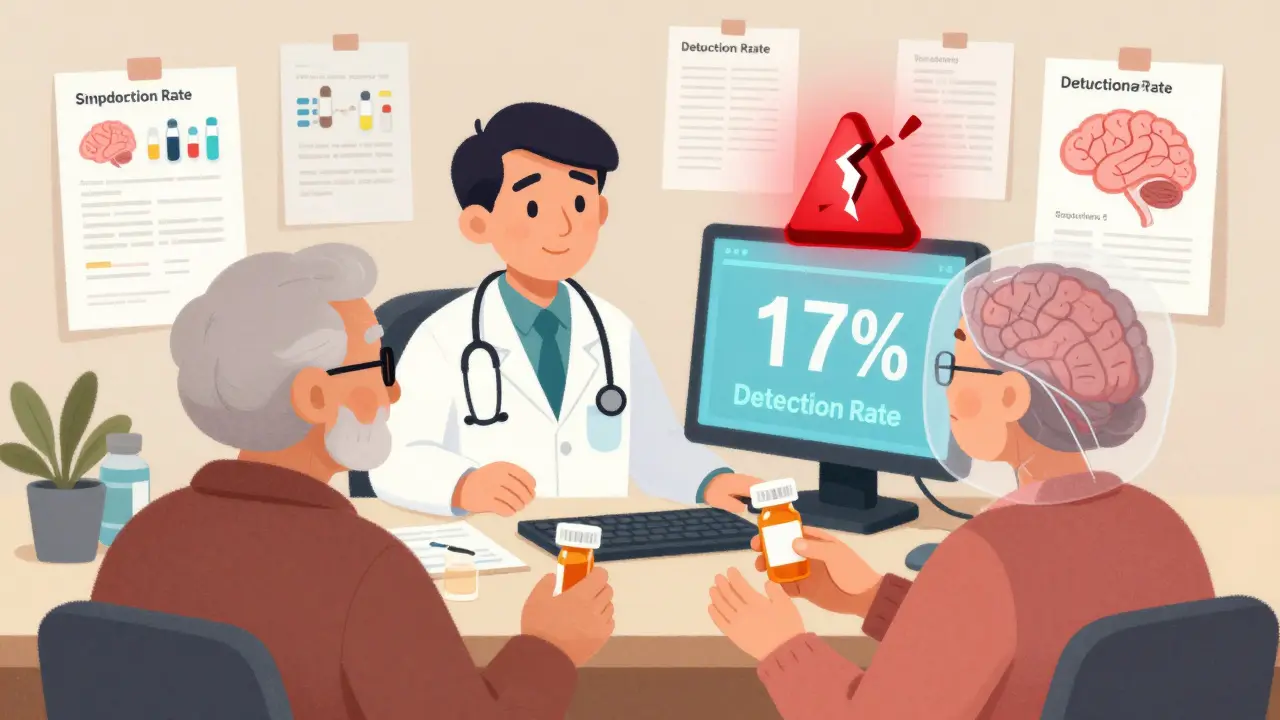
It’s not because they’re careless. Many are trying to help. A patient with chronic pain might also have anxiety or insomnia. Prescribing an opioid for pain and a benzodiazepine for anxiety seems logical. But the science says otherwise. The FDA issued a formal warning in 2016. The CDC now recommends against this combination except in rare cases with close monitoring.Electronic health records still fail to catch most dangerous combinations. A 2020 study found that only 17% of systems flagged these risks. Doctors aren’t always warned. Patients aren’t always told. And because sedatives are so common-millions of prescriptions are written every year-it’s easy to overlook the danger.
How to Stay Safe
The best way to avoid these risks isn’t to stop all medications. It’s to take control of your list.- Keep a complete medication list: Include every prescription, over-the-counter pill, supplement, and herbal remedy. Don’t forget sleep aids, antihistamines, or pain creams.
- Review it with one doctor: Make sure at least one provider-your primary care doctor or pharmacist-sees the full list every 3 months. If you’re over 65, the START criteria say you should have a review within 30 days if you’re on three or more sedatives.
- Ask about alternatives: Is there a non-sedating option? For anxiety, therapy or certain antidepressants might work better than benzodiazepines. For sleep, cognitive behavioral therapy (CBT-I) is as effective as pills-with no risk of overdose.
- Know your opioid dose: If you’re on opioids, ask for your morphine milligram equivalent (MME). Anything over 50 MME per day increases overdose risk. Combine that with a benzodiazepine? The risk jumps dramatically.
- Never mix with alcohol: Even one drink can be enough. There’s no safe level of alcohol with sedatives.
What to Do If You’re Already on Multiple Sedatives
If you’re currently taking two or more sedating drugs, don’t stop suddenly. That can be dangerous too. Withdrawal from benzodiazepines or opioids can cause seizures, severe anxiety, or rebound insomnia.Instead, talk to your doctor about a taper plan. This means slowly reducing one drug at a time-usually by 10% to 25% every one to two weeks. Start with the one that’s least essential. If you’re taking a sleep pill and a painkiller, maybe the sleep pill can go first. If you’re on an anxiety med and an antidepressant, your doctor can help decide which one to adjust.
Some people do better on one drug than two. A 2022 Healthline survey found that 18% of patients using carefully monitored combinations felt better. But that’s under strict medical supervision. For most, the goal should be simplification, not stacking.
The Bigger Picture
This isn’t just about individual choices. It’s about a system that’s still too permissive with sedatives. The FDA now requires boxed warnings on opioid and benzodiazepine labels. All 50 states require e-prescribing for controlled substances, which helps track who’s getting what. But only 28% of primary care providers routinely screen for dangerous combinations.Cost is another barrier. Non-sedating alternatives like CBT-I or certain antidepressants can cost $450 to $600 a month. Sedatives? Often $15 to $30. For people on fixed incomes, the cheaper option wins-even if it’s riskier.
But awareness is growing. The NIH is investing $127 million to study genetic testing that can predict who’s more likely to overdose on sedatives. AI tools like the DETERMINE platform are already helping doctors spot high-risk patients with 87% accuracy.
The message is clear: combining sedating medications isn’t a gray area. It’s a red zone. And the risks aren’t theoretical. They’re written in emergency room records, in obituaries, and in the quiet homes where someone never woke up after taking their usual pills.
You don’t need to be a drug user to be at risk. You just need to be taking more than one thing that makes you sleepy. And if you are, it’s time to talk to someone-before it’s too late.
Can combining sedating medications cause death even at normal doses?
Yes. Even when taken exactly as prescribed, combining sedating medications like opioids and benzodiazepines can suppress breathing to fatal levels. The effect is synergistic, meaning the combined impact is far greater than the sum of each drug alone. A 2017 study found patients on both had over 2.5 times the risk of overdose compared to those on opioids alone. This risk exists even at low doses.
What should I do if I suspect someone is overdosing on sedating drugs?
Call 911 immediately. Do not try to wake them with caffeine, cold water, or shaking. Check for breathing-if it’s slower than 8 breaths per minute, lips are blue, or they’re unresponsive, this is a life-threatening emergency. If naloxone is available and you’re trained to use it, administer it. But even if you give naloxone, you still need emergency help. Naloxone only reverses opioids, not benzodiazepines or alcohol.
Is it safe to take a sleep aid like Ambien with alcohol occasionally?
No. Even one standard drink combined with Ambien can reduce reaction time by 70%, compared to 40% with Ambien alone. This combination increases the risk of falls, blackouts, and respiratory depression. There is no safe level of alcohol with sedating sleep medications. The FDA and CDC both warn against this combination.
Why don’t doctors always warn patients about these risks?
Many doctors are unaware of the full risk because electronic health records rarely flag these interactions. A 2020 study showed only 17% of major systems triggered alerts. Patients often see multiple providers, so no one has the full picture. Additionally, sedatives are commonly prescribed and perceived as routine, so the danger gets overlooked. Always ask your doctor: "Could this interact with my other medications?"
Are there safer alternatives to sedating medications for anxiety or insomnia?
Yes. For anxiety, SSRIs, SNRIs, or therapy like CBT are effective with no overdose risk. For insomnia, cognitive behavioral therapy for insomnia (CBT-I) is recommended as the first-line treatment by the American College of Physicians. These options take time but are safer and more sustainable than long-term use of benzodiazepines or sleep pills. Ask your provider about non-drug options before increasing doses or adding more medications.
Can I stop taking one of my sedating medications on my own?
No. Stopping benzodiazepines, opioids, or certain sleep aids suddenly can cause seizures, severe anxiety, hallucinations, or rebound insomnia. Always work with your doctor to create a tapering plan. Reduce one medication at a time, typically by 10-25% every one to two weeks. Never adjust doses without medical supervision.