
DIC Diagnostic Calculator
Calculate DIC Risk
This calculator uses the ISTH scoring system to determine if a patient has drug-induced DIC. Based on the article, a score of 5 or more indicates overt DIC.
When a drug turns deadly, it’s not always because it’s toxic. Sometimes, it’s because it triggers a silent, fast-moving clotting storm inside your body - a condition called disseminated intravascular coagulation (DIC). This isn’t a common side effect, but when it happens, it kills fast. And too often, doctors miss it - because the warning signs aren’t on the drug label.
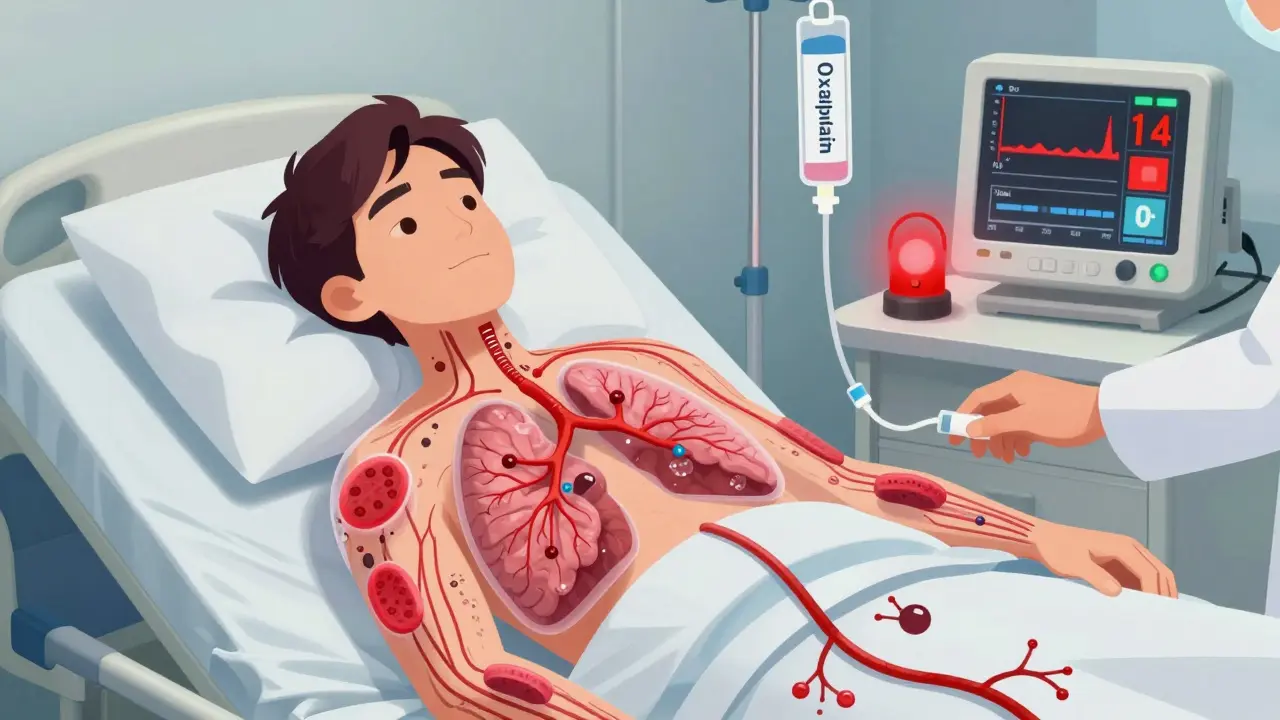
Imagine this: You’re a cancer patient getting oxaliplatin for colon cancer. You feel fine. Then, suddenly, your IV site starts bleeding. Your platelets crash. Your blood won’t clot. You’re bruising for no reason. Your kidneys start failing. Within hours, you’re in the ICU. This isn’t a rare movie scene. It’s real. And it’s happening more often than you think.
What Is Drug-Induced DIC?
DIC isn’t a disease. It’s a syndrome - a chain reaction gone wrong. Your body’s clotting system, normally tightly controlled, goes haywire. Clots form everywhere - in tiny blood vessels, in your lungs, in your brain. These clots suck up platelets and clotting factors until your body runs out. Then, the bleeding starts. You’re stuck in a loop: too much clotting, then too little clotting. And it can kill you in 24 hours.
Drug-induced DIC happens when a medication triggers this process. Some drugs directly activate clotting. Others damage blood vessel walls. Some even turn your immune system against your own clotting proteins. It’s not about overdose. Even normal doses can do it.
According to WHO’s global drug safety database, over 4,600 serious cases of drug-linked DIC were reported between 1968 and 2015. That’s not a fluke. It’s a pattern. And here’s the scary part: most of the drugs involved aren’t labeled as risky for DIC. If your doctor doesn’t know to look for it, you’re on your own.
Which Drugs Are Most Likely to Cause It?
Not all drugs are equal when it comes to triggering DIC. Some carry a much higher risk. Based on data from the WHO’s Vigibase and FDA reports, these are the top offenders:
- Anticancer drugs - especially monoclonal antibodies like bevacizumab (Avastin) and gemtuzumab ozogamicin (Mylotarg). Gemtuzumab has one of the highest reported odds ratios (ROR 28.7), meaning it’s 29 times more likely to cause DIC than expected.
- Anticoagulants - dabigatran (Pradaxa) showed up in 94 serious reports. It’s supposed to prevent clots, but in some people, it does the opposite.
- Chemotherapy agents - oxaliplatin (Eloxatin) caused 75 cases. It’s a common drug for colorectal cancer. Most doctors don’t realize it can trigger DIC.
- Antibiotics - vancomycin and other systemic antibiotics have shown up in reports, though less frequently.
The FDA saw a 23% jump in DIC reports tied to monoclonal antibodies between 2021 and 2022. That’s not because more people are taking them - it’s because we’re finally starting to notice.
How Do You Diagnose It?
DIC doesn’t have one clear symptom. It looks like sepsis. Like liver failure. Like a bleeding disorder. That’s why it’s missed.
The International Society on Thrombosis and Haemostasis (ISTH) has a scoring system that works. It’s simple. You check four things:
- Platelet count - below 100,000? That’s one point. Below 50,000? Two points.
- Prothrombin time (PT) - if it’s prolonged by more than 3 seconds, that’s one point. More than 6 seconds? Two points.
- Fibrin degradation products - if they’re strongly elevated (like D-dimer over 10x normal), that’s three points.
- Fibrinogen - if it’s below 1.0 g/L, that’s one point.
Add them up. If you hit 5 or more - you have overt DIC. No guesswork. No waiting. You act now.
Other clues: unexplained bleeding from IV sites, gums, or urine. Sudden drop in blood pressure. Confusion or shortness of breath. These aren’t random. They’re signs your microvasculature is clogged and collapsing.
What’s the First Thing You Do?
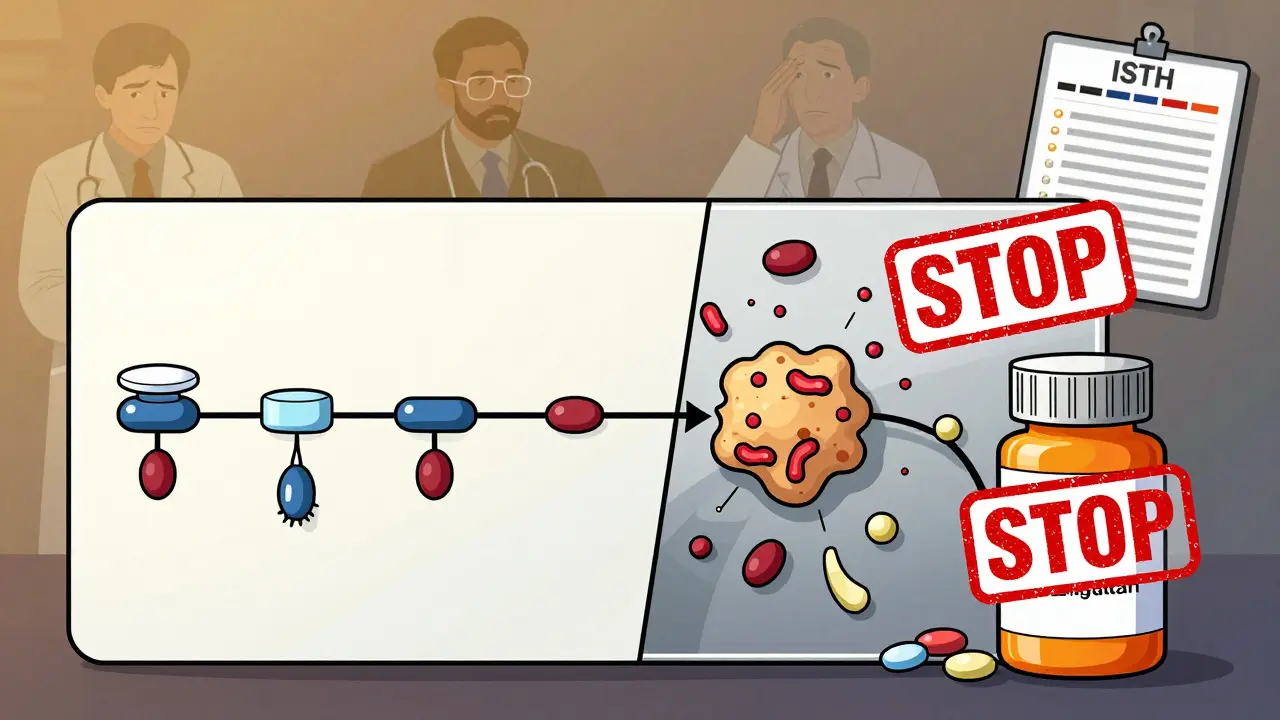
Stop the drug. Immediately.
This is the single most important step. Unlike sepsis-induced DIC, where antibiotics come first, drug-induced DIC is all about removing the trigger. Keep giving oxaliplatin? You’re feeding the fire. Keep giving dabigatran? You’re making it worse.
A 2021 case report described a patient who developed DIC after oxaliplatin. The doctors didn’t stop the chemo right away. By the time they did, he’d already lost 4 liters of blood. He survived - barely. Another patient, whose team stopped the drug within hours, recovered fully.
Don’t wait for lab results. If DIC is suspected and the patient just got a high-risk drug - pause it. Now.
How Do You Treat It?
There’s no magic pill. Treatment is about support. You’re not curing DIC. You’re buying time until the body recovers.
Replace what’s been used up:
- Platelets - give them if the count is below 50,000 and there’s active bleeding. If there’s no bleeding, you don’t need to transfuse unless it’s below 20,000. Over-transfusing can make clots worse.
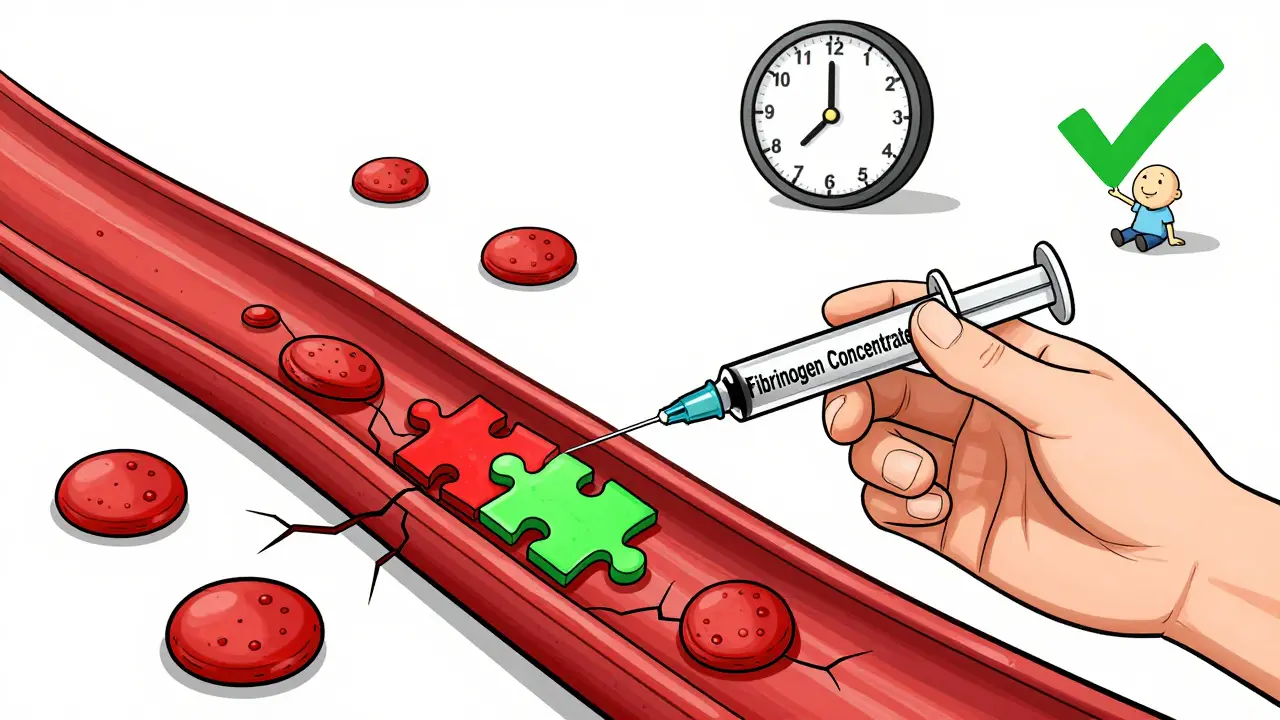
- Fibrinogen - this is critical. If it drops below 1.5 g/L, give fibrinogen concentrate or cryoprecipitate. The OpenAnesthesia guidelines say this is non-negotiable. Below 80 mg/dL? You can’t even give blood thinners safely.
- Fresh frozen plasma (FFP) - used to replace other clotting factors. But don’t overdo it. Too much can overload the system.
Anticoagulants? Maybe - but carefully.
Heparin is sometimes used in DIC to stop new clots. But it’s not for everyone. If the patient has heparin-induced thrombocytopenia (HIT), you’re in danger. Heparin can make it worse. Also, avoid warfarin. It depletes natural anticoagulants like protein C and can cause skin necrosis - a terrifying side effect.
Some studies looked at antithrombin III or thrombomodulin. They helped - but only in patients not already on heparin. That’s a clue: heparin might be the real variable. Use it only if bleeding is minimal and clotting is the main threat.
What Do You Avoid?
There are traps. Big ones.
- Don’t give anticoagulants blindly. Heparin isn’t a cure. It’s a gamble.
- Don’t wait for massive bleeding. DIC kills before you see blood. Act on labs.
- Don’t ignore the drug history. A patient with DIC and no infection? Look at their meds. Last week’s chemo? That’s your answer.
- Don’t assume it’s ITP or liver disease. Platelets are low? Could be DIC. Bleeding? Could be DIC. Confusion? Could be DIC. Always rule it out.
One ICU doctor on Reddit said he’s seen 12 cases in 15 years. Mortality was 58%. He said: "The ones who lived? We caught it early. We stopped the drug. We replaced fibrinogen. That’s it. No fancy drugs. Just basics. Done fast."
Who’s at Highest Risk?
It’s not random. Certain patients are more vulnerable:
- Cancer patients on monoclonal antibodies (bevacizumab, gemtuzumab)
- Patients on newer anticoagulants like dabigatran or rivaroxaban
- Those with pre-existing liver or kidney disease
- People on multiple high-risk drugs at once
Since 2023, the European Medicines Agency has required updated safety plans for 7 oncology drugs linked to DIC. That’s a sign: regulators are waking up.
And now, the International Council for Standardization in Haematology recommends weekly blood tests for patients on high-risk drugs. CBC. PT. Fibrinogen. D-dimer. Just five simple tests. Could save a life.
What’s the Bottom Line?
DIC from drugs is rare. But when it hits, it’s brutal. And it’s preventable - if you know what to look for.
Here’s what you need to remember:
- Drug-induced DIC is underdiagnosed because labels don’t warn about it.
- Stop the drug immediately - that’s step one.
- Check the ISTH score. Don’t wait for bleeding.
- Fibrinogen below 1.5 g/L? Replace it. Platelets below 50,000 with bleeding? Replace them.
- Don’t use heparin or warfarin unless you’re certain it’s safe.
- Mortality is 40-60%. But if you catch it early, survival jumps.
This isn’t about advanced tech. It’s about paying attention. A simple blood test. A quick review of the drug list. A decision to stop the medicine. That’s all it takes.
The next time a patient crashes after a new drug - don’t think infection. Don’t think liver failure. Think DIC. And act.
Can a normal dose of a drug cause DIC?
Yes. DIC from drugs isn’t about overdose. Even standard doses can trigger it in susceptible people. Drugs like dabigatran, oxaliplatin, and bevacizumab have caused DIC at normal therapeutic levels. It’s a reaction, not a toxicity.
Is DIC always fatal?
No, but mortality is high - between 40% and 60% in severe cases. Survival depends on how fast you act. Stopping the drug within hours and replacing fibrinogen and platelets can turn the tide. Delayed treatment means multiorgan failure and death.
Can you use heparin to treat drug-induced DIC?
Sometimes, but not always. Heparin may help prevent new clots if bleeding is minimal. But it’s risky if the patient has HIT or if fibrinogen is very low. Studies show it only helps if the patient isn’t already on other anticoagulants. Many experts avoid it unless the clotting threat clearly outweighs the bleeding risk.
Why isn’t DIC listed on drug labels?
Because the link isn’t always obvious. Many drug-induced DIC cases are rare, and manufacturers aren’t required to list every possible adverse reaction. A 2020 study found that 75.9% of serious DIC cases were from drugs without DIC warnings in their prescribing information. Regulatory agencies are catching up, but awareness lags behind evidence.
How do you know if DIC is caused by a drug and not sepsis?
Look at timing and history. If DIC started within hours or days after a new drug - especially one known to trigger it - and there’s no infection, fever, or source of sepsis, drug-induced DIC is likely. Check the ISTH score. Also, sepsis usually causes a gradual decline. Drug-induced DIC can spike suddenly. A clear drug exposure timeline is the biggest clue.
Should all patients on high-risk drugs get regular blood tests?
Yes, according to 2022 guidelines from the International Council for Standardization in Haematology. For drugs like bevacizumab, oxaliplatin, or dabigatran, weekly CBC and coagulation panels (platelets, PT, fibrinogen, D-dimer) are recommended. Early detection saves lives. Many hospitals still don’t do this - but they should.



10 Comments
Bro, I just saw a guy go down with DIC after his third round of oxaliplatin. Docs were like 'it's probably sepsis' - nah, fam. We stopped the drug, checked fibrinogen, gave cryo, and he walked out in 72 hours. No fancy shit. Just basics. If you're not checking coags on high-risk chemo patients, you're playing Russian roulette with a loaded gun. #StopTheDrugFirst
Okay but why is heparin even a thing here? Like, if the problem is you're clotting too much, then adding another anticoagulant feels like trying to put out a fire with gasoline. I get the theory - stop microclots - but in practice? You're just giving someone another way to bleed out. Fibrinogen replacement? That's the MVP. Platelets? Only if they're falling and bleeding. Everything else is noise.
Also - why are we still using FFP like it's 1998? Cryo and concentrate are way more targeted. Stop the chemo. Replace fibrinogen. Don't over-transfuse. That's the whole playbook.
I've seen this twice in my ICU rotation. First time - patient on bevacizumab, platelets dropped to 30k, D-dimer through the roof. We missed it for 18 hours because the team thought it was TTP. Second time - same drug, same patient type. This time, we had the ISTH score printed on the med cart. We caught it at 4 points. Gave fibrinogen, stopped the drug, and he was discharged in 5 days. It's not rocket science. It's just vigilance. And honestly? Most hospitals don't even have a protocol for this. That's terrifying.
Also - if you're giving dabigatran to someone with renal issues? You're asking for trouble. The label says 'use with caution' - that's code for 'this might kill you if you're not paying attention'.
Simple version: If someone gets a new drug and then starts bleeding or clotting weird, STOP THE DRUG. Then check platelets, PT, fibrinogen, D-dimer. If fibrinogen is under 1.5, give it. If platelets are low and they're bleeding, give them. Don't use heparin unless you're 100% sure. Don't wait. Don't overthink. Just act. This isn't a mystery. It's a checklist.
so like… if your doc gives you some new chemo and you start bleeding from your gums or your iv site… just say ‘hey i think this might be dic’ and ask for the isth score? i mean, it’s not that hard? why do we make medicine so complicated? also i just learned that dabigatran can cause dic?? like… the drug that’s supposed to prevent clots?? that’s wild. my uncle was on that. he’s fine. but still. wild.
Thank you for writing this. I work in oncology nursing and I've seen too many patients slip through the cracks because no one connected the dots. One lady on bevacizumab had petechiae and a dropping platelet count - the resident thought it was ‘just chemo side effects.’ We pushed for coag studies. ISTH score: 7. Fibrinogen: 0.8. We gave cryo. She survived. But if we hadn’t spoken up? She wouldn’t have. This isn’t just knowledge - it’s a moral obligation. If you’re prescribing these drugs, you owe your patients this awareness. Don’t wait for a death to wake you up. Start checking labs. Start asking questions. Start listening.
And yes - weekly CBC and coags for high-risk drugs? Absolutely. It’s cheap. It’s simple. It’s life-saving. Why aren’t we doing this everywhere?