Stevens-Johnson Syndrome: Causes, Risks, and What You Need to Know
When your body reacts badly to a medicine, it doesn’t always mean a simple rash or upset stomach. Stevens-Johnson Syndrome, a severe immune reaction that attacks the skin and mucous membranes, often triggered by medications or infections. Also known as SJS, it can turn life-threatening in days if not caught early. This isn’t just a bad allergy—it’s a full-scale attack on your skin’s protective layer, causing blisters, peeling, and open sores that look like burns.
Most cases start with flu-like symptoms—fever, sore throat, burning eyes—then quickly shift to painful red or purple rashes that spread and blister. The skin begins to slough off in large sheets, especially around the mouth, eyes, and genitals. This is where it crosses into toxic epidermal necrolysis, a more severe form of the same reaction, where over 30% of the skin detaches. Both are medical emergencies. Hospitals treat them like burn units, not regular dermatology cases.
Some drugs are far more likely to trigger this than others. sulfonamide antibiotics, like Bactrim or Septra, are among the top culprits. Others include allopurinol (used for gout), certain seizure meds like carbamazepine, and NSAIDs like ibuprofen in rare cases. It’s not about dosage—it’s about your genes. People of Asian descent with the HLA-B*15:02 gene variant have a much higher risk with certain drugs. Testing isn’t routine, but if you’ve had a bad reaction before, it’s worth asking.
What makes this so dangerous isn’t just the pain—it’s what follows. Infections, dehydration, organ failure, and permanent eye damage are common. Survivors often need long-term care for vision, skin scarring, or trouble swallowing. Many never fully recover. That’s why prevention matters more than treatment. If you start feeling unwell after starting a new drug—especially within the first few weeks—don’t wait. Stop the medication and get checked. A rash that spreads fast, blisters, or affects your mouth or eyes? That’s not normal. It’s a red flag.
Some of the posts below dig into how medications cause unexpected harm—like how gut bacteria can turn drugs toxic, or why people mislabel penicillin allergies. Others show how to track side effects before they become emergencies. You’ll find real stories and practical checks for when to question a prescription, how to read warning labels, and what to ask your pharmacist before you take anything new. This isn’t about scaring you—it’s about giving you the tools to spot danger before it’s too late.
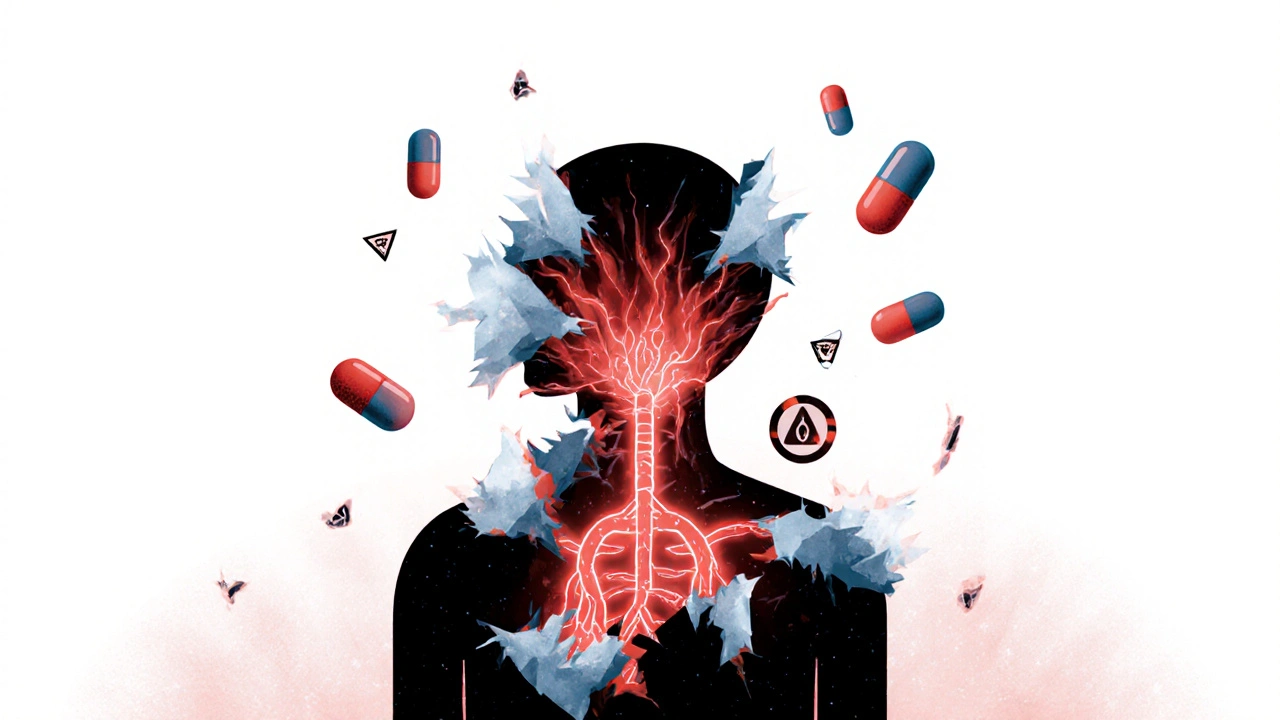
Stevens-Johnson Syndrome and Toxic Epidermal Necrolysis: What You Need to Know
Stevens-Johnson Syndrome and Toxic Epidermal Necrolysis are rare but deadly drug reactions that cause skin and mucous membrane detachment. Learn the warning signs, triggers, and why genetic testing can save lives.
view more