
Living with pets and allergies doesn’t have to mean saying goodbye to your furry friend. If you sneeze every time your cat jumps onto the couch or your nose runs after hugging your dog, you’re not alone. About 1 in 10 people in the U.S. have pet allergies, and many of them still live with their animals - because the right strategies work. The problem isn’t the hair. It’s the pet dander: tiny flakes of skin, plus saliva and urine proteins, that stick to everything and float in the air. Cats produce Fel d 1, dogs produce Can f 1 - both are stubborn, long-lasting, and invisible to the naked eye. But you can slash your exposure without giving up your pet.
Start with the bedroom - it’s the most important room
| Strategy | Reduction in Nighttime Symptoms | Time to See Results |
|---|---|---|
| Pet-free bedroom | Up to 40% | 1-2 weeks |
| HEPA air purifier in bedroom | 30-50% | 2-4 weeks |
| Washing bedding weekly at 130°F (54°C) | 50-70% | 1 week |
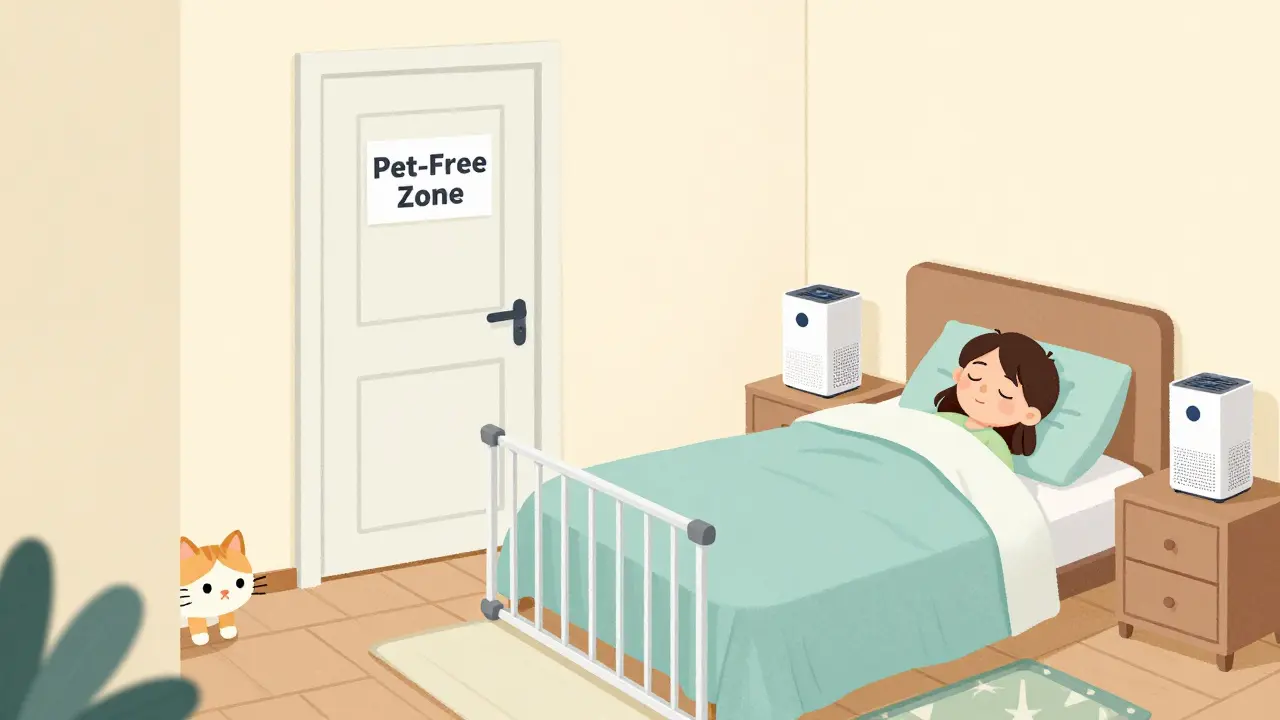
Doctors agree: making your bedroom a pet-free zone is the single most effective step you can take. That’s where you spend 8 hours a night breathing deeply - and where allergens settle thickly on pillows, sheets, and comforters. Studies show that keeping pets out of the bedroom cuts nighttime sneezing, congestion, and wheezing by up to 40%. Even if your pet sleeps on the couch during the day, ban them from the bedroom at night. Use a baby gate or close the door. Wash your bedding every week in hot water (130°F or higher) to kill allergens and remove trapped dander. Swap out feather or down pillows for synthetic ones, and use allergen-proof mattress and pillow covers - they’re not fancy, but they block 95% of dander from getting through.
Upgrade your vacuum - standard ones won’t cut it
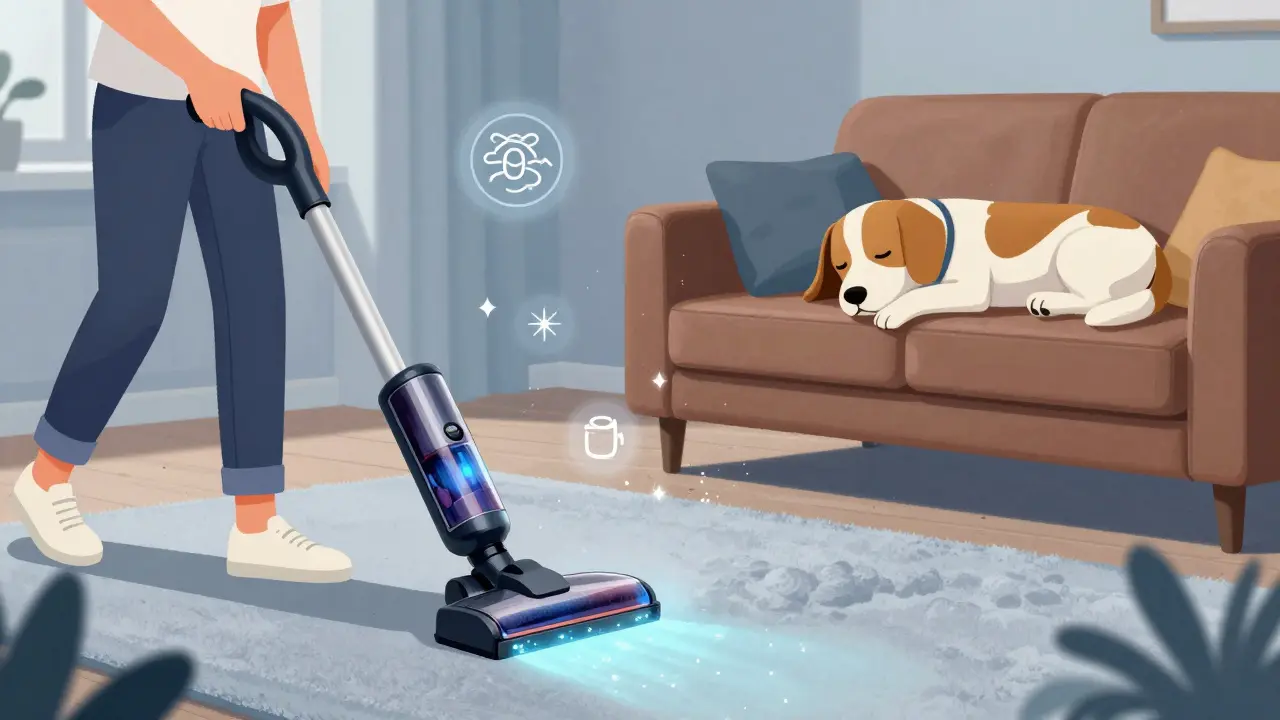
Most vacuum cleaners just kick allergens back into the air. Regular filters can’t catch particles smaller than 1 micron - and pet dander is often under 0.5 microns. That’s why HEPA filters matter. A true HEPA vacuum traps 99.97% of particles as small as 0.3 microns, including dander, saliva, and dust mites. Research from Filtrete shows HEPA vacuums remove 30-50% more allergens than standard models. Don’t just buy any vacuum with “HEPA” on the label - check the specs. Look for sealed systems that prevent leaks. Vacuum at least 2-3 times a week, focusing on carpets, upholstered furniture, and curtains. If you have hardwood or tile floors, you’re already ahead - they hold 50-75% less dander than carpet. Consider replacing high-pile rugs with washable mats or hard flooring where possible.
Use an air purifier - but choose wisely
Air purifiers aren’t magic, but a good one makes a real difference. Look for models with true HEPA filters and a CADR (Clean Air Delivery Rate) rating that matches your room size. For a typical bedroom or living room (200-300 sq ft), aim for a CADR of at least 200. Place it near where your pet spends the most time - the living room sofa, the window sill, or the corner where they nap. Don’t waste money on ionizers, ozone generators, or UV lights - they don’t remove dander and can irritate lungs. Independent tests show HEPA air purifiers reduce airborne pet allergens by 40-60% in standard rooms. Run it on high for 30 minutes after your pet moves around, then switch to low for continuous cleaning. Replace the filter every 6-12 months - most units have indicator lights to remind you.
Bathe your pet - weekly if you can
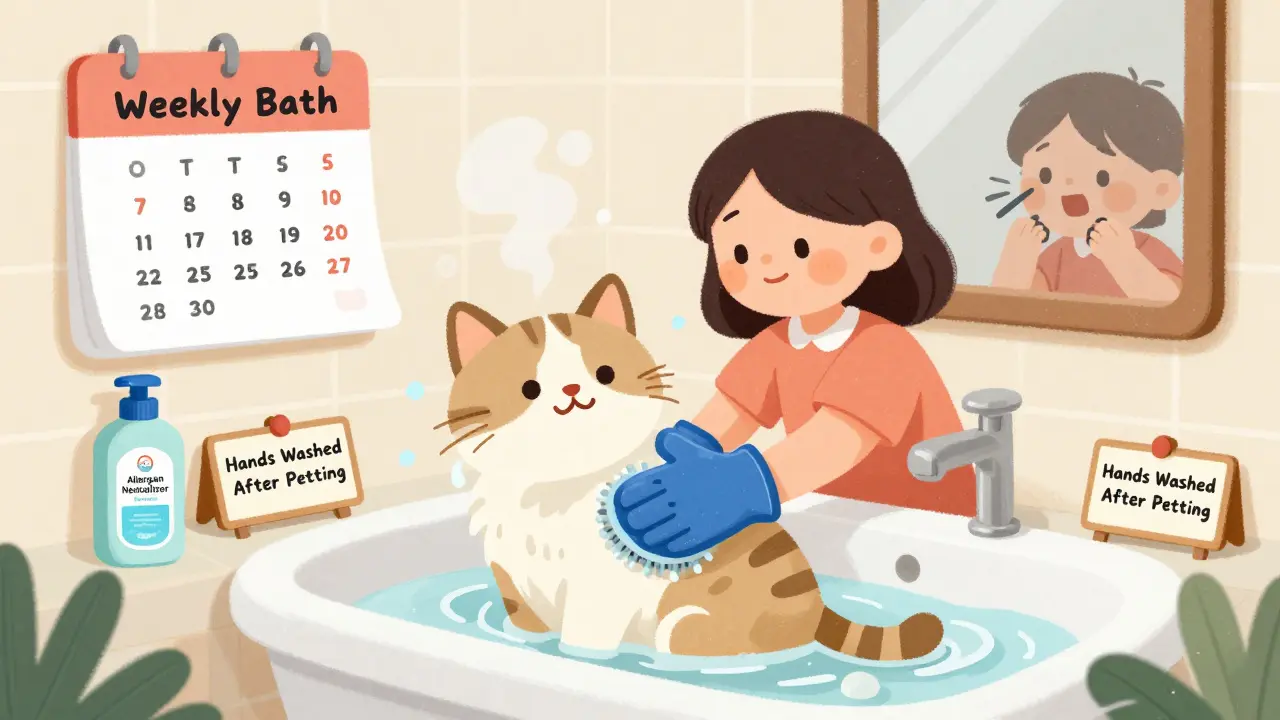
Washing your pet removes allergens from their fur and skin before they spread. Studies show weekly baths can reduce airborne allergens by up to 80%. But here’s the catch: most pet owners don’t do it. Only 35% of dog owners and 40% of cat owners bathe their pets weekly. Cats hate water - that’s a real hurdle. Use a gentle, hypoallergenic pet shampoo designed to neutralize allergens (look for products with oatmeal or aloe). Wet your pet thoroughly, lather, let it sit for 5 minutes, then rinse well. Dry them completely - damp fur holds allergens longer. If your cat refuses baths, try allergen-reducing wipes. They’re not as effective as a full bath, but daily wiping cuts dander by 30-50%. For dogs, brushing them outdoors with a rubber grooming glove before bathing helps remove loose dander.
Control the rest of your home
Every surface in your house can be a dander trap. Use lint rollers on couches, chairs, and clothes - they remove 70-85% of surface allergens in seconds. Wash pet bedding weekly in hot water. Keep your pet out of the kitchen and dining areas where you eat - allergens can settle on plates and utensils. Use microfiber cloths to dust surfaces - they trap dander instead of spreading it. Avoid heavy drapes, wool blankets, and fabric-covered furniture. Opt for leather, vinyl, or washable slipcovers. If you have a cat, clean the litter box daily. Cat urine contains allergens, and scooping reduces airborne particles. Open windows for ventilation when weather permits - fresh air dilutes allergens.
Medication and long-term solutions
Environmental changes help, but sometimes you need backup. Over-the-counter antihistamines like loratadine or cetirizine work for about 60-70% of people with mild symptoms. Take them daily during peak seasons, not just when you sneeze. Nasal corticosteroid sprays (like fluticasone) are even more effective for stuffy noses and are safe for long-term use. If symptoms persist, talk to an allergist about immunotherapy. Allergy shots or the new sublingual tablet (Odactra for cat allergies) retrain your immune system. After 3-5 years of treatment, 80-85% of patients see lasting relief - even after stopping. This isn’t a quick fix, but it’s the only treatment that changes your body’s reaction long-term.
Forget the ‘hypoallergenic’ myth
You’ve heard it: “Bengal cats are hypoallergenic,” “Poodles don’t shed,” “This breed won’t trigger allergies.” It’s false. All cats and dogs produce allergens - no matter their hair length, breed, or size. Some individual animals produce less Fel d 1 or Can f 1, but that’s luck, not genetics. A 2023 study from the University of California, Davis found that even so-called “hypoallergenic” breeds had wide variation in allergen levels - sometimes higher than regular cats. Don’t waste money on breed-specific marketing. Focus on what works: cleaning, filtering, and limiting exposure.
What it costs - and what it saves
Setting up a dander-friendly home doesn’t have to break the bank. A good HEPA vacuum runs $150-$300. A decent air purifier for a medium room is $100-$250. Allergen-reducing shampoo: $10-$20. Washable pet bedding: $20-$40. That’s $300-$500 upfront. Replace HEPA filters every 6-12 months - about $20-$50 each time. Compare that to the cost of missed work, ER visits for asthma attacks, or buying new furniture every few years because dander ruins fabrics. Households that stick with these steps see a 50-70% drop in measurable allergens within 3 months. And according to Kaiser Permanente, 75% of people report better sleep and fewer symptoms in just 4-6 weeks.
Final tip: Wash your hands
It sounds simple, but washing your hands after petting your animal cuts allergen transfer to your face by 90%. That means fewer itchy eyes and less sneezing. Keep a hand sanitizer or soap near the door. Don’t rub your eyes after hugging your dog. Don’t touch your face while cuddling your cat. Small habits make a big difference.
Can you outgrow pet allergies?
Some people do, especially children, but it’s not common. Most adults with pet allergies keep them for life. The best path to lasting relief is immunotherapy - not waiting it out.
Do air purifiers help with pet dander?
Yes, but only if they have a true HEPA filter and are sized for the room. Units without HEPA or with ionizers won’t help. Look for a CADR rating that matches your room size.
Is it safe to keep pets if someone has asthma?
Yes, if you combine strict environmental controls with asthma medication. Many asthma patients live with pets successfully. The key is keeping pets out of the bedroom, using HEPA filters, and avoiding direct contact before bed.
How long does pet dander last in a home after the pet leaves?
Pet allergens can stick around for up to six months - especially in carpets, upholstery, and bedding. Deep cleaning and HEPA filtration are needed to remove them fully.
Are there any new treatments on the horizon?
Yes. A new FDA-approved tablet (Odactra) for cat allergies works like allergy shots but is taken under the tongue. Also, CRISPR gene editing in cats is showing promise - early tests reduced Fel d 1 by 90%, but it’s still years away from being available to the public.


14 Comments
Just started using a HEPA vacuum and holy crap it’s a game changer. My cat still sleeps on the bed but now I don’t wake up sounding like a seal with a cold. Also washed all my bedding in hot water-felt like a lab experiment but worth it.
HEPA filters are just a distraction. The real issue is the government and pet industry colluding to keep you buying gadgets while they secretly pump allergens into the air through 5G towers and smart litter boxes. You think your vacuum helps? Nah. They’re just making you feel better while the real villains-Big Pet and the FDA-watch from their ivory towers. Wake up.
Washing bedding at 130F? That’s ridiculous. Most fabrics can’t handle that. You’re damaging your sheets and wasting energy. Just vacuum and use a lint roller. Also cats don’t produce Fel d 1 in their urine-that’s a myth. You’re misinformed.
Oh so the solution to allergies is to spend $500 on gadgets and then pretend you’re not a monster for banning your dog from the bedroom? Congrats, you’ve turned your home into a sterile lab and your pet into a social outcast. Real compassion.
Thank you for this meticulously researched and compassionate guide. The emphasis on non-pharmaceutical interventions is both scientifically sound and deeply humane. I have shared this with my allergy clinic’s patient education portal.
Bro I tried the pet-free bedroom thing. My dog cried for three nights. I gave in. Now I just sleep with an antihistamine and a hug. Sometimes the emotional cost outweighs the sneezes.
You Americans overcomplicate everything. In Nigeria we just let the cat sleep on the bed and drink ginger tea. If you sneeze you’re weak. Also HEPA filters are a capitalist scam. Your body should adapt. Stop buying things.
It’s funny how we treat pets like allergen factories instead of family. We obsess over dander like it’s a moral failing. But what if the real problem isn’t the cat-it’s that we’ve forgotten how to live with imperfection? Maybe we’re allergic to the idea of messy love. Not the fur. Not the skin. The mess.
My cat has been banned from the bedroom for 8 months and I still wake up choking. The HEPA purifier died after 4 months. The shampoo made her shed more. I’m not giving up but I’m starting to think maybe I’m just allergic to responsibility
My daughter has asthma and we kept our golden retriever. It wasn’t easy. We cried. We bought new pillows. We vacuumed until our arms hurt. But last night she slept through the whole night without her inhaler. That’s worth every penny. You’re not alone.
Odactra? Please. It’s just a placebo with a fancy name. Real science is CRISPR cats. The future is gene-edited pets that don’t produce Fel d 1. Until then, you’re just rearranging deck chairs on the Titanic.
I’ve been doing the weekly baths and the wipes. It’s a grind. But I noticed I don’t need antihistamines as much anymore. Small wins. Still can’t stand the smell of the shampoo though.
YOU’RE NOT ALONE!!! I DID THIS TOO!!! AND MY DOG STARTED CRYING!!! AND THEN I REALIZED… THE ALLERGIES WEREN’T IN MY NOSE… THEY WERE IN MY HEART!!!
Thank you for addressing the myth of hypoallergenic breeds. I’ve spent years researching this, and the data is unequivocal: allergen production is individual, not breed-specific. Your citation of the UC Davis study is particularly compelling. I would only add that environmental control remains the most ethical and effective approach for both human and animal well-being.