

NSAID Safety Risk Calculator
How This Tool Works
Based on the American College of Gastroenterology guidelines, this calculator determines your risk of NSAID-related gastrointestinal bleeding. Each factor adds to your risk score. A score of 2 or more indicates high risk.
Every year, millions of people reach for ibuprofen or naproxen to ease aching joints, headaches, or back pain. These drugs-non-steroidal anti-inflammatory drugs, or NSAIDs-are everywhere: in medicine cabinets, grocery store shelves, and pharmacy counters. But behind the convenience lies a quiet danger. For many, especially older adults and those with existing health conditions, taking NSAIDs can lead to something far worse than a stomach upset: gastrointestinal bleeding from peptic ulcers.
How NSAIDs Hurt Your Stomach
NSAIDs work by blocking enzymes called COX-1 and COX-2. These enzymes help make prostaglandins-chemicals that cause pain and swelling. But prostaglandins also protect your stomach lining. When you take an NSAID, you reduce pain, but you also reduce the natural defense your stomach has against its own acid. Over time, this can wear away the lining, leading to erosions, ulcers, and even bleeding.You don’t need to have a history of ulcers for this to happen. In fact, many people bleed silently. The bleeding might not cause vomiting blood or black stools right away. Instead, it creeps in slowly-draining iron from your body until you’re exhausted, pale, and diagnosed with anemia. One study found that 86% of patients with lower GI bleeding from NSAIDs didn’t even have a visible ulcer. The damage was hidden.
Who’s Most at Risk?
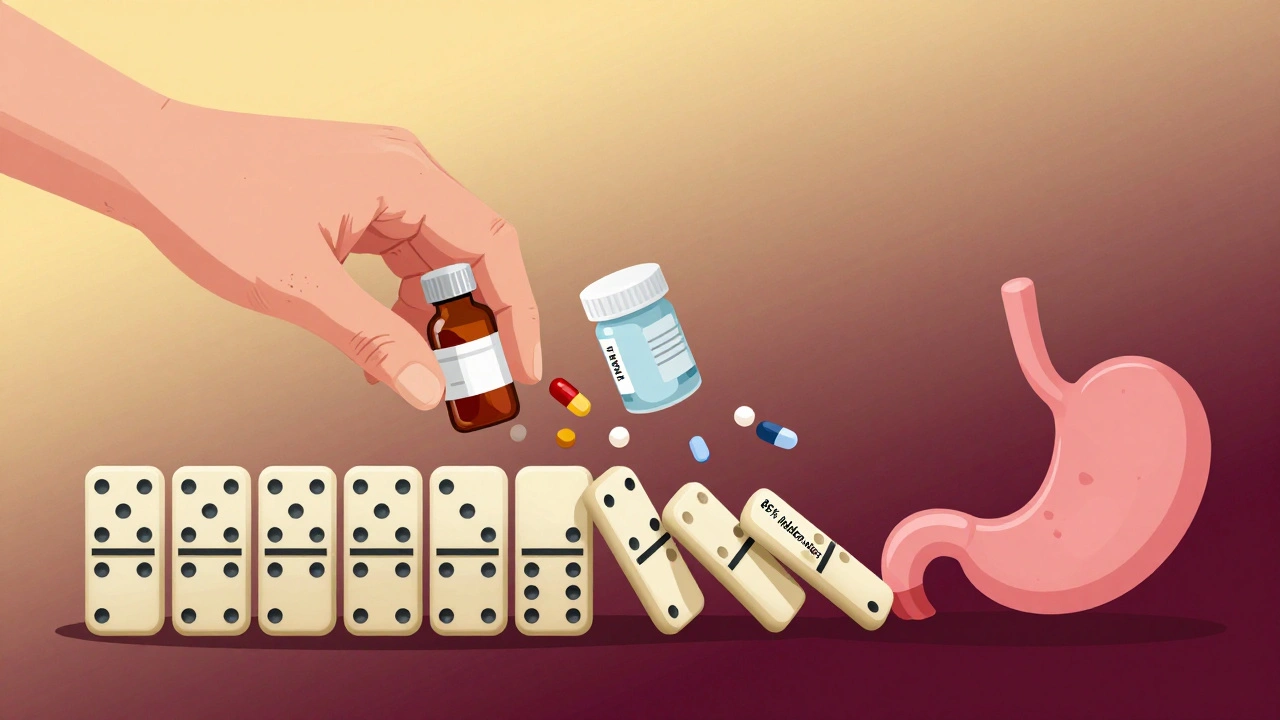
Not everyone who takes NSAIDs will bleed. But some people are walking into danger without knowing it. Risk factors stack up like dominoes:- Age over 65-your stomach lining thins with age
- Previous ulcer or GI bleed-once you’ve had one, you’re far more likely to have another
- Taking blood thinners like warfarin or aspirin-this doubles your bleeding risk
- Using corticosteroids (like prednisone)-even low doses raise the danger
- Taking more than one NSAID at a time-combining ibuprofen and naproxen is common, and deadly
- Using NSAIDs at high doses or for long periods-over-the-counter doesn’t mean safe
A 2021 guideline from the American College of Gastroenterology says if you have two or more of these risk factors, you’re in the high-risk group. And yet, many people never talk to their doctor about it. One patient forum found that 63% of NSAID users had GI symptoms-nausea, bloating, dark stools-but only 37% told their doctor. That’s a dangerous gap.
Not All NSAIDs Are the Same
It’s a myth that all NSAIDs carry the same risk. Traditional ones like ibuprofen, naproxen, and diclofenac hit both COX-1 and COX-2. That means they reduce pain but also strip away stomach protection. They’re the biggest culprits in bleeding cases.Then there are COX-2 inhibitors-drugs like celecoxib (Celebrex). These were designed to spare the stomach. A 2000 Lancet study showed celecoxib caused half the number of serious ulcers compared to ibuprofen. But here’s the catch: COX-2 drugs raise heart attack risk. Rofecoxib (Vioxx) was pulled from the market in 2004 after studies showed it doubled heart attack chances. Celecoxib is still around, but it’s not a free pass. It’s safer for your stomach, but you still need to watch your heart.
The Best Shield: PPIs and Other Protections
If you need NSAIDs and you’re at risk, you need a shield. The strongest one is a proton pump inhibitor, or PPI. These drugs-omeprazole, esomeprazole, pantoprazole-shut down stomach acid production. A 2017 Cochrane review of over 13,000 patients showed PPIs cut NSAID-related ulcers by 75%. That’s not a small benefit. That’s life-saving.Another option is misoprostol. It rebuilds the stomach lining, but it’s messy. About 1 in 5 people get diarrhea or cramps. Most stop taking it because of side effects. That’s why PPIs are the go-to.
There’s also a newer combo pill: naproxen plus esomeprazole (Vimovo). Approved in 2023, it’s designed to deliver pain relief with built-in protection. In one trial, only 7.3% of people on the combo developed ulcers compared to 25.6% on naproxen alone. For people who can’t avoid NSAIDs, this is a game-changer.
Real Stories Behind the Numbers
Behind every statistic is a person. On Reddit, a caregiver described how their 78-year-old mother developed severe anemia from a slow, hidden bleed. She didn’t have pain. No black stools. Just fatigue. She ended up needing three blood transfusions. The doctor only found the cause after checking her NSAID use.On the other side, people on Drugs.com report that celecoxib gave them pain relief without stomach issues. But those same forums are full of stories from people who stopped taking ibuprofen because they felt nauseous every morning. One arthritis patient said they quit after three months-“I was tired of feeling sick just to walk to the mailbox.”
These aren’t outliers. A 2022 Arthritis Foundation survey found 42% of NSAID users stopped taking them because of GI symptoms. That’s nearly half. And many of them didn’t know why.
What Should You Do?
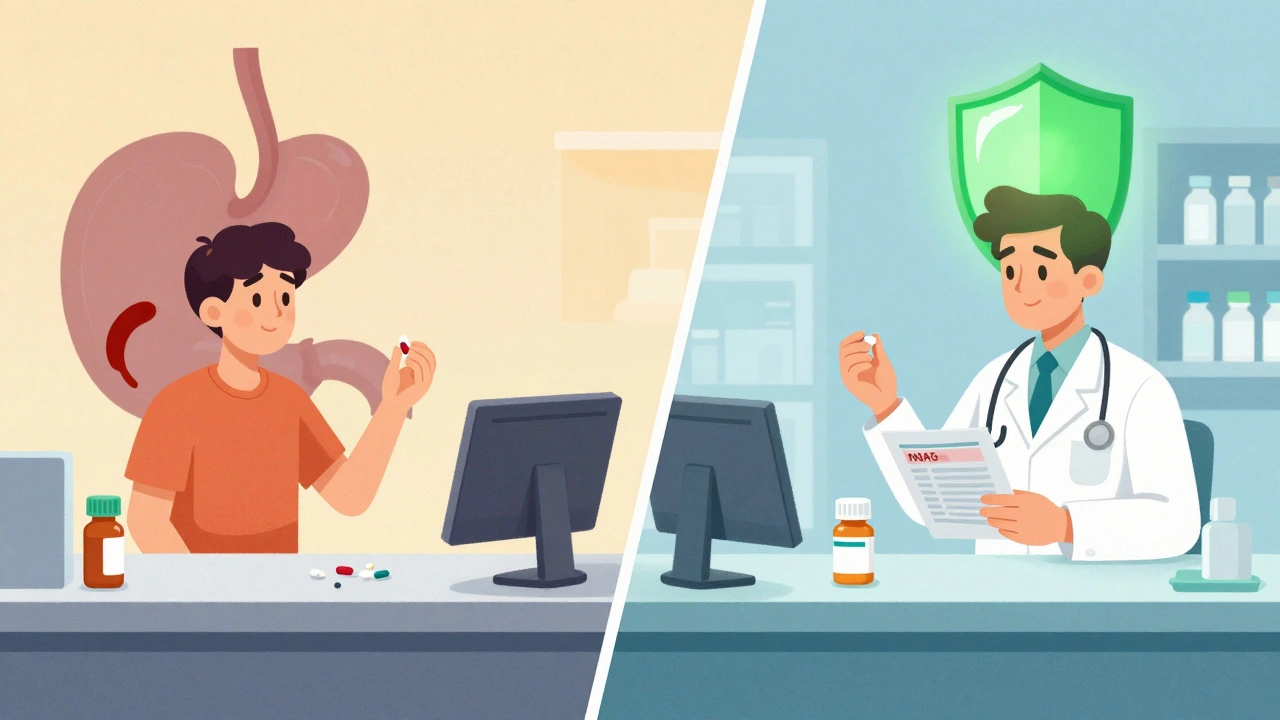
If you’re taking NSAIDs regularly, here’s what to do:- Ask yourself: Am I taking this because I need it-or because it’s easy?
- Check your dose. Are you using more than the label says? Over-the-counter NSAIDs are often taken at double the recommended dose.
- Review your meds. Are you on blood thinners? Steroids? Other NSAIDs? Tell your doctor.
- Ask: Do I need a PPI? If you’re over 65, have had an ulcer, or take anticoagulants, you almost certainly do.
- Consider alternatives. Acetaminophen doesn’t hurt your stomach. Physical therapy, weight loss, or heat therapy might reduce your need for pills.
And if you’re on a PPI, don’t just take it forever. Long-term PPI use has its own risks-bone loss, kidney issues, nutrient deficiencies. Work with your doctor to use the lowest dose for the shortest time possible.
The Bigger Picture
NSAIDs are cheap, effective, and widely used. In the U.S. alone, they cause over 100,000 hospitalizations and 16,500 deaths every year. The global market is worth over $11 billion. But the cost isn’t just financial. It’s in lives lost to bleeding that could have been prevented.Regulators have known this for decades. The FDA added black box warnings to all NSAIDs in 2005. But warnings on a label don’t stop people from taking them. Awareness does.
The future holds promise-new drugs like CINODs (COX-inhibiting nitric oxide donors) are in trials. They aim to reduce ulcers without raising heart risks. But until they’re widely available, the best tool is still knowledge.
NSAIDs aren’t evil. They’re powerful tools. But like any tool, they need to be used with care. Your stomach doesn’t scream before it bleeds. So don’t wait for pain to tell you it’s damaged. Ask questions. Get checked. Protect yourself before it’s too late.
Can I take ibuprofen if I’ve had a stomach ulcer before?
No, not without protection. If you’ve had a peptic ulcer or GI bleed before, taking NSAIDs like ibuprofen without a proton pump inhibitor (PPI) puts you at very high risk of another bleed. Your doctor should prescribe a COX-2 inhibitor like celecoxib along with a PPI if you need pain relief. Never restart NSAIDs after a previous bleed without medical guidance.
Are over-the-counter NSAIDs safer than prescription ones?
No. Over-the-counter NSAIDs like ibuprofen or naproxen are the same drugs as prescription versions-they’re just lower doses. Many people take them daily, at higher-than-recommended doses, without realizing the risk. In fact, 26% of users exceed the label dose, and most don’t tell their doctor. The danger isn’t in the prescription label-it’s in how often and how much you take.
Do all NSAIDs cause bleeding, or just some?
All NSAIDs carry some risk, but not equally. Non-selective NSAIDs like naproxen, ibuprofen, and diclofenac block both COX-1 and COX-2 enzymes, which means they reduce pain but also strip away your stomach’s protective lining. COX-2 inhibitors like celecoxib are designed to be gentler on the stomach, cutting ulcer risk by about half. But they’re not risk-free-they can increase heart problems. So the safest choice depends on your overall health.
How do I know if NSAIDs are causing internal bleeding?
Signs aren’t always obvious. You might feel unusually tired, dizzy, or short of breath-signs of anemia from slow, hidden bleeding. Your stool might be dark, tarry, or bloody, but sometimes there’s no change at all. The only way to know for sure is a blood test for iron levels and possibly a stool test for hidden blood. If you’re on NSAIDs and feel off, ask your doctor to check for GI bleeding.
Is it safe to take a PPI long-term with NSAIDs?
PPIs are very effective at preventing NSAID ulcers, but long-term use (over a year) can lead to low magnesium, vitamin B12 deficiency, bone fractures, and kidney issues. The goal isn’t to take them forever-it’s to use the lowest dose for the shortest time needed. If you’re on NSAIDs long-term, work with your doctor to reassess your need for both drugs every 6-12 months.
What are safer alternatives to NSAIDs for chronic pain?
For joint or muscle pain, acetaminophen (Tylenol) is much gentler on the stomach. Physical therapy, weight management, heat therapy, and even low-impact exercise like swimming can reduce pain without drugs. For arthritis, some people benefit from topical NSAIDs (gels or patches), which deliver pain relief with far less stomach exposure. Always discuss alternatives with your doctor before stopping or switching medications.


15 Comments
Just started taking naproxen for my arthritis and now I’m reading this and honestly freaking out. I had no idea it could silently drain my iron. I’m scheduling a blood test tomorrow. Thanks for the wake-up call.
Interesting how the article focuses on PPIs as the primary shield but barely touches on the fact that long-term PPI use can cause small intestinal bacterial overgrowth and nutrient malabsorption. I’ve seen patients on omeprazole for five years develop severe B12 deficiency and osteoporosis without realizing the connection. The real solution isn’t just layering drugs-it’s reducing NSAID dependence entirely through physical therapy, weight control, and even acupuncture. The medical system is addicted to pills, not solutions.
Yeah right. NSAIDs cause bleeding? Newsflash: everything causes bleeding. Water causes drowning. Breathing causes lung cancer. You’re just scared of pills because you don’t understand pharmacology. If you want to live in a bubble, fine. But don’t scare people with fearmongering.
I’ve been on ibuprofen for 12 years and never had an issue but I’m definitely getting a PPI now just in case. My doctor never mentioned it and I’m mad I didn’t ask sooner. Thanks for the clarity.
OMG I’m so glad I found this. I’ve been taking two Advil a day for my back and I’ve been feeling like a zombie for months. I thought it was just aging. Turns out I’m anemic. I cried in the bathroom after reading this. I’m switching to Tylenol and seeing my doc next week. You saved me. 💕
Wait so if I’m 68 and on blood thinners and take naproxen for my knee pain… I’m basically playing Russian roulette? Why isn’t this on every pharmacy label? Why aren’t pharmacists screaming this at people? I feel like I’ve been set up to die.
I’ve been taking celecoxib for years. No stomach issues. But I do get occasional chest tightness. I didn’t connect it until now. I’m going to ask my cardiologist about it. Good reminder that everything has trade-offs.
my grandma died from a bleed from ibuprofen. no warning. just gone. don’t be her.
THIS. I’ve been telling my mom for years to stop taking OTC naproxen like candy 🙏 I got her on Vimovo last year and she’s walking again without nausea. Life changing. Also PPIs aren’t evil-they’re lifesavers if used right. 💪❤️
Anyone who thinks NSAIDs are dangerous hasn’t read the actual FDA pharmacovigilance data. The mortality rate from NSAID-related GI bleeds is 0.001% of users. Meanwhile, people die from falling, eating too much sugar, or being hit by a car. This article is fear porn disguised as medicine. Wake up.
in nigeria we just take painkillers like water. no doctor no test. if your head hurt you take 2. if your back hurt you take 2 more. i know three people who died from this. no one talks about it here. this post should be translated to pidgin.
sooo… the FDA knew this in 2005 but didn’t do anything? and now we’re supposed to trust them? what about the opioid crisis? what about the Vioxx scandal? this is just the next big pharma cover-up. they don’t care if you bleed as long as you keep buying PPIs. the whole system is rigged.
Why do people think OTC means safe? I’ve seen so many patients on Reddit say they take 800mg ibuprofen daily. That’s prescription strength. You’re not a hero for ignoring labels. You’re a statistic waiting to happen.
Let’s be real. The entire NSAID industry is built on the silent suffering of the elderly. The real conspiracy isn’t that they cause ulcers-it’s that doctors get paid to prescribe them. PPIs? They’re the profit engine. The pharma lobby funds every guideline. The truth? They want you dependent on both. Stop taking pills. Move. Stretch. Eat turmeric. Your body doesn’t need chemistry to feel better.
I’m a physical therapist and I see this every day. People come in with knee pain, take ibuprofen for months, then wonder why they’re exhausted. We get them on water-based exercises, weight management, and heat wraps. Pain drops. NSAIDs stop. They feel alive again. You don’t need a pill to move. You just need a plan. And a little patience.