
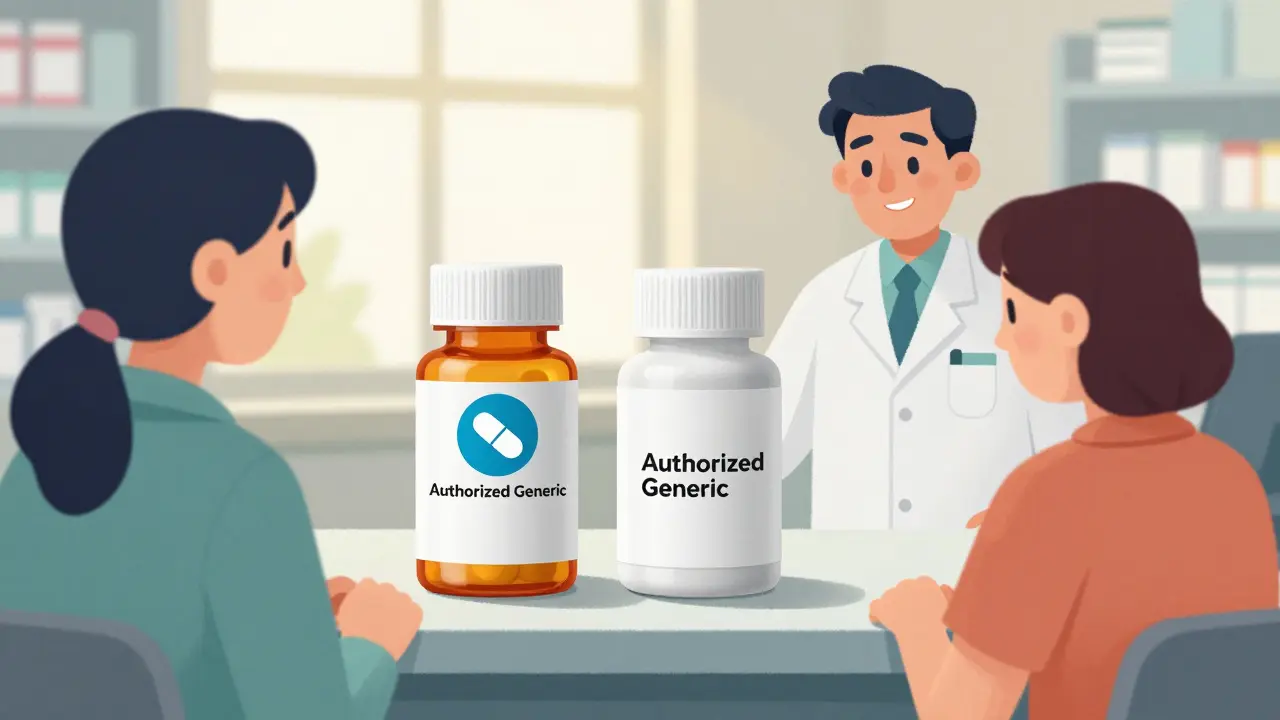
When a blockbuster drug loses its patent, most people assume the brand disappears and is replaced by cheap generics. But that’s not always what happens. In many cases, the same company that made the original drug - the one with the familiar logo and packaging - starts selling an identical version under a different name and at a much lower price. This isn’t a mistake. It’s a calculated move. And it’s called an authorized generic.
What Exactly Is an Authorized Generic?
An authorized generic is the exact same drug as the brand-name version. Same active ingredients. Same inactive ingredients. Same pills, same capsules, same manufacturing process. The only difference? No brand name on the label. Sometimes, the color or shape changes slightly, but the medicine inside is identical. It’s made by the original brand company - or licensed to them - and sold under the brand’s own New Drug Application (NDA) with the FDA. That means it doesn’t go through the usual generic approval process. It skips the wait. It skips the guesswork. And it hits the market faster than any traditional generic could.Think of it like this: If you’ve been taking Lipitor for years, and suddenly a generic version shows up, you might wonder - is this really the same? What if the fillers are different? What if it doesn’t work as well? An authorized generic removes that doubt. It’s the exact same drug you’ve always trusted, just without the brand name.
Why Do Brand Companies Do This?
You’d think a company would want to hold onto its brand as long as possible. After all, that’s where the profit is. But when a patent expires, the brand’s sales can drop by 80-90% in just one year. That’s not a minor dip. That’s a financial earthquake. So instead of letting all that money go to competitors, they create their own version of the generic - and sell it themselves.This isn’t charity. It’s strategy. Here’s how it works:
- They protect their revenue. Even if they can’t charge the brand price anymore, they still capture a chunk of the market by offering the same drug at a lower cost.
- They undercut the competition. When a generic company gets that 180-day exclusivity under the Hatch-Waxman Act, they’re the only one allowed to sell the generic. That gives them a monopoly. But if the brand company launches an authorized generic during that window, they’re now competing directly with the first generic. Prices drop faster. Profits for the generic company shrink. And the brand company keeps some of the market.
- They control the quality. Traditional generics can vary slightly in inactive ingredients. For some drugs - especially those with narrow therapeutic windows like blood thinners or seizure meds - even small changes can matter. An authorized generic eliminates that risk. Patients get continuity. Doctors feel confident. Pharmacies don’t have to switch prescriptions.
For example, when Pfizer launched the authorized generic of Celebrex (celecoxib) under its Greenstone subsidiary, they didn’t just lose customers - they kept them. Same pill. Same effectiveness. Same side effects. Just a different label. And a lower price.
The Timing Is Everything
The timing of these launches isn’t random. Data from 2010 to 2019 shows that 75% of authorized generics were launched after generic competition had already started. That’s reactive. Defensive. But recent trends tell a different story. Between 2020 and 2023, more companies are launching authorized generics before the first generic even hits the market. That’s not defense anymore. That’s offense.Why? Because they’re trying to scare off competitors. If a generic company knows a brand manufacturer is ready to drop an identical product at the same time, they might think twice about investing millions to challenge the patent. Why risk it if the brand will just match your price and undercut you?
And here’s the kicker: In markets with the 180-day exclusivity period, about 70% of authorized generics were launched before or during that window. That’s not coincidence. That’s precision targeting. The brand company isn’t waiting to see what happens. They’re setting the rules.
Who Benefits?
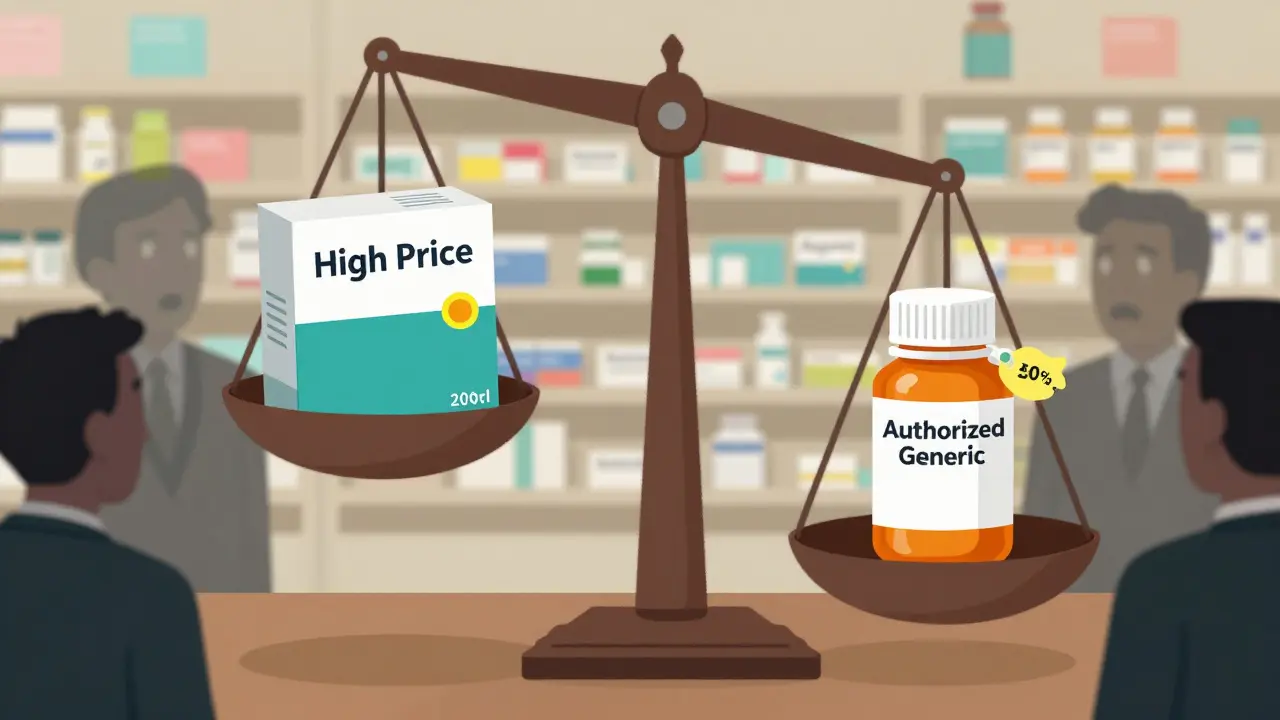
At first glance, this looks like a trick. A big pharma company playing both sides. But the real winners? Patients and payers.The Federal Trade Commission found in 2011 that when authorized generics enter the market during the exclusivity period, prices drop faster and stay lower. That means cheaper prescriptions for consumers. Lower costs for insurers and Medicare. More people get access to the drugs they need.
And patients? They prefer them. A 2005 Roper survey showed over 80% of Americans wanted the option of an authorized generic. Why? Because they know it’s the same drug. No uncertainty. No worry about whether the generic will work. Just the same medicine, cheaper.
For drugs where consistency matters - like epilepsy treatments, thyroid meds, or anticoagulants - that peace of mind is priceless.
It’s Not Just About Pills
This strategy is evolving. Some companies are now offering authorized generics through specific channels - like mail-order pharmacies or certain retail chains - to avoid direct price comparisons with their own branded product. It’s still the same medicine. But they’re segmenting the market. The brand stays for patients who don’t mind paying more. The authorized generic targets those who do.And it’s not just small molecules anymore. As biologics - complex drugs like Humira or Enbrel - start losing patent protection, companies are already looking at how to apply this model to biosimilars. Could we see "authorized biosimilars" soon? It’s a logical next step. The same logic applies: control the narrative. Control the supply. Keep the revenue.
What This Means for You
If you’re taking a brand-name drug that’s about to go generic, don’t assume the cheapest option is always the best. Ask your pharmacist: Is there an authorized generic available? It might be the same exact pill, just cheaper. No need to switch to an unknown brand. No risk of formulation changes. Just a better price.And if you’re a patient who’s been on a drug for years - especially one that’s critical to your health - you might want to stick with the authorized version. It’s not just about cost. It’s about consistency. About trust. About knowing your medicine hasn’t changed.
Final Thought: It’s Not a Loophole. It’s a Business.
Brand companies don’t launch authorized generics because they’re being nice. They do it because it’s smart. It’s calculated. It’s how they survive when patents expire. But in doing so, they’ve created a rare win-win: they keep some revenue, patients get lower prices, and the system stays stable.This isn’t a trend that’s fading. It’s becoming standard. And if you’re not asking about authorized generics, you might be paying more than you need to.
Are authorized generics the same as regular generics?
No. Regular generics only need to prove they’re bioequivalent to the brand - meaning they have the same active ingredient and work the same way. But they can use different inactive ingredients, which sometimes affects how the drug is absorbed. Authorized generics are made by the brand company and contain the exact same ingredients - active and inactive - as the original. They’re not just similar. They’re identical.
Why are authorized generics cheaper than the brand but not as cheap as regular generics?
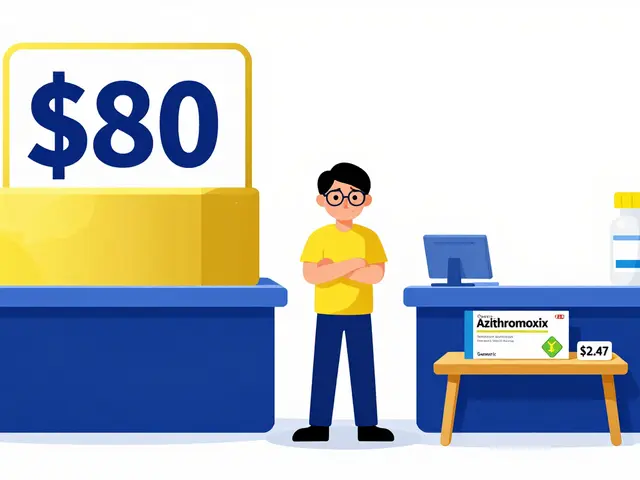
Because they’re made by the original manufacturer, they don’t have the same cost-cutting pressures as third-party generics. They still use the same facilities, same quality controls, same packaging lines. That means their prices are lower than the brand but not always as low as generics made by companies that specialize in low-cost production. Still, they’re almost always cheaper than the brand - often 20-50% less.
Can I ask my doctor to prescribe an authorized generic?
Yes. Your doctor can write the prescription for the generic version of the drug, and your pharmacist can fill it with the authorized version if it’s available. You don’t need to ask for it by name - just make sure your pharmacist knows you’re open to the authorized generic. Many pharmacies automatically substitute it if it’s cheaper and available.
Do authorized generics affect how insurance covers my drug?
Usually, they help. Insurance plans often have lower copays for generics, and authorized generics count as generics. That means you’ll pay less out of pocket. Some plans even prefer them because they’re the exact same drug - reducing the chance of treatment disruption or adverse reactions.
Is there a list of drugs with authorized generics?
Yes. Websites like GoodRx and the FDA’s Orange Book list authorized generics. You can also ask your pharmacist. Popular ones include Celebrex (celecoxib), Concerta (methylphenidate ER), Colcrys (colchicine), and Pravachol (pravastatin). If your drug is on the list, the authorized version is often available at major pharmacies.

10 Comments
Let me tell you something about authorized generics that no one’s talking about. The brand companies don’t just launch these to ‘help patients’-they’re preemptively crushing competition before it even gets off the ground. You think it’s about consistency? Nah. It’s about control. They own the manufacturing line, the supply chain, the distribution network. When they drop an authorized generic, they’re not just competing-they’re monopolizing the space under the guise of patient safety. And guess who gets stuck with the bill? The insurers. The Medicare system. The middle-class families who think they’re saving money but are really just being funneled into a corporate-designed trap. The FDA calls it ‘identical,’ but identical doesn’t mean interchangeable when you’re talking about a company that controls every variable. This isn’t innovation. It’s economic suffocation dressed up as transparency.
so like… if the drug is the exact same why does it cost less? like… i dont get it. are they just lying about the ingredients? or is it a scam? i mean, i’ve been on celebrex for years and now i see this ‘authorized generic’ and i’m like… is this the same pill? or is it like… the same pill but with less filler? or more? i’m confused. also, why does my pharmacy never mention it? is it because they get kickbacks from the brand? i feel like i’m being gaslit by big pharma.
There’s something profoundly elegant about this strategy, honestly. It’s not just business-it’s systems thinking. The brand company recognizes that the moment a patent expires, the market doesn’t just shift-it fractures. And instead of letting that fracture become a chasm of uncertainty, they offer continuity. They give people the drug they know, the formulation they trust, the experience they’ve built their health around-just without the price tag of branding. It’s not manipulation; it’s stewardship. Think of it as the pharmaceutical equivalent of a family restaurant that keeps its secret recipe but drops the name off the menu to stay affordable. No gimmicks. No obfuscation. Just integrity wrapped in pragmatism. And yes, it’s self-serving-but self-serving doesn’t mean selfish. Sometimes, the most ethical thing a corporation can do is keep its own product alive in a way that benefits everyone but itself.
Authorized generics? More like authorized exploitation. This is how Big Pharma rigs the game. They patent the drug, milk it for 20 years, then say, ‘Oh, we’re gonna make a cheaper version so we don’t lose money!’ But here’s the catch-they don’t let anyone else make it. They own the patent on the manufacturing process too. They control the raw materials. They have exclusive access to the FDA’s fast-track approval. And they use that to block every other generic company from entering the market. This isn’t competition. It’s a monopoly with a different label. And if you think patients are benefiting, you’re not looking at the data. The price drops? Sure. But only until the brand’s version hits the shelves. Then it stabilizes. Then it creeps back up. They’re not lowering prices-they’re controlling them.
OMG this is so helpful!! I had no idea authorized generics even existed!! I’ve been paying $120 for my thyroid med and just found out the authorized version is $35 at my local pharmacy. I’m crying. Like, seriously. My pharmacist didn’t mention it because I never asked. But now I’m telling everyone I know. If you’re on any long-term med, please, PLEASE ask your pharmacist. It’s not magic. It’s just the same pill. And you deserve to pay less. You’re not being silly for wanting to save money. You’re being smart. 💕
I’ve been reading about this and I’m convinced this is all part of the globalist agenda. The same corporations that make the brand drugs are also the ones behind the CDC and the WHO. They want you to think you’re getting a deal, but they’re actually testing how fast people will switch to ‘identical’ drugs so they can later force mandatory switches during health crises. They’re conditioning us. This isn’t about cost-it’s about control. And if you think this is coincidence that authorized generics appeared right after the pandemic? Think again. They’re building infrastructure for the next phase. Wake up.
Oh, the audacity. The sheer, unmitigated gall of these pharmaceutical titans. To take the very medicine that once bore their sacred name-the one that patients wept over, that families relied on, that doctors swore by-and strip it of its dignity, its legacy, its identity… only to sell it back to the same people at a discount, as if to say, ‘Here, take what was yours, but now it’s humble.’ It is not strategy. It is sacrilege. The brand was not merely a label-it was a covenant. And now, they have broken it. Not with malice, but with cold, calculating, corporate indifference. I weep for the trust that has been commodified. I weep for the patients who believe they are being helped, when in truth, they are being pacified. This is not progress. It is elegy.
Let’s cut through the noise. Authorized generics aren’t a loophole-they’re a lifeline. And the fact that companies are launching them *before* the first generic hits? That’s not predatory. That’s visionary. Think about it: if you’re a small generic manufacturer, you invest millions to challenge a patent. You wait. You hope. You prepare. Then-bam-the brand drops an identical product at the same time. Suddenly, your 180-day monopoly is gone. Your entire business model collapses. So what do you do? You don’t enter the market. You walk away. And that’s okay. Because what we gain? Faster, cheaper access. Less confusion. Fewer formulation switches. Fewer adverse events. This isn’t about ‘winning.’ It’s about reducing systemic friction. The real villain here isn’t the brand company. It’s the outdated regulatory framework that lets monopolies form in the first place. We need to fix that-not demonize the people trying to make the system work better.
As someone who works in Canadian health policy, I find this phenomenon fascinating from a comparative standpoint. In Canada, we don’t have the same 180-day exclusivity window, and our generic market operates under a different regulatory model. But what’s striking is how similar the outcomes are: patients benefit from price reductions, prescribers report fewer discontinuities, and formularies prefer these products. The ethical tension is real, of course-the tension between corporate self-interest and public good-but the empirical evidence is clear. In jurisdictions with transparent pricing and robust generic procurement, authorized generics reduce overall drug expenditures without compromising safety. The real question isn’t whether this is ‘fair’-it’s whether we can replicate this model without the predatory timing. That’s where policy innovation needs to go.
Simple truth: if the drug is identical, why does the brand still exist? Answer: because people are lazy. They don’t want to switch. They don’t want to ask questions. They don’t want to think. So the company gives them two options: the expensive one they know, and the cheap one they’re scared of. And guess which one they pick? The expensive one. The brand isn’t dying. It’s being propped up by human inertia. The authorized generic isn’t a gift-it’s a trap. A trap designed to make you feel smart for choosing the cheaper option, while the company keeps the loyal customers paying full price. It’s psychological pricing. And it’s working.