
14 Jan |
12:05 PM
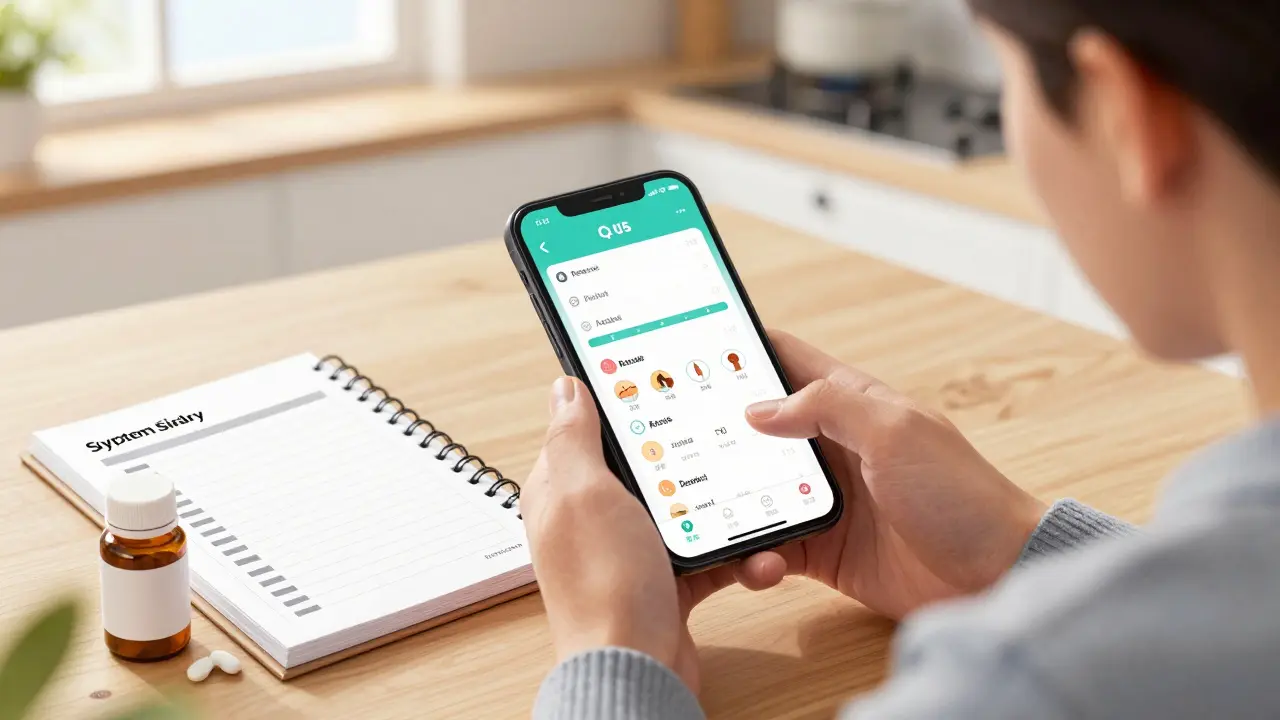
When you start a new medication, it’s normal to wonder: Is this feeling because of the drug? Dizziness after taking blood pressure pills? Nausea after a new antibiotic? A rash that showed up two days after starting a painkiller? These aren’t just inconveniences-they could be signs of a drug reaction. But telling the difference between a side effect and something more serious is hard, especially when your doctor only sees you for 10 minutes. That’s where a symptom diary comes in. Not a vague journal. Not a scribbled note. A real, structured record that turns guesswork into evidence.
Why a Symptom Diary Matters
Your body doesn’t always tell you clearly when a drug is causing trouble. Symptoms like fatigue, brain fog, or a mild rash can look like stress, aging, or another condition. Without a clear timeline, doctors can’t tell if the drug is the culprit. In one case from 2023, a patient’s dizziness was blamed on low blood sugar-until they showed a diary proving it only happened 30 minutes after taking their new diabetes med. The dose was lowered, and the dizziness vanished. Studies show that patients who keep detailed symptom diaries help doctors spot real drug reactions 83% faster than those who rely on memory. The FDA and NIH both say this isn’t optional for serious reactions-it’s essential. If you’re on multiple meds, have a chronic condition, or are older (over 65), your risk of drug interactions goes up. A diary isn’t just helpful. It’s a safety net.What to Record: The 9 Must-Have Details
A good symptom diary isn’t about writing everything. It’s about recording the right things. The National Institute on Aging’s guidelines list nine key data points. Skip any, and you risk missing the link between the drug and the symptom.- Date and time of medication taken - Down to the minute. Not “around 8 a.m.” Write “08:17”. Use your phone’s clock. Don’t trust your memory.
- Exact dosage and route - Was it 5 mg or 10 mg? Was it swallowed, injected, or applied as a patch? Write it exactly as the label says.
- All other meds and supplements - Including ibuprofen, vitamin D, fish oil, or herbal teas. Many reactions happen because of combinations, not single drugs.
- Exactly what you felt - Not “felt bad.” Say “sharp pain on the left side of my head, behind the eye, like a stabbing pressure.” Location matters.
- When the symptom started - How long after taking the drug? 15 minutes? 3 hours? 2 days? Write it down immediately.
- How long it lasted - Did it go away in 20 minutes? Last all day? Come and go?
- What else was happening - Were you stressed? Exercising? In a hot room? Eating something new? Environmental triggers can mask or mimic drug reactions.
- What you did to fix it - Did you lie down? Take an antihistamine? Drink water? Record it. It helps doctors know what works.
- How bad it was - Use the CTCAE scale: Grade 1 (mild, no interference), Grade 2 (moderate, limits daily activity), Grade 3 (severe, medical intervention needed), Grade 4 (life-threatening), Grade 5 (death). You don’t need to be a doctor. If it made you miss work, it’s Grade 2 or higher.
Paper vs. Apps: Which Works Better?
You can use a notebook. But most people quit within 72 hours. Why? It’s too slow. Too messy. Too easy to forget. Apps like Medisafe, CareClinic, and MyTherapy are designed for this. They auto-timestamp entries. You pick symptoms from a list. You can add photos of rashes or swelling. They even send reminders to log your meds and symptoms. A 2023 study found that people using apps kept their diaries 2.5 times longer than those using paper. But here’s the catch: not all apps are equal. Make sure yours lets you record all nine data points. If it doesn’t have a field for “time of drug intake” or “concurrent medications,” it’s not good enough. Free apps often cut corners. Look for ones used in clinical trials-they follow FDA’s 21 CFR Part 11 rules for data accuracy. If you prefer paper, get a pre-printed template. Hospitals and pharmacies sometimes give them out. Or download one from the NIH website. The key is structure. Blank pages invite chaos.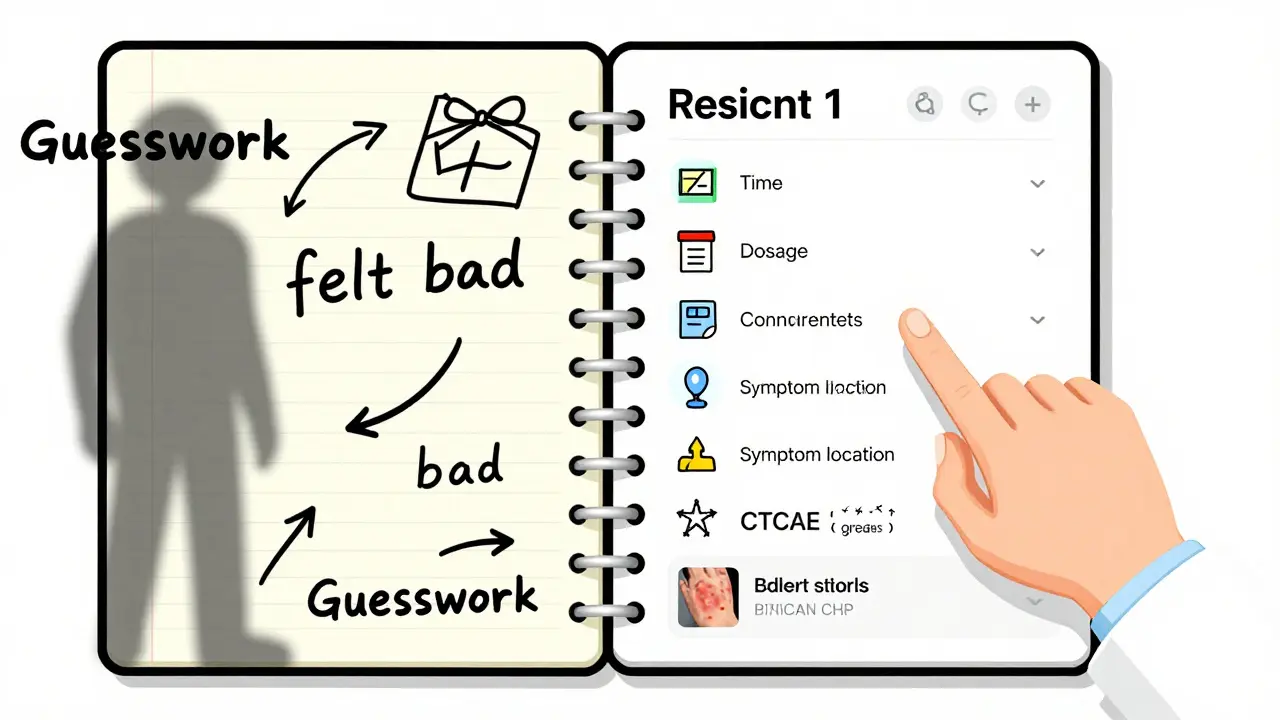
What Not to Do
Most people make the same mistakes.- Don’t log every tiny itch - If you’ve been told a headache is common with this drug, don’t write it down every day. That’s noise. Focus on new, unusual, or worsening symptoms.
- Don’t wait until the end of the day - Memory fades fast. The NIH says symptoms recorded after 48 hours are 40% less accurate. Log within 15 minutes if it’s sudden. If it’s chronic, log at the same time each day.
- Don’t skip the meds you don’t think matter - That “just a little” aspirin or melatonin? It might be the missing link.
- Don’t ignore photos - For skin reactions, a photo taken at the first sign of redness or swelling is worth a thousand words. Save it with the entry.
How to Use It With Your Doctor
A diary only helps if you share it. Don’t wait for your next appointment. Bring it to your next visit-printed or on your phone. Show the pattern. Say: “I started this drug on January 3. On January 5 at 11:23 a.m., I got a rash on my chest that lasted 6 hours. I took no other meds that day. The next day, same thing at 10:45 a.m. After I skipped the pill on January 7, no rash.” That’s a clear signal. One patient on Reddit shared how their neurologist dismissed their dizziness for months-until they showed a 14-day diary matching levodopa doses with symptom spikes. The doctor changed the dosage within 48 hours. Don’t just hand over the diary. Walk them through it. Say: “I think this drug is causing this. Here’s the pattern.” Most doctors will thank you. They’re not mind readers. You’re giving them data they can’t get any other way.
When to Get Help Right Away
Not all reactions are slow. Some are dangerous. If you have any of these, stop the drug and call 999 or go to A&E:- Sudden swelling of the face, lips, or throat
- Difficulty breathing or wheezing
- High fever with rash or blistering skin
- Severe dizziness, fainting, or chest pain
- Yellow skin or eyes, dark urine, or severe stomach pain
What Happens After You Start
Within a week, you’ll notice something: you’re more in control. You stop guessing. You stop blaming yourself. You stop feeling like a burden. You might realize you’ve been taking a drug that’s not helping-and causing more harm than good. Or you might discover a harmless side effect you can manage. Either way, you’re not just a patient. You’re a partner in your care. The FDA is now pushing for patient diaries to be part of routine care. In 2024, they started a pilot program that links diary data directly to electronic health records. That means your notes could automatically flag potential drug reactions before your doctor even sees you. This isn’t science fiction. It’s happening now. And you can be part of it.Start Today
You don’t need to be perfect. You just need to start. Pick one drug you’re taking that you’re unsure about. Open your phone’s notes app. Or grab a notebook. Write down:- Drug name
- Dosage
- Time taken
- Any new symptom you’ve noticed
- When it happened


9 Comments
Started my diary yesterday after reading this. Took my blood pressure med at 07:42 and got that weird buzzing in my ears by 08:15. Logged it. Didn’t think it mattered. Turned out it’s a known side effect. Feels good to have proof, not just guesswork.
Thanks for the push. I’ll keep going.
You know, in India, we’ve got this thing called ‘jugaad’-fixing things with duct tape and hope. But this? This isn’t jugaad. This is science dressed in a notebook. I used to scribble ‘felt weird’ and call it a day. Now I write ‘10 mg amlodipine, 08:03, tingling left hand, lasted 47 min, no other meds, stress level: low.’
My pharmacist actually asked me if I was a med student. I told her I’m just a guy who stopped trusting his gut and started trusting his phone. Best decision I ever made.
While I appreciate the intent behind this piece, I must emphasize that the structural integrity of the data-collection protocol is paramount. The utilization of timestamped, granular, and non-ambiguous inputs-particularly in compliance with 21 CFR Part 11-is not merely advisable; it is a regulatory imperative for longitudinal clinical validity.
Moreover, the conflation of anecdotal correlation with causal attribution remains a persistent methodological flaw in patient-reported outcomes. One must exercise extreme caution in interpreting temporal proximity as mechanistic causation.
My grandma started this after her heart med mix-up last year. She didn’t even know what CTCAE was, but she took pics of her swollen ankles every morning. Took it to her doc. Turns out the diuretic was making her kidneys cry. They switched her meds in two days.
She’s 82. No smartphone. Just a notebook, a pen, and a stubbornness that could move mountains. If she can do it, you can too. No excuses.
Why are we letting Big Pharma control our bodies? You think they want you to track side effects? No! They want you to keep taking the pill until you’re in the hospital-then sell you another one! This diary nonsense? It’s a trap. They’ll use your data to fine-tune the poison.
Stop logging. Start questioning. And stop trusting doctors who don’t even know what’s in your supplements.
Interesting. But you didn’t mention the fact that 78% of people who keep symptom diaries are already hypochondriacs who over-medicate. Also, why is the FDA suddenly interested? Coincidence that this was published right after the new drug patent cliff? I think we’re being manipulated into becoming data points for insurance algorithms.
Also, your grammar is inconsistent. You use ‘you’re’ incorrectly in three places.
This is the most helpful thing I’ve read in months. I’ve been blaming myself for brain fog for a year. Turns out it’s my new antidepressant. I logged it for 10 days, showed it to my doctor, and we cut the dose. I feel like myself again.
You’re not just keeping a diary-you’re reclaiming your body. Thank you.
So… you’re telling me that if I record every sneeze after taking vitamin D, I can prove it’s causing my migraines? Or is this just a glorified version of astrology with more decimal points?
Also, who approved the CTCAE scale for laypeople? That’s a scale used in oncology trials-not for people who think their tea is making them dizzy.
America’s finest medical minds say this is essential. Meanwhile, in the real world, people are dying because their meds are made in China. This diary? It’s a distraction. What we need is a ban on foreign pharmaceuticals. No more pills from India. No more apps. Just American-made drugs and common sense.
And if you’re still using a phone to log symptoms? You’re already part of the problem.