
For decades, cancer treatment meant one thing: chemotherapy. Harsh. Broad. Toxic. It attacked every fast-growing cell-cancerous or not. But today, something different is happening. Doctors aren’t just treating tumors based on where they are in the body. They’re treating them based on what’s happening inside the DNA of the cancer itself. This is targeted therapy-precision medicine built on tumor genetics.
What Exactly Is Targeted Therapy?
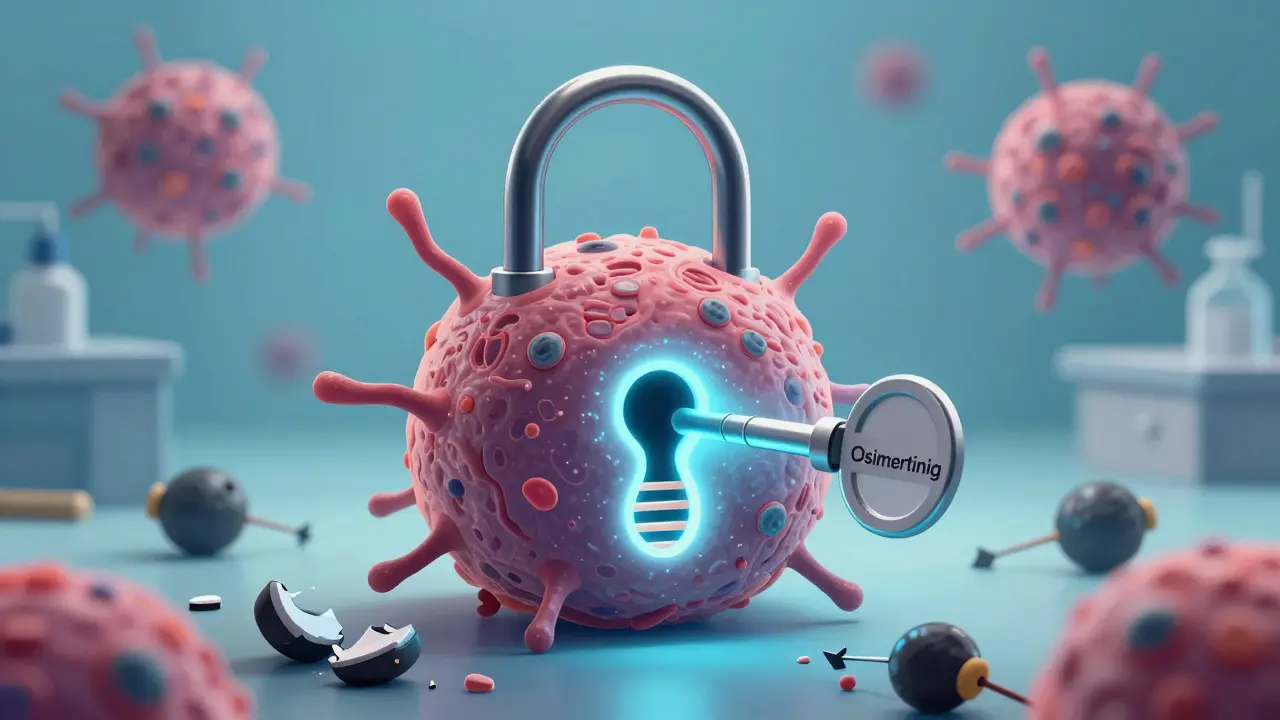
Targeted therapy isn’t about blasting cells with poison. It’s about finding a specific flaw in a cancer cell’s DNA and hitting it with a drug designed to exploit that flaw. Think of it like picking a lock with the right key instead of smashing the door down.
These drugs target proteins or signals that cancer cells rely on to grow and spread. For example, if a lung tumor has a mutation in the EGFR gene, a drug like osimertinib can block that faulty signal. The cancer can’t grow as fast. Normal cells, which don’t have that mutation, are mostly left alone.
The first big win came in 2001 with imatinib (Gleevec) for chronic myeloid leukemia. Before imatinib, survival rates hovered around 20-30%. After? Nearly 90% of patients were alive one year later. That wasn’t just progress-it was a revolution.
How Do Doctors Know Which Therapy to Use?
You can’t just guess. You need to know what’s driving the cancer. That’s where genomic testing comes in.
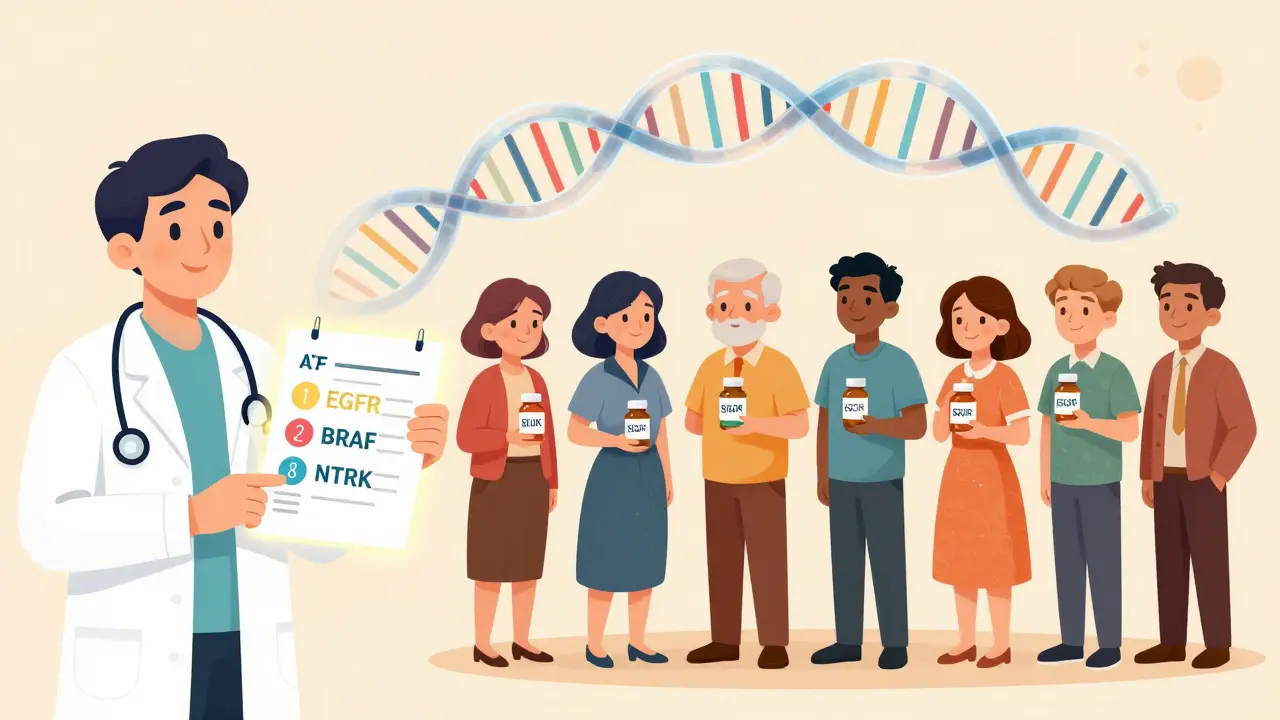
Doctors take a sample of the tumor-either from a biopsy or sometimes through a blood test called a liquid biopsy-and send it for next-generation sequencing (NGS). These tests look at hundreds of genes at once. Panels like FoundationOne CDx or MSK-IMPACT check for mutations in 300 to 500 cancer-related genes.
The goal? Find one of these actionable targets:
- EGFR mutations in lung cancer
- ALK or ROS1 fusions in lung or thyroid cancer
- BRAF V600E mutations in melanoma or colorectal cancer
- HER2 amplifications in breast or stomach cancer
- NTRK fusions in rare tumors across many organs
When these mutations are found, matching drugs can shrink tumors dramatically. For example, larotrectinib works in 75% of patients with NTRK fusions-no matter if the cancer started in the lung, colon, or salivary gland. That’s called histology-agnostic treatment: treating based on genes, not location.
Why Is This Better Than Chemotherapy?
Let’s compare real numbers.
In EGFR-mutant non-small cell lung cancer, chemotherapy gives patients about 10 months before the cancer starts growing again. Osimertinib? Almost 19 months. That’s nearly double the time before progression.
Side effects are also drastically lower. Chemotherapy often causes severe nausea, hair loss, and fatigue. About half of patients on chemo get grade 3 or 4 toxicities-serious enough to require hospitalization. With targeted therapy? That number drops to 15-30%.
One patient with stage IV lung cancer wrote on a cancer forum: “After starting osimertinib, my tumor shrank 80% in eight weeks. I could cook dinner. Walk the dog. I didn’t feel like I was dying every day.”
That’s the human side of the data. People aren’t just living longer-they’re living better.
But It’s Not a Cure-And Not Everyone Qualifies
Here’s the hard truth: targeted therapy doesn’t work for everyone.
Only about 10-15% of solid tumors have currently actionable genetic targets. And even when a target is found, resistance almost always develops. In 70-90% of cases, the cancer finds a way around the drug within 9 to 14 months.
Why? Tumors are smart. They’re not one uniform mass. They’re made of many different cell populations. One part might have the EGFR mutation. Another part doesn’t. The drug kills the EGFR group-but the others survive and grow back.
And here’s another bottleneck: access. Only 13.8% of cancer patients currently qualify for genomically matched therapies, according to AACR Project GENIE. Many don’t get tested at all. In the U.S., about 65% of advanced cancer patients get genomic testing. In Europe, it’s 22%. In Asia, just 8%.
Insurance is another hurdle. One in two patients reported denials for genomic testing. Some wait over a month for approval. And even when they get the drug, the cost is brutal-$15,000 to $30,000 per month. That’s four to six times more than chemo.
A Reddit user with an NTRK fusion wrote: “My tumor is rare. My insurance says larotrectinib isn’t ‘standard’ for my cancer type. But the data says it works in 75% of cases, no matter where it started. Why does that not count?”
What’s Next? The Future of Precision Oncology
The field is moving fast.
Liquid biopsies are now FDA-approved to track resistance mutations in real time. Instead of waiting for a scan to show growth, doctors can detect new mutations in the blood months earlier. That means switching drugs sooner-before the cancer takes over.
Researchers are also trying to tackle the hardest targets: tumor suppressor genes like TP53 and PTEN. These are broken in 80% of cancers-but we don’t have drugs to fix them yet. Restoring lost function is much harder than blocking an overactive signal.
AI is helping too. IBM Watson for Oncology matched treatment plans to molecular tumor boards with 93% accuracy in a 2024 study. That’s huge for community hospitals that don’t have access to specialists.
The FDA is also expanding how drugs are approved. Pembrolizumab was approved in 2018 for any tumor with MSI-H-no matter the organ. That was the first tissue-agnostic approval. More are coming.
The Real Barrier Isn’t Science-It’s Equity
The science is advancing. The tools exist. The data is clear.
But who gets to benefit?
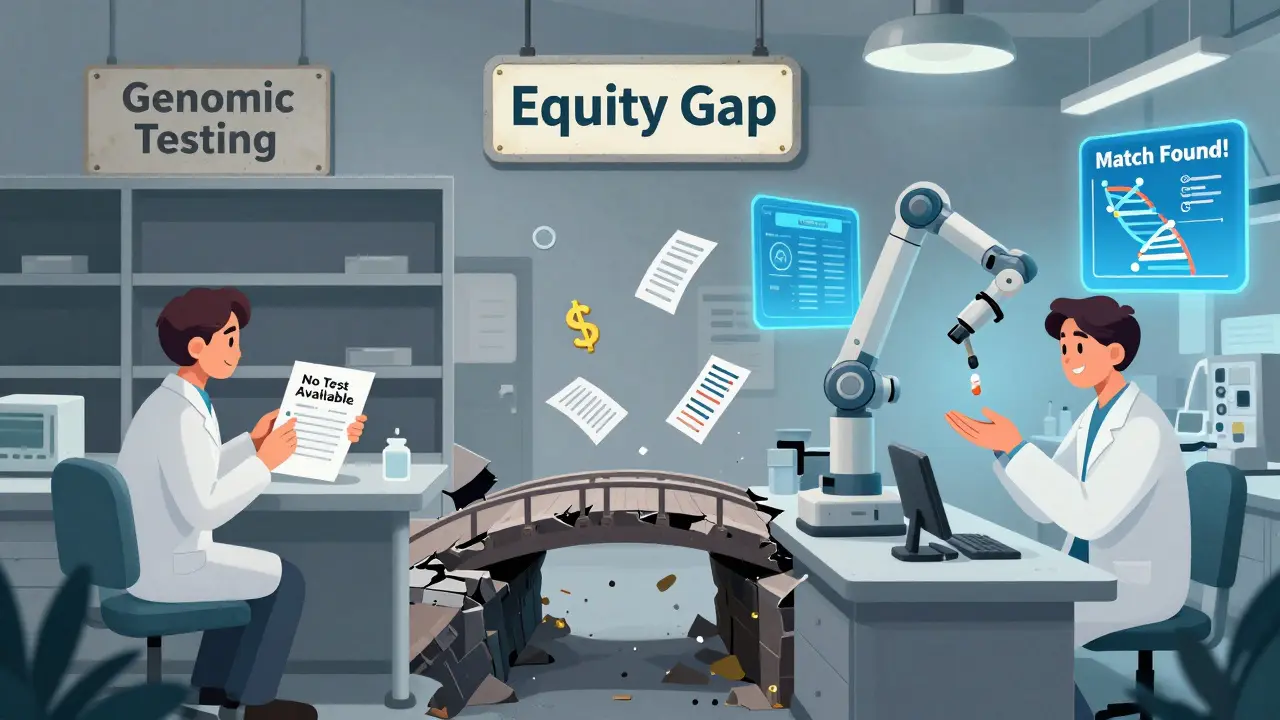
Studies show Black, rural, and low-income patients are far less likely to receive genomic testing. The NCI’s RESPOND initiative is now investing $195 million to fix this. Because precision medicine only works if it’s precise for everyone.
Community oncologists want to do better. But only 32% of community hospitals have molecular tumor boards. Academic centers? 89%. That gap means patients in small towns might miss out on life-extending treatments simply because their local clinic doesn’t have the infrastructure.
Programs like the Personalized Oncology Alliance are stepping in-offering free molecular tumor board reviews to over 200 community practices. That’s a lifeline.
What Should You Do If You’re Facing Cancer?
If you or someone you love has been diagnosed with advanced cancer, ask these questions:
- Has my tumor been tested for genomic mutations?
- Which panel was used-FoundationOne, MSK-IMPACT, or something else?
- Was the test covered by insurance? If not, is there a financial aid program?
- Can I get a second opinion from a molecular tumor board?
- Are there clinical trials for my specific mutation?
Don’t assume your oncologist has already ordered the test. Push for it. If they say it’s not necessary, ask why. And if cost is an issue, organizations like CancerCare and Patient Advocate Foundation can help with appeals and grants.
Targeted therapy isn’t magic. It’s not for everyone. But for those who qualify, it’s changed the game-from a death sentence to a manageable condition. And the more we learn, the more people will benefit.
Is targeted therapy the same as immunotherapy?
No. Targeted therapy attacks specific genetic mutations inside cancer cells, while immunotherapy helps your immune system recognize and kill cancer cells. They’re different tools. Sometimes they’re used together-for example, a BRAF inhibitor plus an immune checkpoint blocker in melanoma. But they work in completely different ways.
Can targeted therapy cure cancer?
In rare cases, yes-especially in blood cancers like chronic myeloid leukemia with imatinib. But for most solid tumors, targeted therapy controls the disease rather than curing it. It turns aggressive cancers into chronic conditions, like diabetes or high blood pressure, where you take a daily pill to keep things stable. Long-term survival is now possible, but ongoing treatment is usually needed.
How long does genomic testing take?
Typically, it takes 14 to 21 days from the time the tumor sample is sent to the lab. Some centers offer faster turnaround-down to 7 days-for urgent cases. But delays happen, especially if insurance approval is needed or if the sample doesn’t have enough tumor DNA. Always ask for a timeline when the test is ordered.
What if my tumor has a mutation but no drug exists for it?
That’s more common than you think. About 20-30% of genomic reports show variants of unknown significance (VUS)-mutations we don’t yet understand. Even if a mutation is known, a drug might not be approved for your cancer type. In those cases, clinical trials are your best option. Many trials now enroll patients based on genetics, not tumor location. Ask your oncologist about trials matching your mutation.
Why are targeted therapies so expensive?
They’re expensive because they’re complex to develop, test, and manufacture. Each drug targets a small group of patients-sometimes only a few hundred per year. That means the cost of R&D has to be spread across fewer people. Plus, many are patented and have no generic alternatives yet. Insurance often denies coverage, especially for off-label use. Financial aid programs exist, but navigating them takes time and support.
Can I get targeted therapy without a biopsy?
Sometimes. Liquid biopsies-blood tests that detect tumor DNA floating in the bloodstream-are now approved for certain cancers like lung and colorectal. They’re less invasive and can be done repeatedly to track changes. But they’re not always as accurate as tissue biopsies, especially for early-stage cancer. Most experts still recommend tissue testing first, then using liquid biopsies to monitor progress or resistance.
Final Thoughts
Targeted therapy is one of the most significant advances in cancer care in 50 years. It’s not perfect. It’s not available to everyone. But for the right person, at the right time, it can mean the difference between months and years-and between suffering and living.
The future isn’t about one-size-fits-all treatment. It’s about matching the drug to the DNA. And that’s a future worth fighting for.


8 Comments
Just wanted to say this post gave me actual hope. My mom’s been on osimertinib for 18 months now - she’s gardening again, laughing at dumb TikToks, and even started knitting. 🌸 It’s not a cure, but it’s a gift. Thank you for writing this with so much heart.
Let’s be brutally honest: this ‘precision medicine’ narrative is corporate propaganda dressed in lab coats. The real agenda? To sell $30k/month pills to the wealthy while the rest of us are left with chemo and silence. You call it progress? I call it capitalism with a stethoscope.
USA thinks it owns science now? My cousin in Lagos got diagnosed last year - no test, no drug, no hope. But you guys post about NTRK fusions like it’s a Netflix documentary. Meanwhile, African hospitals still use 1990s machines. This ain’t medicine - it’s colonialism with a DNA sequencer.
If you or someone you love is facing this, please don’t give up. Ask for the test. Ask for help. There are nonprofits that cover costs, and patient navigators who will walk you through the maze. You’re not alone. I’ve seen it - people get matched, get better, and then turn around and help others. That’s the real breakthrough.
Okay, but why is it that every time a drug works for 75% of people, the FDA still makes you jump through 14 hoops to get it? And don’t even get me started on insurance! I’ve seen people wait 6 weeks for approval-while their tumors grow! This isn’t science-it’s a bureaucratic nightmare with a price tag bigger than my student loan!
As someone who works in global health policy, I must emphasize that the disparity in access is not merely logistical-it is ethical. The data is clear, the tools exist, yet systemic inequities prevent marginalized populations from benefiting. This is not a failure of innovation; it is a failure of prioritization.
Interesting how everyone ignores the elephant in the room: targeted therapy is just the latest phase of medical commodification. The same people who profit from chemo now profit from these drugs-only now they’ve rebranded it as ‘personalized.’ The science is real, but the system? It’s rigged. And yes, I’ve seen patients die because their insurer said ‘off-label.’ Don’t be fooled by the glossy brochures.
It’s funny… we’re decoding the DNA of cancer, but we still can’t decode why we let profit decide who lives and who doesn’t. Maybe the real mutation isn’t in the tumor-it’s in the system.