
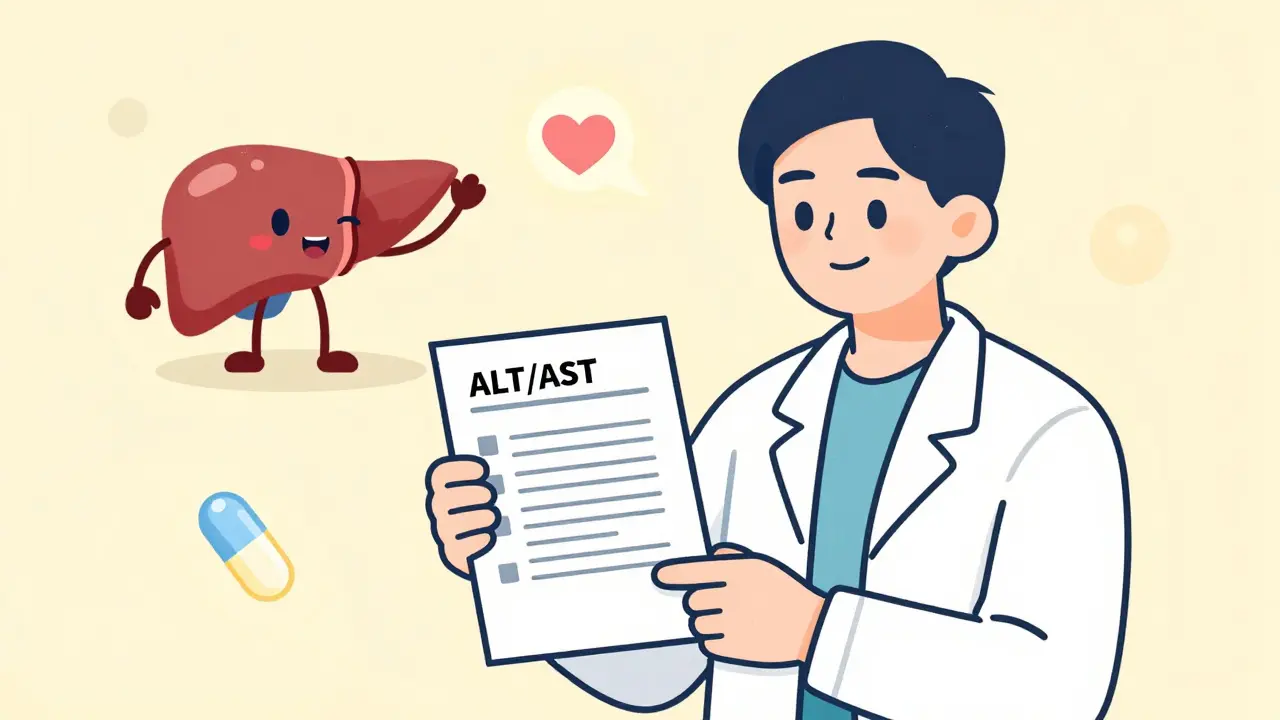
When you start taking a statin to lower your cholesterol, the last thing you want to hear is that your liver enzymes are high. It sounds scary. It sounds like your liver is damaged. But here’s the truth: statin-related liver enzyme elevations are almost never dangerous. In fact, they’re usually harmless - and stopping your statin over them might be riskier than keeping it.
What Does It Mean When Liver Enzymes Go Up?
Your liver makes enzymes like ALT (alanine aminotransferase) and AST (aspartate aminotransferase). These help process nutrients and detoxify your blood. When a blood test shows them higher than normal, it doesn’t mean your liver is failing. It just means the enzymes are leaking into your bloodstream - often because liver cells are stressed, not dead. With statins, this happens in about 0.5% to 2% of people. Most of the time, the numbers go up slightly - say, from 30 to 80 U/L - and stay there. No symptoms. No jaundice. No pain. Just a lab result that makes you panic. The FDA defines a "significant" rise as ALT or AST more than three times the upper limit of normal. That’s the threshold where doctors might pause the statin. But even then, serious liver injury from statins is extremely rare - less than 1 in 10,000 patients.Why Do Statins Raise Liver Enzymes?
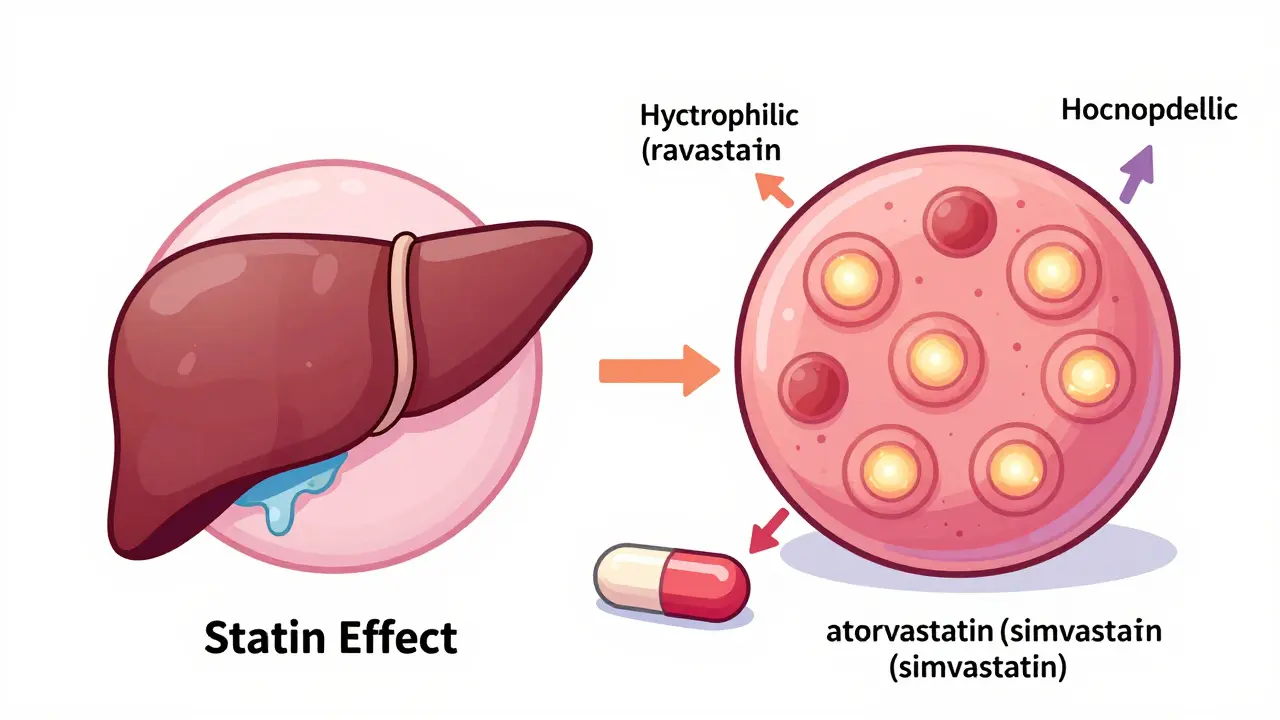
It’s not because statins are toxic. It’s because they interfere with how liver cells handle energy. Statins block an enzyme called HMG-CoA reductase to lower cholesterol. But that same enzyme is involved in making coenzyme Q10, which helps power your mitochondria - the energy factories inside your cells. In some people, especially those taking lipophilic statins like simvastatin or atorvastatin, this disruption causes mild mitochondrial stress. That leads to a small increase in oxidative stress and enzyme leakage. Think of it like a car engine running a little hotter than usual - the parts still work fine, but you see a little more smoke. Hydrophilic statins like pravastatin and rosuvastatin don’t penetrate liver cells as deeply, so they cause fewer enzyme spikes. That’s why switching from atorvastatin to pravastatin often brings enzymes back to normal - not because the first one was toxic, but because the second one is gentler on liver cells.Who’s at Higher Risk?
Not everyone is equally likely to see enzyme changes. Certain factors make it more common:- People over 75
- Those with kidney disease (creatinine clearance under 30 mL/min)
- Patients taking other drugs that interact with statins, like clarithromycin or cyclosporine
- People with a genetic variant called SLCO1B1*5 - this affects how statins enter liver cells
- Those on high-dose statins (80mg atorvastatin, 40mg rosuvastatin)
What Should You Do If Your Enzymes Are High?
Here’s the step-by-step approach most doctors follow now - and it’s backed by the American College of Cardiology and the FDA:- Don’t panic. Most elevations are mild and don’t mean harm.
- Check if you have symptoms. Fatigue, nausea, dark urine, yellow eyes? That’s different. Call your doctor.
- Rule out other causes. Viral hepatitis, alcohol use, or other meds (like acetaminophen or antibiotics) can raise enzymes too. Your doctor should test for these before blaming statins.
- If ALT/AST is under 3x ULN - keep taking the statin. Repeat the test in 4 to 6 weeks. In most cases, the numbers stabilize or drop on their own.
- If it’s over 3x ULN - pause the statin for 4 weeks. Retest. If enzymes return to normal, restart at a lower dose or switch to a different statin.
- Never stop without talking to your doctor. Stopping statins because of a lab number increases your risk of heart attack or stroke - especially if you’ve had one before.
Why Do So Many People Stop Statins Over This?
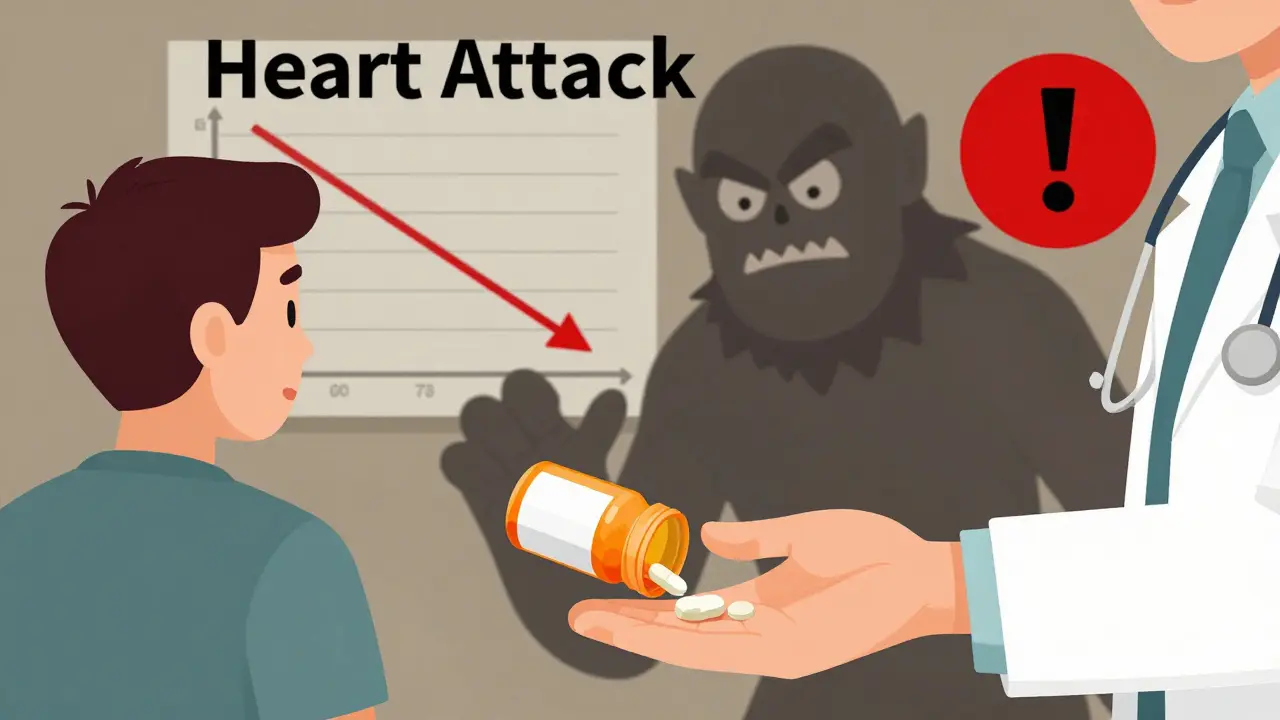
Because they’re scared. A 2021 survey found that nearly 7 out of 10 statin users worried about liver damage. One Reddit user shared how his ALT jumped from 28 to 142 after starting atorvastatin. He stopped the drug, convinced he’d ruined his liver. He didn’t. His enzymes returned to normal within weeks - and his heart risk stayed high. Meanwhile, Mayo Clinic researchers tracked 17 patients who stopped statins because of mild enzyme rises. Five of them had a heart attack or stroke within 18 months. That’s not coincidence. That’s consequence. Doctors are partly to blame. Despite FDA guidelines saying routine liver tests aren’t needed, over a third of primary care providers still order them every 6 months. That’s $1.27 billion a year spent on tests that don’t prevent harm. And every time a patient sees a "high" result, they get anxious - even if it’s normal for them.What About Testing Before You Start?
Yes, get a baseline liver test before starting a statin. But don’t expect it to predict anything. If your enzymes are already high because of fatty liver or alcohol, that doesn’t mean you can’t take statins. In fact, statins may help improve your liver health over time. The only reason to test before starting is to have a reference point. If your ALT was 80 before you started, and it goes to 110 after, that’s not a statin problem - it’s your fatty liver getting worse. You need to address that, not stop the statin.Are Some Statins Safer for the Liver?
Yes. Here’s the reality:| Statin | Typical ALT Elevation Risk | Liver Penetration | Best For |
|---|---|---|---|
| Pravastatin | 0.3% | Low (hydrophilic) | Patients with liver concerns or on other meds |
| Rosuvastatin | 0.4% | Low (hydrophilic) | High LDL, minimal drug interactions |
| Atorvastatin | 0.8% | High (lipophilic) | Strong cholesterol lowering |
| Simvastatin | 1.1% | High (lipophilic) | Lower doses only - avoid with certain drugs |
| Cerivastatin | 2.7% | High | Withdrawn in 2001 - not available |
What’s New in 2026?
A new genetic test called StatinSafety Plus can now check for the SLCO1B1 gene variant that increases liver enzyme risk. It’s 84% accurate. But it’s not for everyone. The cost is high, and unless you’re on a high-dose statin or already have liver disease, it’s not worth it. Meanwhile, researchers are testing coenzyme Q10 supplements to reduce enzyme spikes. In one trial, people who took 200mg daily saw a 43% drop in ALT elevations. But here’s the catch: no one knows if that actually lowers heart risk. The goal isn’t to fix the enzyme number - it’s to prevent heart attacks. And statins do that brilliantly.The Bottom Line
Statin-related liver enzyme elevations are common. They’re rarely dangerous. They’re almost never a reason to stop taking the drug. The real danger isn’t the liver. It’s the heart attack you avoid by staying on your statin. The number needed to treat to prevent one heart attack is 39. The number needed to harm to cause serious liver injury? 1,000. If your enzymes go up - don’t stop. Don’t panic. Talk to your doctor. Rule out other causes. Retest in a month. Most of the time, you’ll find out your liver is fine - and your heart is still protected.Frequently Asked Questions
Can statins cause liver damage?
Serious liver damage from statins is extremely rare - less than 1 in 10,000 users. Most cases of elevated liver enzymes are mild, temporary, and not harmful. Statins do not cause cirrhosis, liver failure, or chronic liver disease. The risk is far lower than the risk of heart attack or stroke if you stop taking them.
Should I stop my statin if my ALT is high?
No - not unless your ALT is more than three times the upper limit of normal and you have symptoms like jaundice or severe fatigue. If your enzymes are mildly elevated but you feel fine, continue the statin and retest in 4 to 6 weeks. Stopping statins for minor enzyme rises increases your risk of heart problems.
Which statin is safest for the liver?
Pravastatin and rosuvastatin have the lowest risk of liver enzyme elevation because they’re hydrophilic and don’t penetrate liver cells as deeply. Simvastatin and atorvastatin carry slightly higher risk, especially at high doses. If you’ve had enzyme spikes before, switching to pravastatin often resolves the issue.
Do I need regular liver tests while on statins?
No. The FDA and major medical groups no longer recommend routine liver tests for people on statins. Only test before starting, and then only if you develop symptoms like nausea, dark urine, or yellow skin. Routine testing causes unnecessary worry and costs billions each year without preventing harm.
Can I take statins if I have fatty liver disease?
Yes - and you should. People with fatty liver disease have a lower risk of statin-induced enzyme spikes than those without it. Statins may even help reduce liver fat and inflammation. Avoiding statins because of fatty liver is a mistake - it increases your heart risk without protecting your liver.



8 Comments
OMG YES. I had my ALT jump from 35 to 110 after starting atorvastatin and I nearly quit meds until my cardiologist laughed and said, 'That's just your liver waving hello.' 🤗 I’ve been on it 3 years now and my heart is fine. Stop listening to Reddit fear-mongers. Statins saved my life. 🚫❤️🩺
Oh, how quaint-the modern medical establishment’s latest placebo-driven dogma. You speak of ‘mild elevations’ as if they were trivial inconveniences, but have you ever considered the cumulative oxidative burden on hepatocytes? The liver is not a disposable organ, and to casually dismiss transaminase flux as ‘harmless’ is not merely irresponsible-it is a betrayal of physiological integrity. One does not casually ignore biomarkers, especially when the pharmaceutical industry has a vested interest in normalization. 📉💊
Hey, I just wanted to say this post is so helpful-seriously, thank you. I’ve been on pravastatin since last year after my enzymes spiked on simvastatin, and switching was a game-changer. No more panic every time I get bloodwork. Also, if you’ve got fatty liver, statins might actually help it. I didn’t know that until I read this. Keep sharing stuff like this. We need more clarity, not fear. 🙌
From a clinical perspective, the key here is risk stratification and dynamic monitoring. The paradigm shift away from routine LFT surveillance aligns with ACC/AHA guidelines predicated on the NNT/NNH calculus-where the number needed to treat for cardiovascular event reduction vastly outweighs the negligible incidence of statin-induced hepatotoxicity. The cognitive bias of anchoring to isolated transaminase elevations without context is a well-documented phenomenon in primary care. Consider this: a 50-unit ALT rise in a 72-year-old with metabolic syndrome is statistically benign if asymptomatic. Re-test. Don’t react. 📊
This is such a needed perspective. I’ve seen too many patients quit statins over minor enzyme changes and then end up in the ER with a heart attack six months later. It’s heartbreaking. The real villain isn’t the drug-it’s the misinformation. Also, I love how you mentioned pravastatin and rosuvastatin. I always recommend those to my older patients with liver concerns. They’re gentle, effective, and don’t cause drama. 🙏❤️
Let’s be real here-this whole ‘don’t panic’ narrative is a beautiful lie wrapped in a white coat. You say it’s rare, but how many people are quietly dropping their meds because they’re terrified? And how many doctors, afraid of liability, still order those useless LFTs every six months just to cover their asses? The system is rigged. The FDA doesn’t care about your liver-they care about your heart because the heart market is worth billions. Meanwhile, your liver’s just a side note in a corporate PowerPoint. And don’t even get me started on CoQ10 supplements-those are just placebo pills with a fancy label. 🤡
Statins? Nah. I don’t trust Big Pharma. My buddy’s uncle’s neighbor’s cousin got liver failure after one of those pills. I don’t care what the ‘science’ says. My body, my rules. If my cholesterol’s high, I’ll eat more avocado and lift weights. That’s real medicine. Not some chemical cocktail designed to keep shareholders happy. 🇺🇸💪
Wait… so you’re telling me the FDA and the AMA are both lying to us? That this whole ‘liver enzymes aren’t dangerous’ thing is just a cover-up so drug companies can keep selling statins? And that the SLCO1B1 test is expensive because they don’t want you to know your genetic risk? 🤔 I’ve been on atorvastatin for 4 years and my ALT’s been 85 the whole time. I’m not taking any chances. I’m switching to red yeast rice. At least that’s ‘natural.’ And if my heart goes? Well… at least my liver’s clean. 😏