
Hyponatremia Risk Calculator for Older Adults
Risk Assessment Tool
This calculator estimates your risk of developing hyponatremia (low sodium levels) while taking an SSRI antidepressant. Based on the article, older adults are at higher risk, especially when taking certain SSRIs and specific combinations.
Your Risk Assessment
Based on information from medical studies cited in the article, your risk level indicates what actions should be taken. For older adults, baseline sodium testing before starting an SSRI and repeat testing at two weeks is recommended.
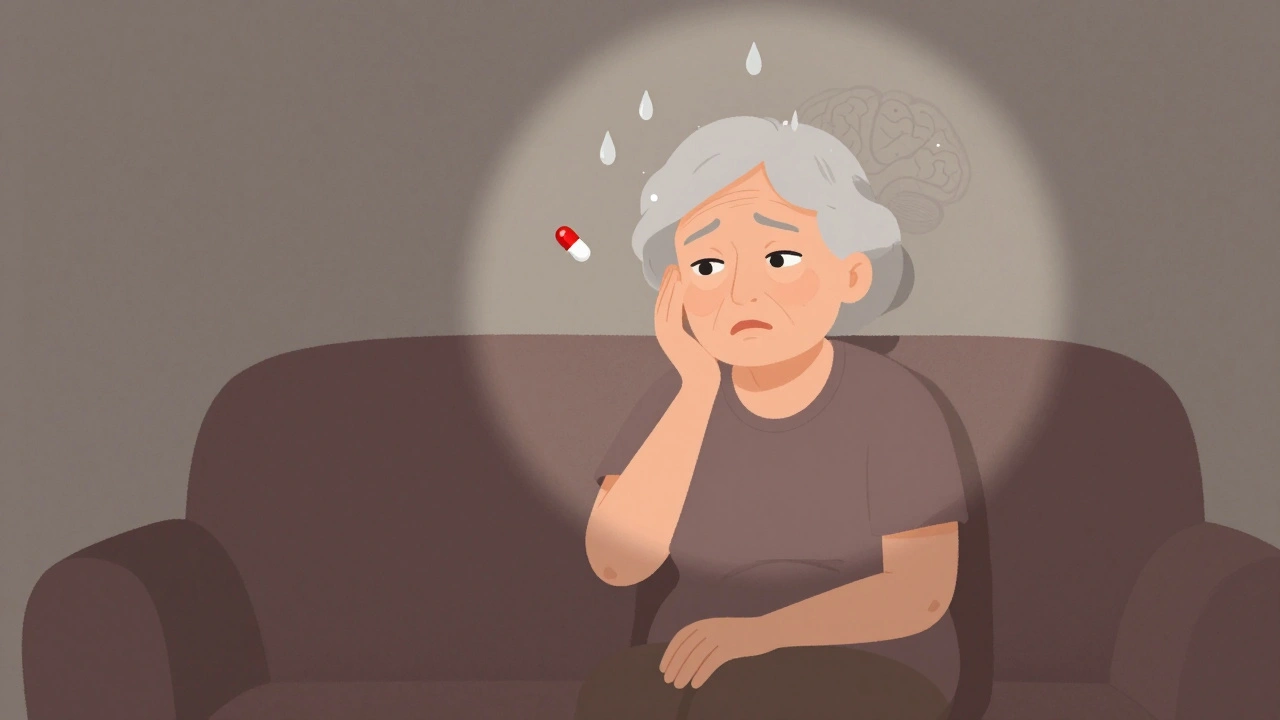
When you start an SSRI for depression, you expect to feel better - not worse. But for some people, especially older adults, a quiet but dangerous side effect can sneak in: hyponatremia. That’s when your blood sodium drops too low, and your body starts holding onto water like a sponge. The result? Confusion, dizziness, nausea, and in severe cases, seizures or coma. It’s not rare. It’s not theoretical. It’s happening right now in homes and clinics across the UK and beyond.
What Exactly Is Hyponatremia?
Hyponatremia means your blood sodium level falls below 135 mmol/L. Normal sodium? Between 135 and 145. When it dips below that, your brain cells swell with extra water. Your brain doesn’t have room to expand, so it starts to malfunction. That’s why people get confused, forget names, stumble, or seem "just off" - like they’re aging faster than they should. In extreme cases, sodium can crash to 118 mmol/L or lower. That’s life-threatening.This isn’t just a side effect. It’s a direct chemical reaction. SSRIs - drugs like citalopram, sertraline, fluoxetine, and paroxetine - boost serotonin in the brain. That’s how they help with mood. But serotonin doesn’t just affect your emotions. It also talks to your pituitary gland and tells it to release more antidiuretic hormone (ADH). ADH makes your kidneys hold onto water. More water in your blood? Sodium gets diluted. That’s SIADH - Syndrome of Inappropriate Antidiuretic Hormone Secretion. It’s the root cause.
Who’s at Highest Risk?
Not everyone on SSRIs gets this. But some people are far more vulnerable.- Age 65 and older: Risk jumps to nearly 1 in 6. Their kidneys don’t clear water as well, and their bodies are less able to balance fluids.
- Women: Over 65% of documented cases are in women, possibly due to body composition and hormone differences.
- Low body weight: People under 60 kg are more sensitive to drug effects.
- Already on diuretics: Thiazide diuretics (like hydrochlorothiazide) make the risk 4 times worse. Many older adults take them for high blood pressure - and then get an SSRI on top.
- Pre-existing kidney issues: If your eGFR is below 60, your kidneys are already struggling. Adding an SSRI can push them over the edge.
One case from a Reddit post in March 2024 tells the story: an 82-year-old woman started citalopram for depression. Two weeks later, she was so confused she couldn’t recognize her own daughter. Her sodium was 122 mmol/L. She ended up in the hospital. The doctor didn’t connect the dots until the blood test came back. That’s not unusual. In fact, studies show it takes an average of 7 days for hyponatremia to be correctly diagnosed in older patients - because symptoms look like dementia or just "getting old."
When Does It Happen?
Timing matters. This isn’t something that shows up on day one. It usually appears between two and four weeks after starting the SSRI - or after a dose increase. That’s why many doctors miss it. They check in at week one, see no issues, and assume everything’s fine. But the real danger window is weeks two to six.That’s why the American Psychiatric Association now says: baseline sodium test before starting an SSRI, and another at two weeks. For anyone over 65, or on other risk factors, monthly checks for the first three months are recommended. Simple blood test. Zero cost. Could save a life.

Which SSRIs Are Riskiest?
Not all SSRIs are equal. Some are far more likely to trigger hyponatremia.According to a 2024 meta-analysis of over 30 studies:
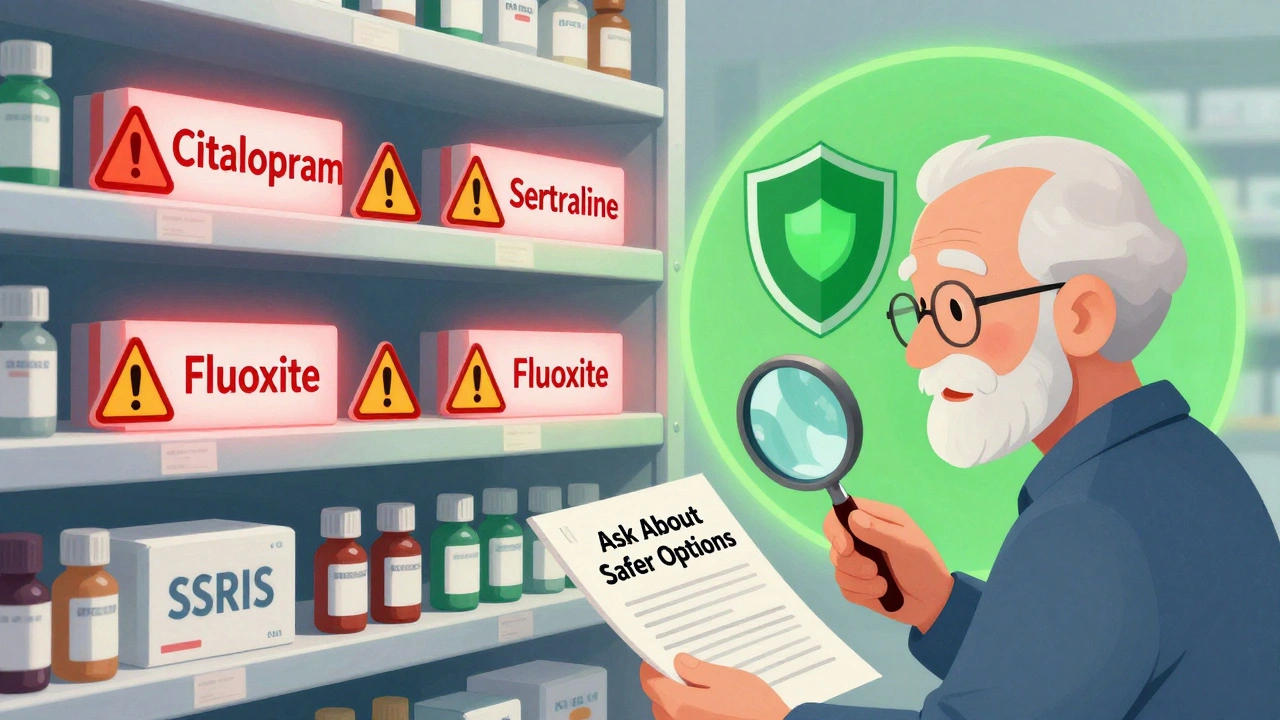
- Citalopram: Highest risk - 2.37 times more likely than non-SSRIs
- Sertraline: 2.15 times higher risk
- Fluoxetine: 1.98 times higher risk
- Paroxetine: 1.82 times higher risk
Why? It comes down to how tightly these drugs bind to the serotonin transporter (SERT). The tighter the grip, the more serotonin is released in the brain - and the more ADH gets triggered. Citalopram has the strongest binding. That’s why it’s the most dangerous.
And here’s the kicker: the FDA now requires all SSRI labels to clearly warn about hyponatremia risk. But most patients never see it. A 2023 survey found only 28.7% of people starting SSRIs were told about this side effect. That’s not informed consent. That’s negligence.
What Are the Safer Alternatives?
You don’t have to give up on treatment. There are antidepressants with much lower risk.Mirtazapine is the standout. It’s not an SSRI. It works differently - blocking certain serotonin receptors instead of boosting them. And it doesn’t trigger ADH release. Studies show its hyponatremia risk is less than half that of SSRIs. In fact, it’s the safest option for older adults. The American Geriatrics Society’s 2023 Beers Criteria explicitly recommends mirtazapine over SSRIs for seniors.
Here’s the real number: for every 1,000 older adults treated with SSRIs, about 18.6 will develop hyponatremia. With mirtazapine? Only 6.5. That’s a number needed to harm (NNH) of 82. Meaning, if you switch 82 elderly patients from an SSRI to mirtazapine, you prevent one case of dangerous low sodium.
Bupropion (Wellbutrin) is another good alternative. It doesn’t affect serotonin much - it works on dopamine and norepinephrine. Its risk is nearly the same as non-SSRI antidepressants. SNRIs like venlafaxine and duloxetine carry moderate risk - higher than mirtazapine, but lower than citalopram.
What Happens If It’s Not Caught?
Mild hyponatremia (125-134 mmol/L) might just cause headaches, nausea, or fatigue. People write it off as the flu. But if it drops below 125, things get dangerous fast.Severe cases require hospitalization. Treatment? Intravenous 3% saline - but carefully. Too fast, and you risk osmotic demyelination syndrome - a condition that destroys brain cells and can leave someone permanently disabled. Recovery takes days. Sodium levels usually take 72 to 96 hours to normalize after stopping the SSRI.
And it’s not just the sodium. Some patients develop serotonin syndrome at the same time - a rare but deadly mix of high serotonin causing muscle rigidity, fever, and confusion. One 78-year-old woman in a 2022 case report was admitted to the ICU after starting sertraline. Her sodium was 118. She had fever and tremors. She spent five days in intensive care.
What Should You Do?
If you or a loved one is on an SSRI - especially if over 65 - here’s what you need to do:- Ask for a baseline sodium test before starting the medication.
- Request a repeat test at two weeks - no excuses.
- Watch for early signs: headaches, nausea, feeling "foggy," unexplained tiredness, loss of balance.
- Don’t assume it’s aging. Confusion in an older person is not normal. It’s a red flag.
- Ask about alternatives. Is mirtazapine an option? Is bupropion right for you?
- If you’re on a diuretic, tell your psychiatrist. This combo is a ticking time bomb.
Doctors aren’t always up to speed. A 2023 survey found that 63.4% of primary care physicians didn’t know hyponatremia typically shows up at 2-4 weeks. That’s why you need to be your own advocate.
The Bigger Picture
SSRIs are still the most prescribed antidepressants in the world. In the US alone, over 214 million were filled in 2023. But things are changing. Between 2018 and 2023, SSRI prescriptions for people over 65 dropped by 22.3%. Meanwhile, mirtazapine prescriptions for that group rose by 34.7%. That’s not coincidence. It’s evidence.The cost of ignoring this? $1.27 billion a year in the US - mostly for hospital stays and ER visits. That’s not just money. It’s lost time, lost independence, lost dignity.
By 2027, mirtazapine is expected to be prescribed to over 40% of older adults starting antidepressants. That’s the future. And it’s a better one.
You don’t have to choose between depression and danger. There’s a safer path. You just need to ask for it.
Can SSRIs cause confusion in elderly patients?
Yes. SSRIs can cause confusion in elderly patients due to hyponatremia - low sodium levels caused by excess water retention. This happens because SSRIs trigger the release of antidiuretic hormone (ADH), leading to diluted sodium in the blood. Symptoms like disorientation, memory lapses, or seeming "out of it" are often mistaken for dementia or aging, but they can be reversed by stopping the medication and correcting sodium levels.
How long after starting an SSRI does hyponatremia appear?
Hyponatremia typically develops between two and four weeks after starting an SSRI or increasing the dose. It’s rare before week two and uncommon after week six. This timing is why many cases are missed - doctors often check in too early and assume everything’s fine.
Which SSRI has the lowest risk of hyponatremia?
None of the SSRIs are low-risk - they all carry some risk. But among them, paroxetine has the lowest relative risk (1.82 times higher than non-SSRIs), followed by fluoxetine (1.98) and sertraline (2.15). However, mirtazapine - not an SSRI - has less than half the risk of any SSRI and is the safest choice for older adults.
Is mirtazapine safer than SSRIs for seniors?
Yes. Mirtazapine is significantly safer for seniors. It doesn’t increase antidiuretic hormone, so it doesn’t cause hyponatremia. Studies show only 6.5 out of 1,000 seniors on mirtazapine develop low sodium, compared to 18.6 out of 1,000 on SSRIs. The American Geriatrics Society recommends mirtazapine over SSRIs for older adults as a first-line option.
Should I stop my SSRI if I feel confused?
Don’t stop abruptly. But do contact your doctor immediately. Confusion, nausea, or dizziness after starting an SSRI could be hyponatremia. A simple blood test can confirm sodium levels. If low, your doctor will advise stopping the SSRI and may give fluids or IV saline. Stopping suddenly can cause withdrawal symptoms, so always follow medical guidance.
Can hyponatremia from SSRIs be permanent?
No - if caught early. Sodium levels usually return to normal within 3-4 days after stopping the SSRI. But if sodium drops too low too fast and is corrected too quickly, it can cause osmotic demyelination - a rare but serious brain injury that can lead to permanent disability. That’s why correction must be slow and controlled under medical supervision.
Are there any warning signs before confusion sets in?
Yes. Early signs include mild headache, nausea, fatigue, loss of appetite, and feeling unusually tired or weak. These often appear before confusion or dizziness. If you notice these after starting an SSRI - especially in someone over 65 - get a sodium test. Catching it early means avoiding hospitalization.




15 Comments
so i read this and my grandpa was on sertraline and kept falling over like a drunk guy but doc said he's just gettin old... dumbass
This is the kind of post that makes me want to hug my grandma tighter. I didn't know SSRIs could do this. I'm taking this to my mom's doctor tomorrow. No more guessing games with elderly health.
As a geriatric nurse practitioner, I've seen this too many times. The confusion is mislabeled as dementia. The fatigue? "Just tired from aging." The nausea? "Stomach bug." We miss the signal because we're trained to look for the loudest noise. A simple sodium panel at week two could prevent hospitalizations. It's not complicated. It's not expensive. It's just not prioritized. We owe our elders better.
My aunt was on citalopram for six weeks and started forgetting her own birthday. We thought it was early Alzheimer's. Turned out her sodium was 121. She switched to mirtazapine and within ten days, she was back to telling her old jokes and remembering everyone's names. It's not a miracle drug-it's just the right drug. Why aren't we talking about this more?
Wow this is eye opening. I'm from India and my uncle is on sertraline and he's been acting weird for months. We thought he was just stressed. I'm gonna take him to the doc and ask for sodium test. Thank you for sharing this. So many people suffer in silence because no one connects the dots.
So let me get this straight… we’ve got a class of drugs that are literally poisoning elderly patients with a side effect that’s easy to test for, and the medical system just shrugs and calls it "normal aging"? And you’re surprised people are confused? Nah. The system’s just confused.
Oh, here we go again. Another "SSRIs are dangerous" fearmongering post. Let me guess-you think mirtazapine is some magical panacea? Have you looked at the sedation rates? The weight gain? The metabolic havoc? You’re trading one risk for another, and you’re not even acknowledging the trade-offs. This isn’t medicine-it’s Pinterest health advice with a dash of arrogance.
In the UK, we’ve been quietly wrestling with this for years. The NHS doesn’t always have the bandwidth to monitor sodium levels religiously, but the guidelines are clear. What’s heartbreaking is how often families are left to notice the changes-because the GP appointment was 12 weeks away. This isn’t just a medical issue. It’s a social one. We need to train caregivers, not just clinicians.
Interesting data. But correlation isn't causation. Also, sample sizes in those meta-analyses are questionable.
I’m a pharmacist, and I’ve personally counseled over 80 elderly patients on SSRIs. I always ask: "Have you noticed any headaches, nausea, or feeling unusually tired?" If yes-I immediately check their meds and recommend a sodium panel. It’s part of my job. Why isn’t it part of every doctor’s? The fact that only 28% of patients are warned is unacceptable. We need mandatory patient education sheets-printed, not digital. Elderly patients don’t scroll.
my grandma was on one of these and she got weird. we didn't think much of it. guess we should've checked
I used to think my dad was just slipping-forgetting names, tripping over nothing, staring into space like he was miles away. Then I found this article and realized: he wasn’t fading. He was drowning. We got his sodium tested, stopped the SSRI, switched to mirtazapine, and within a week he was back-laughing at dumb TV commercials, calling me by my name, asking about his garden. This isn’t just a medical fact. It’s a gift. A second chance. Thank you for writing this. I’m sharing it with everyone I know.
As a pharmacogenomics researcher, I must point out that the CYP2C19 polymorphism significantly modulates citalopram metabolism, and the risk stratification in this post is dangerously oversimplified. Moreover, the 2024 meta-analysis you cite has significant publication bias-only 3 of the 30 studies were prospective, and none controlled for polypharmacy. Also, mirtazapine has a higher risk of QT prolongation in elderly patients with cardiac comorbidities. Your recommendation is clinically irresponsible without context.
This is exactly why we need better communication between primary care and psychiatry. I’ve seen patients get an SSRI prescribed by a PCP who didn’t know about the hyponatremia risk, and then the psychiatrist didn’t know they were on hydrochlorothiazide. It’s a systemic failure. We need shared EHR alerts. Not just guidelines.
Thank you for the detailed response, Katherine. I’ve been telling my colleagues the same thing for years. The real tragedy isn’t the side effect-it’s how easily it’s preventable. We’ve got the tools. We just need the will. And sometimes, that starts with a family member asking one simple question: "Could this be the medicine?"