
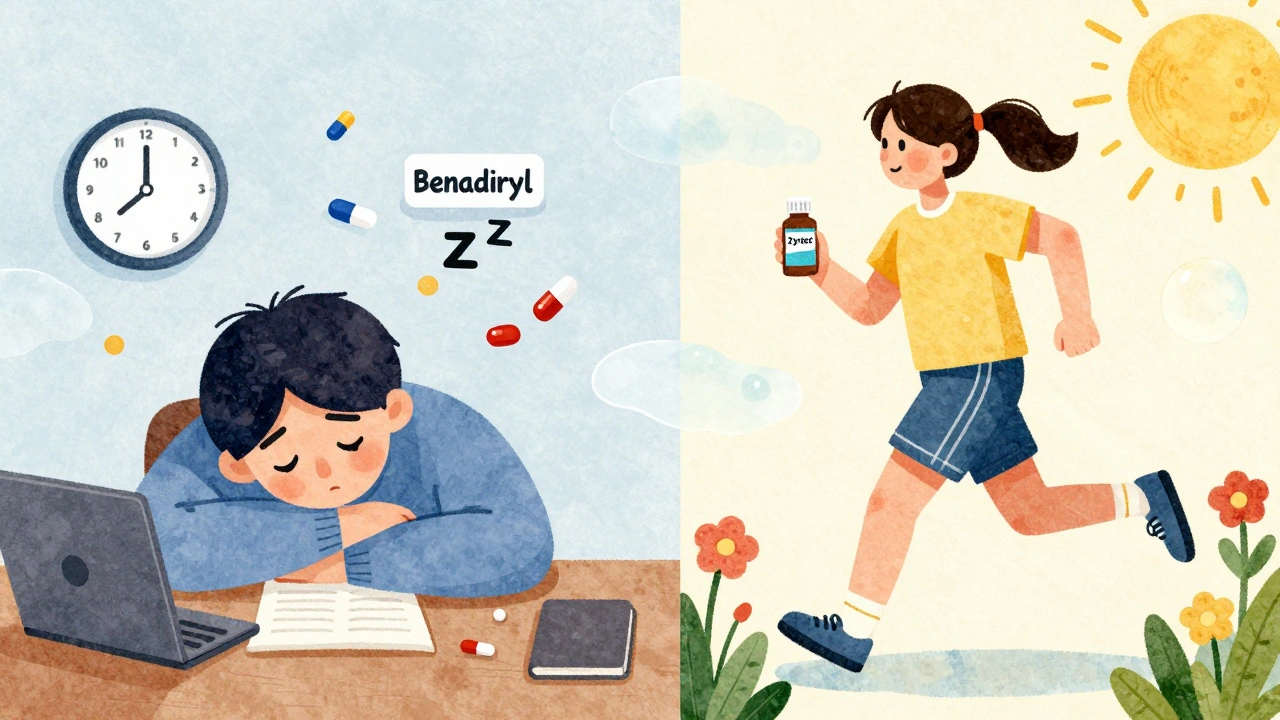
When your nose starts running, your eyes itch, or you break out in hives, antihistamines are often the first thing you reach for. But not all antihistamines are the same. There are two main types - first-generation and second-generation - and choosing the wrong one can leave you groggy, dry-mouthed, or still suffering. If you’ve ever taken Benadryl for allergies and felt like you’d been hit by a truck, you’re not alone. The truth is, the antihistamine you pick matters more than you think.
What’s the Big Difference?
The core difference between first- and second-generation antihistamines comes down to one thing: how they interact with your brain. First-generation antihistamines like diphenhydramine (Benadryl), chlorpheniramine (Chlor-Trimeton), and promethazine (Phenergan) are small, fat-soluble molecules. That means they slip easily through the blood-brain barrier. Once inside, they block histamine receptors in your brain - which is why they make you sleepy. That’s not a side effect. For many, it’s the point. Second-generation antihistamines like loratadine (Claritin), cetirizine (Zyrtec), and fexofenadine (Allegra) were designed differently. They’re bulkier, more polar, or get actively pumped out of the brain by transporters. The result? They block histamine in your nose and skin, but barely touch your brain. That’s why you can take Zyrtec in the morning and still drive, work, or pick up your kids without feeling like you’re in a fog.Sleepiness: The Dealbreaker
Let’s be honest - drowsiness is the biggest reason people ditch first-generation antihistamines. Studies show 50-60% of people taking Benadryl feel sleepy. That’s more than half. And it’s not just a mild tiredness. It’s slowed reaction times, poor focus, and memory lapses. One driving simulation study found users had 25% slower reaction times after taking diphenhydramine - similar to having a blood alcohol level of 0.05%. Second-generation antihistamines? Only 10-15% of users report drowsiness. And even then, it’s usually mild. That’s why the American Academy of Allergy, Asthma & Immunology (AAAAI) says second-generation options should be the first choice for most people with chronic allergies. If you’re managing hay fever year-round, you don’t want to be medicated into a nap every day. But here’s the twist: some people like the sleepiness. If your allergies keep you awake at night, diphenhydramine can actually help. A survey of 8,742 users on Drugs.com found that 52% said Benadryl gave them better sleep than melatonin. For nighttime use, it still has a place.How Fast Do They Work?
First-generation antihistamines kick in fast - within 30 minutes. That’s why they’re still used in emergency situations: sudden hives, insect bites, or anaphylaxis (alongside epinephrine). If you’re caught off guard by a pollen storm or a new pet, Benadryl gives you quick relief. Second-generation ones? Slower. They take 1-3 hours to reach peak levels in your blood. That means if you wait until your eyes are watering to take Zyrtec, you’re already behind. The trick is to take them daily, even when you feel fine. They work best as prevention, not rescue.How Long Do They Last?
First-generation antihistamines last 4-6 hours. That means you need to take them 3-4 times a day. Try to remember that at 8 a.m., 1 p.m., 6 p.m., and 11 p.m. It’s a hassle. And if you miss a dose, symptoms come roaring back. Second-generation antihistamines? One dose lasts 12-24 hours. Once daily. That’s a game-changer for compliance. A 2023 AAAAI survey found 85% of people taking once-daily antihistamines stuck with them, compared to just 60% on the multi-dose first-gen versions.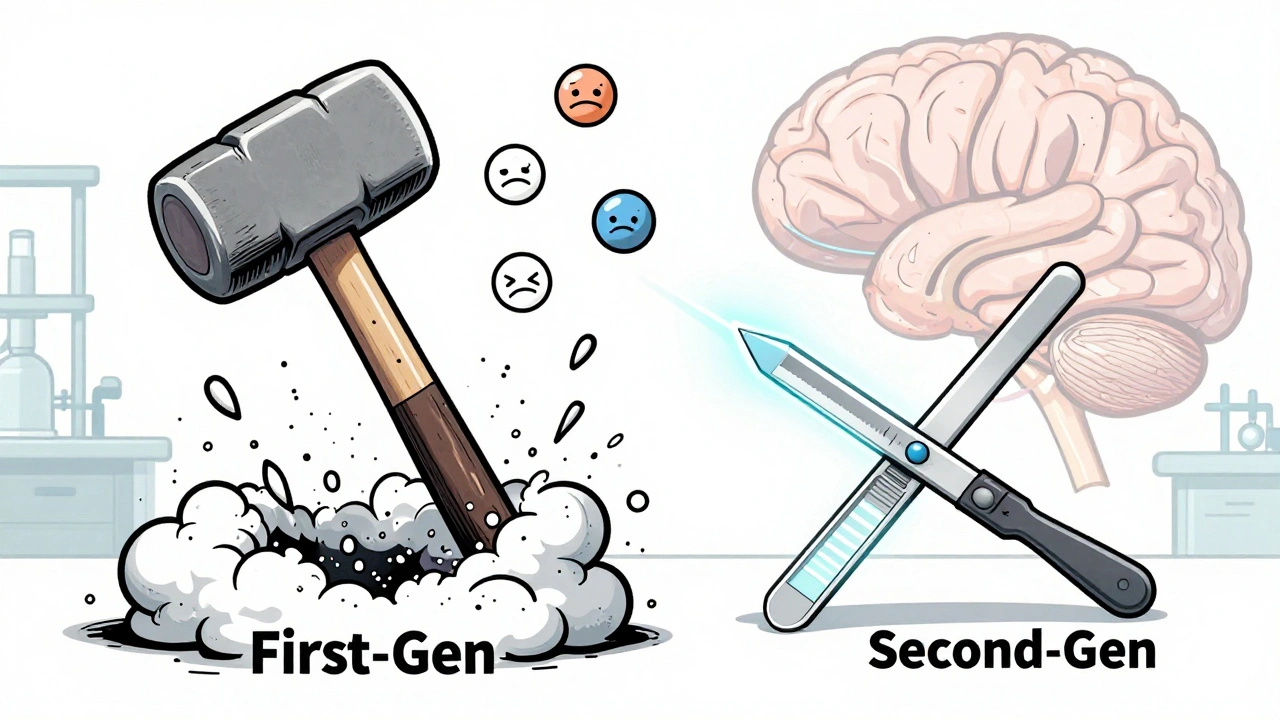
Efficacy: Do They Even Work?
You might assume the newer drugs are stronger. But it’s not that simple. For sneezing, runny nose, and itchy eyes, second-generation antihistamines are slightly more effective. A 2022 meta-analysis showed they reduce symptoms by 60-70%, while first-gen manage 50-60%. But here’s where it gets interesting: cetirizine (Zyrtec) is consistently more effective than loratadine (Claritin) or fexofenadine (Allegra) for moderate-to-severe allergic rhinitis. European studies show Zyrtec delivers 15-20% better symptom control. If you’ve tried Claritin and it didn’t help, switching to Zyrtec might be the fix. The downside? Second-generation antihistamines don’t do much for nasal congestion. That’s why many people end up needing a decongestant like pseudoephedrine. New combo pills - like fexofenadine/pseudoephedrine - are now on the market to fix that gap.Cost: Pay More for Less Sleep?
Generic diphenhydramine costs about $4-6 for 100 tablets. That’s pennies per dose. Generic loratadine? Around $10-15 for 30 tablets. Zyrtec or Allegra? Same price range. Brand names? $25+ a month. So why pay more? Because the cost of being sleepy at work, forgetting your kid’s soccer game, or crashing your car isn’t just financial - it’s personal. For most people, the extra $5-10 a month is worth avoiding brain fog.Side Effects Beyond Drowsiness
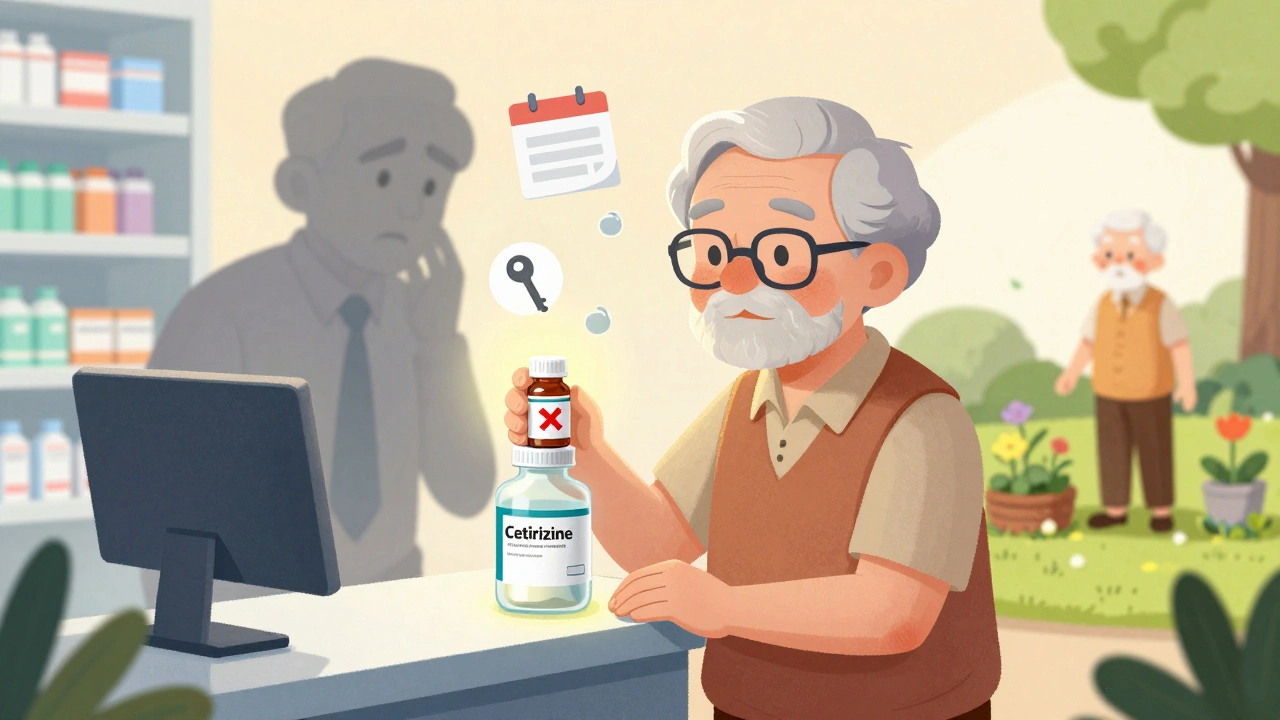
First-generation antihistamines don’t just make you sleepy. They block another type of receptor - muscarinic receptors - which leads to dry mouth, constipation, blurry vision, and trouble peeing. In older adults, this can cause urinary retention or confusion. A 2022 JAMA Internal Medicine study warned that long-term use of these drugs in seniors is linked to cognitive decline, similar to low-dose benzodiazepines. Second-generation antihistamines? Much cleaner. Dry mouth? Rare. Blurry vision? Almost unheard of. The biggest risk? A tiny chance of heart rhythm changes - but only at very high doses or if you’re taking other drugs that interfere with metabolism. At normal doses, they’re extremely safe.Who Should Use Which?
Choose second-generation antihistamines if:- You have seasonal or year-round allergies
- You need to stay alert for work, school, or driving
- You’re taking it daily
- You’re over 65
- You want fewer side effects
- You need fast relief for sudden hives or bites
- You’re using it at night to help with sleep
- You have motion sickness or nausea
- You’re on a tight budget and only need it occasionally
What About the Newer Ones?
You might hear about desloratadine (Clarinex) or levocetirizine (Xyzal). These are actually metabolites of older second-gen drugs - meaning they’re purer, more active versions. Desloratadine is what your body turns loratadine into. Levocetirizine is the active half of cetirizine. They’re more potent, with fewer inactive ingredients. Prescriptions for these are rising - up 12% in the first quarter of 2024. They’re not magic, but if standard second-gen antihistamines aren’t working, they’re the next step.Real People, Real Results
On Reddit’s r/Allergies, 68% of users say they switched from Benadryl to Zyrtec or Claritin because they couldn’t function during the day. One user wrote: “Zyrtec lets me work without the brain fog Benadryl gives me.” On Amazon, second-gen antihistamines average 4.2 stars. First-gen? 3.8. The top complaint about Benadryl? “Makes me too sleepy for work.” The top praise for Zyrtec? “Finally found something I can take daily without side effects.” But don’t ignore the night owls. On Drugs.com, over half of users say diphenhydramine helps them sleep better than melatonin. That’s not a fluke. It’s science.What to Do Next
If you’re still using Benadryl every day for allergies, talk to your pharmacist. Ask if switching to cetirizine or loratadine makes sense. Don’t just assume it’s the same thing. If you’ve tried Claritin and it didn’t work, try Zyrtec. They’re not interchangeable. If you’re over 65, avoid first-gen antihistamines unless it’s for a one-time emergency. The risks outweigh the benefits. And if you’re using them for sleep? Fine - but keep it occasional. Long-term use of diphenhydramine as a sleep aid is not recommended by sleep specialists.Final Thought
Antihistamines aren’t just pills. They’re tools. First-generation ones are like a sledgehammer - fast, powerful, but messy. Second-generation are like a scalpel - precise, clean, designed for daily use. The right choice depends on your life, your symptoms, and your priorities. There’s no one-size-fits-all. But for most people in 2025, the answer is clear: go second-generation. Unless you’re going to bed.Is Benadryl still a good choice for allergies?
Benadryl (diphenhydramine) works for quick relief of sudden allergy symptoms like hives or insect bites. But it’s not ideal for daily use. It causes drowsiness, dry mouth, and can impair thinking - especially in older adults. For ongoing allergies, second-generation antihistamines like Zyrtec or Claritin are safer and more convenient.
Why does Zyrtec work better than Claritin for some people?
Zyrtec (cetirizine) is more potent at blocking histamine receptors than Claritin (loratadine). Clinical trials show it provides 15-20% greater symptom relief in moderate-to-severe allergic rhinitis. It also works faster and is more effective for itchy eyes. If Claritin isn’t helping, switching to Zyrtec often makes a noticeable difference.
Can second-generation antihistamines make you sleepy?
Yes - but rarely at standard doses. About 10-15% of users report mild drowsiness with cetirizine or fexofenadine. Taking higher-than-recommended doses can increase this risk. The label says "non-drowsy," but that’s based on normal use. If you feel sleepy, don’t drive or operate machinery.
Are first-generation antihistamines dangerous for seniors?
Yes. First-gen antihistamines like Benadryl can cause confusion, memory problems, urinary retention, and constipation in older adults. Studies link long-term use to increased risk of dementia. The American Geriatrics Society lists them as potentially inappropriate for seniors. Use them only for emergencies, not daily.
Do I need a prescription for second-generation antihistamines?
No. Loratadine (Claritin), cetirizine (Zyrtec), and fexofenadine (Allegra) are all available over-the-counter in the U.S. Generic versions are affordable. Prescription versions exist (like Clarinex or Xyzal), but they’re usually just stronger doses of the same active ingredients.
What’s the best antihistamine for nasal congestion?
Most second-generation antihistamines don’t help much with nasal congestion. For that, you need a decongestant like pseudoephedrine. New combination pills - such as fexofenadine/pseudoephedrine - are now available and work better than antihistamines alone for stuffy noses.


12 Comments