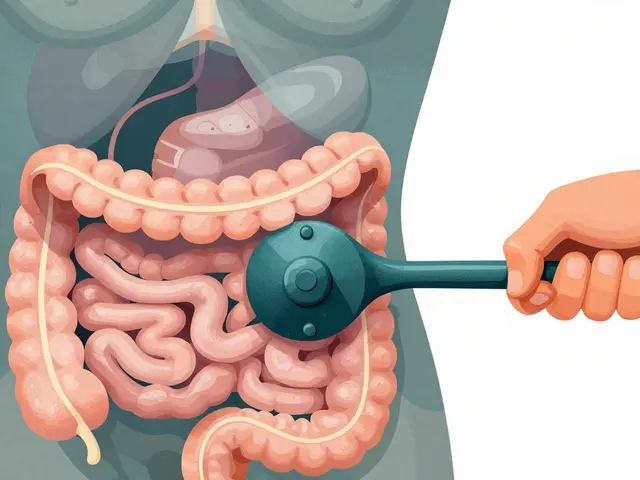
Waking up at 3 a.m. with a tingling, numb hand that feels like it's fallen asleep-and won't wake up-is a classic sign of something happening deep in your wrist. It's not just a "sore wrist"; for millions of people, it's the start of Carpal Tunnel Syndrome is a condition where the median nerve becomes compressed as it passes through the carpal tunnel in the wrist. If you've noticed your grip weakening or you're dropping your coffee mug more often than usual, you're dealing with a pressure problem. Inside your wrist, the pressure is normally between 2 and 10 mmHg. In someone with this condition, that pressure can spike above 30 mmHg, essentially squeezing the nerve and cutting off its blood supply.
How Your Wrist Actually Works
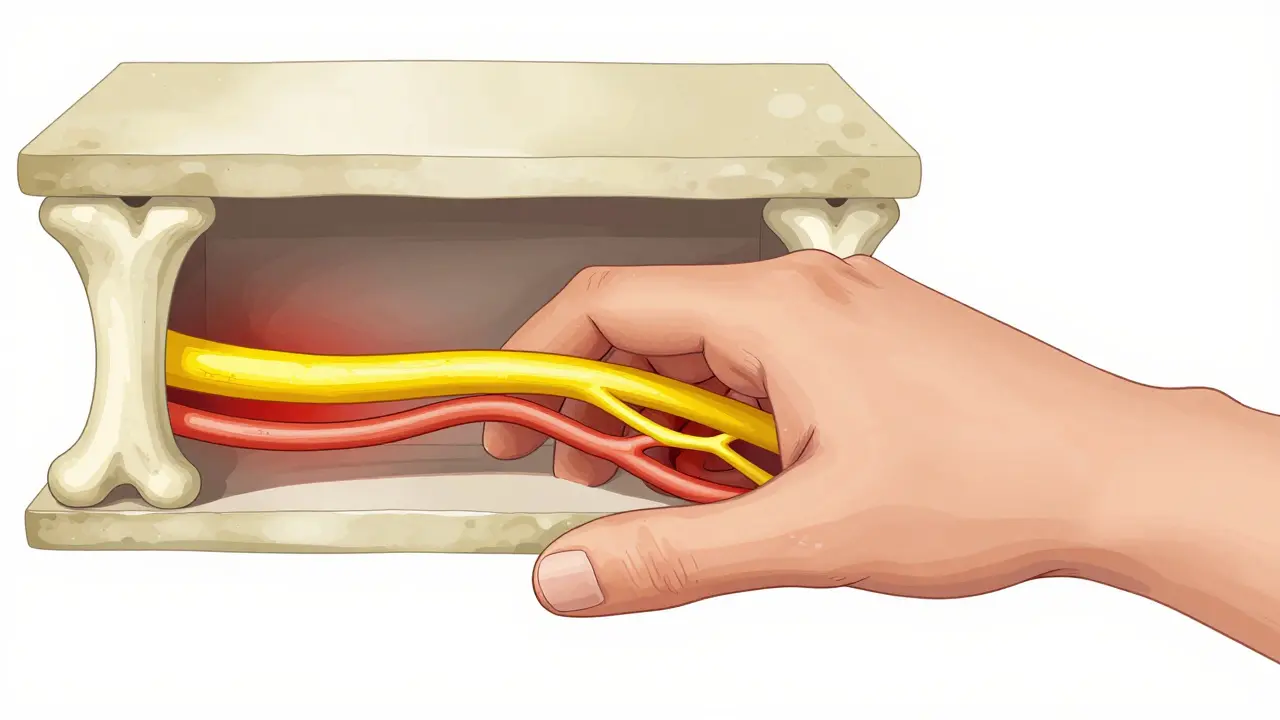
Think of the carpal tunnel as a narrow hallway. The walls are made of carpal bones, and the roof is a tough band called the transverse carpal ligament. Inside this hallway, the median nerve travels alongside nine flexor tendons. Everything fits perfectly until it doesn't. When the tendons swell or the tunnel narrows, the nerve-which is the most flexible part of the group-gets crushed.
This nerve is responsible for sensation in your thumb, index, middle, and half of your ring finger. That's why you don't feel numbness in your pinky; that finger is served by a different nerve entirely. If you're feeling that "pins and needles" sensation specifically in those first three and a half fingers, the median nerve is likely the culprit.
Spotting the Warning Signs
It usually starts with intermittent tingling, but it can progress into something that affects your daily life. About 89% of people report that their symptoms are worst at night, often because we tend to curl our wrists while sleeping, which further closes the tunnel. As the condition worsens, you might notice a physical change in your hand: the thenar eminence-the fleshy muscle at the base of your thumb-can actually start to shrink or atrophy.
If you're trying to figure out if your pain is serious, look at your grip strength. Clinical data shows that advanced cases can lead to a 20-35% reduction in how hard you can squeeze. If you can't open a jar that used to be easy, it's time to see a professional.
Diagnosing the Nerve Pinch
You can't diagnose this just by looking at a wrist. While a doctor will check your reflexes and muscle strength, they'll likely order nerve conduction studies to be sure. These tests measure how fast electrical signals travel through your nerve. If the sensory conduction velocity drops below 45 m/s, it's a clear sign the nerve is being squeezed.
| Method | Success Rate | Best For... | Typical Recovery |
|---|---|---|---|
| Nocturnal Splinting | 40-60% (Mild cases) | Early symptoms < 10 months | Immediate / Ongoing |
| Steroid Injections | 60-70% (Short term) | Moderate pain relief | Instant (lasts 3-6 months) |
| Open Surgery | 75-90% | Severe cases / Nerve atrophy | 4-8 weeks |
| Endoscopic Surgery | 75-90% | Faster return to work | 2-4 weeks |
Non-Surgical Ways to Find Relief
If you catch this early, you might not need surgery. A simple nocturnal wrist splint can be a game-changer. The goal is to keep your wrist in a neutral position while you sleep so the tunnel stays as open as possible. However, the biggest hurdle here is consistency; barely half of patients actually wear them every night.
For those who need more immediate help, corticosteroid injections can reduce inflammation and buy you a few months of relief. A modern pro tip is to look for ultrasound-guided injections, which are about 20% more accurate than the old "landmark" method where the doctor just feels for the spot. Just be careful-repeated injections can sometimes cause tissue scarring (fibrosis), which might actually make a future surgery more complicated.
When Decompression Surgery is Necessary
When numbness becomes constant or your thumb muscle starts to waste away, surgery is usually the only permanent fix. The goal of nerve decompression is to cut the transverse carpal ligament. By slicing this "roof," the tunnel expands, and the pressure on the median nerve drops instantly.
You generally have two choices: open surgery or endoscopic surgery. Open surgery is the gold standard and used in 90% of cases. Endoscopic surgery uses a small camera and a smaller incision, which means you'll likely get back to your desk job in about 14 days instead of 28. Long-term, both have similar success rates, but the endoscopic route requires a surgeon who has a lot of experience with that specific tool.
One thing surgeons don't always emphasize enough is "pillar pain." Between 15-30% of people feel a lingering tenderness in the palm of their hand for a few weeks or months after the procedure. It's not a failure of the surgery; it's just how the tissue heals.

The Truth About Keyboards and Work
We've all heard that typing all day causes carpal tunnel. Interestingly, recent medical reviews show no direct causal link between computer use and the development of the syndrome. However, that doesn't mean your workstation doesn't matter. The real danger comes from forceful gripping motions-anything requiring over 20 kg of force-which can increase your risk by more than three times.
If you work in a high-repetition environment, like a meatpacking plant or an assembly line, your risk is significantly higher. In fact, people in these roles have a 45% recurrence rate even after treatment if they don't change how they work. The key is ergonomics: keep your wrist extension below 15 degrees. If your wrist is bent back sharply while you work, you're effectively pinching that nerve for hours on end.
Recovery and Long-Term Success
Recovery isn't just about the surgery; it's about what you do afterward. Immediate finger motion exercises are critical to prevent stiffness. If you're a desk worker, you might feel "normal" in two weeks, but manual laborers often need up to 12 weeks to regain full grip strength.
Two things can secretly slow you down: smoking and diabetes. Smokers often see a 30% slower recovery time because nicotine constricts blood vessels, hindering nerve healing. Similarly, keeping your HbA1c levels below 7% if you are diabetic can speed up nerve recovery by 25%. It's all about getting as much blood and oxygen to that damaged nerve as possible.
Can carpal tunnel syndrome go away on its own?
Generally, no. While symptoms may wax and wane, the physical compression of the nerve remains. An exception is pregnancy-associated CTS, which resolves spontaneously in about 70% of cases within three months after giving birth. For most others, early intervention with splints or therapy is needed to prevent permanent damage.
Is surgery the only way to fix the problem?
Not necessarily. Conservative treatments like nocturnal splinting and activity modification work for about 70% of mild cases. However, if you have constant numbness or visible muscle wasting in the thumb, surgery is usually recommended to avoid permanent nerve death.
How long does the recovery from surgery actually take?
It depends on your job. Desk workers often return to their roles within 2 to 4 weeks. Manual laborers, who need full grip strength, typically take 8 to 12 weeks for a complete recovery. Suture removal usually happens around the 10-14 day mark.
What is "pillar pain" after surgery?
Pillar pain is a tenderness felt in the padded areas of the palm around the surgical scar. It affects 15-30% of patients. It is a common postoperative occurrence and usually resolves over several months as the tissue heals.
Will a wrist brace help if I already have severe symptoms?
Braces are most effective for mild cases (under 10 months duration). For severe cases with constant numbness, a brace may provide minor relief, but it cannot "unpinch" a nerve that is severely compressed. In these instances, surgical decompression is the more effective path.