
OIC Treatment Path Finder
Identify potential management strategies based on your symptoms
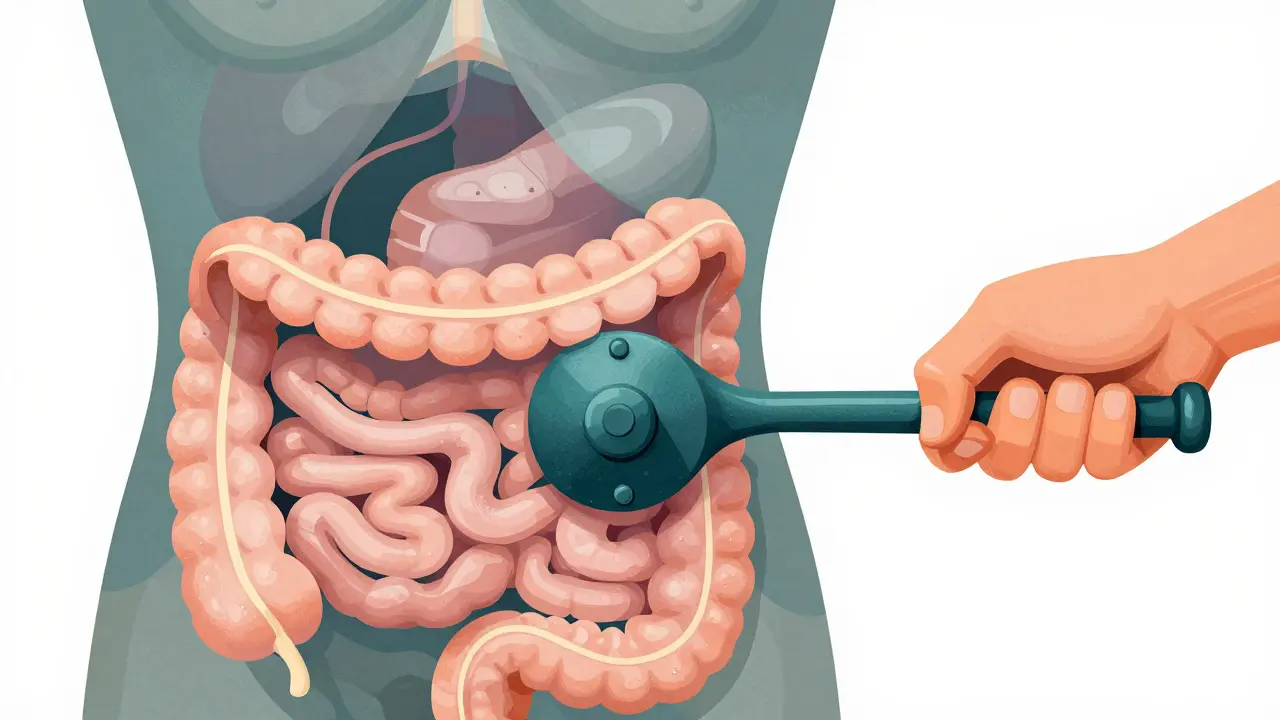
The real problem is how opioids interact with your gut. They bind to μ-opioid receptors in the gastrointestinal mucosa. This essentially puts a "brake" on the muscles in your small intestine and colon, slowing down transit time and causing your body to absorb too much water from your stool. The result? Hard, dry stools that are incredibly difficult to pass. It's a mechanical failure of the gut, which is why simple tips like "drinking more water" often aren't enough.
The Gold Standard for Prevention
The biggest mistake people make is waiting until they are backed up to take action. By the time you're straining and feeling bloated, the cycle is already established. Expert consensus suggests a proactive approach: start your bowel management plan at the same time you start your opioid prescription. When you're proactive, you can prevent up to 70% of severe cases.
Start with the basics. While diet helps, it's rarely the cure for OIC. However, increasing fiber and staying hydrated creates a better foundation for medications to work. From there, move to first-line pharmacologic options. Most doctors recommend Osmotic Laxatives, such as polyethylene glycol, which draw water into the colon to soften stool. If those aren't enough, Stimulant Laxatives are used to trigger the muscle contractions needed to push waste out.
When Standard Laxatives Fail
Here is the frustrating part: standard over-the-counter (OTC) laxatives often fail for OIC patients. Why? Because they treat the symptom (hard stool) but not the cause (the opioid receptors blocking the gut). About 68% of patients report that typical laxatives just don't cut it. When this happens, it's time to talk about PAMORAs (Peripherally Acting μ-Opioid Receptor Antagonists).
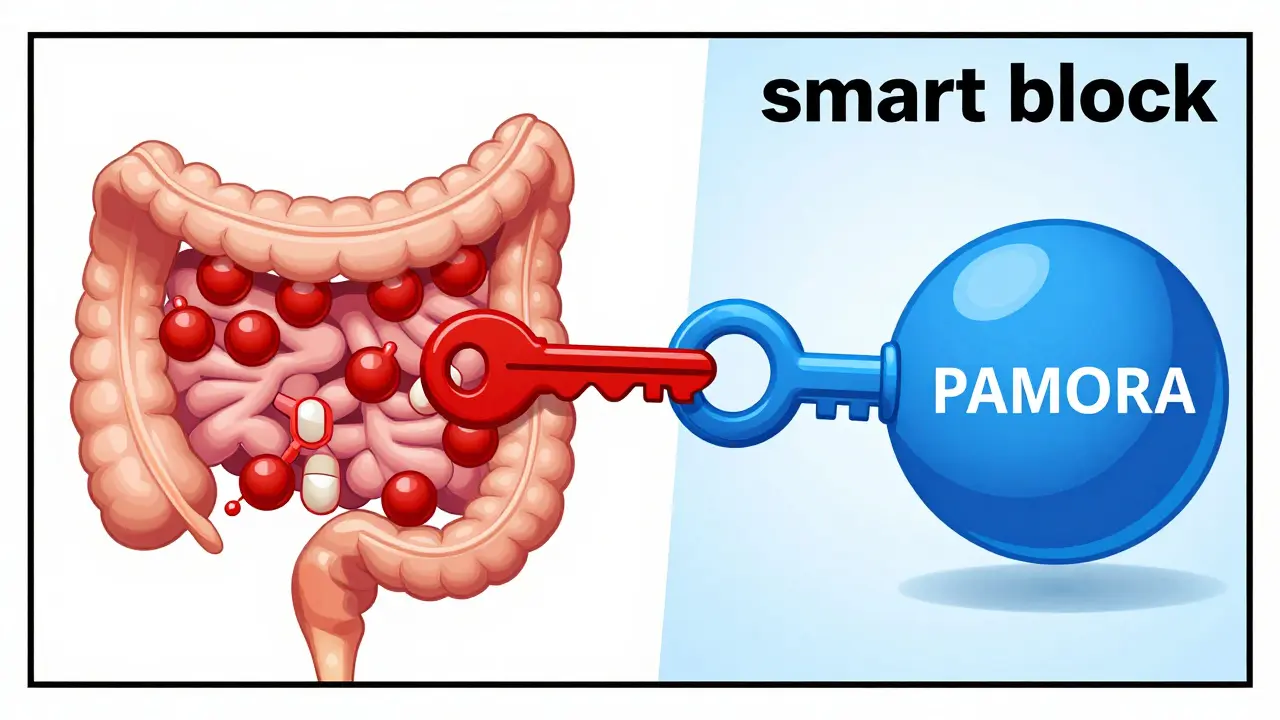
Think of PAMORAs as a "smart" block. They are designed to bind to the same receptors in your gut that the opioids are hitting, effectively knocking the opioids off and letting the gut move again. Crucially, they are "peripherally acting," meaning they don't cross the blood-brain barrier. This allows you to get your bowel function back without losing the pain relief provided by your medication. It's the best of both worlds: pain control and a functioning digestive system.
| Medication | Mechanism | Key Attribute | Common Side Effect |
|---|---|---|---|
| Lubiprostone | Chloride channel activator | Increases fluid secretion | Nausea (32%) |
| Methylnaltrexone | PAMORA | Available in weekly form | Abdominal pain |
| Naloxegol | PAMORA | Oral administration | Diarrhea |
| Naldemedine | PAMORA | Prevents OINV (Nausea) | Flatulence |
Choosing the Right Prescription Path
Not every prescription is right for every patient. For instance, Lubiprostone (sold as Amitiza) is often used to increase the frequency of bowel movements by activating chloride channels, though it's most commonly labeled for women. If you're in palliative care or dealing with advanced illness and standard laxatives have failed, Methylnaltrexone (Relistor) is a powerhouse that can work within 30 minutes, though it often requires an injection.
For those dealing with cancer, the 2024 ASCO guidelines highlight Naldemedine. It's particularly useful because it doesn't just fight constipation; it may also help prevent opioid-induced nausea and vomiting (OINV), addressing two of the worst side effects of opioid therapy simultaneously.
However, these powerful tools come with a warning. You cannot use PAMORAs if you have a known or suspected gastrointestinal obstruction. Forcing bowel movements against a blockage can lead to gastrointestinal perforation-essentially a tear in the bowel wall-which is a life-threatening emergency. This is why a doctor's screening is non-negotiable before starting these drugs.
Navigating the Costs and Barriers
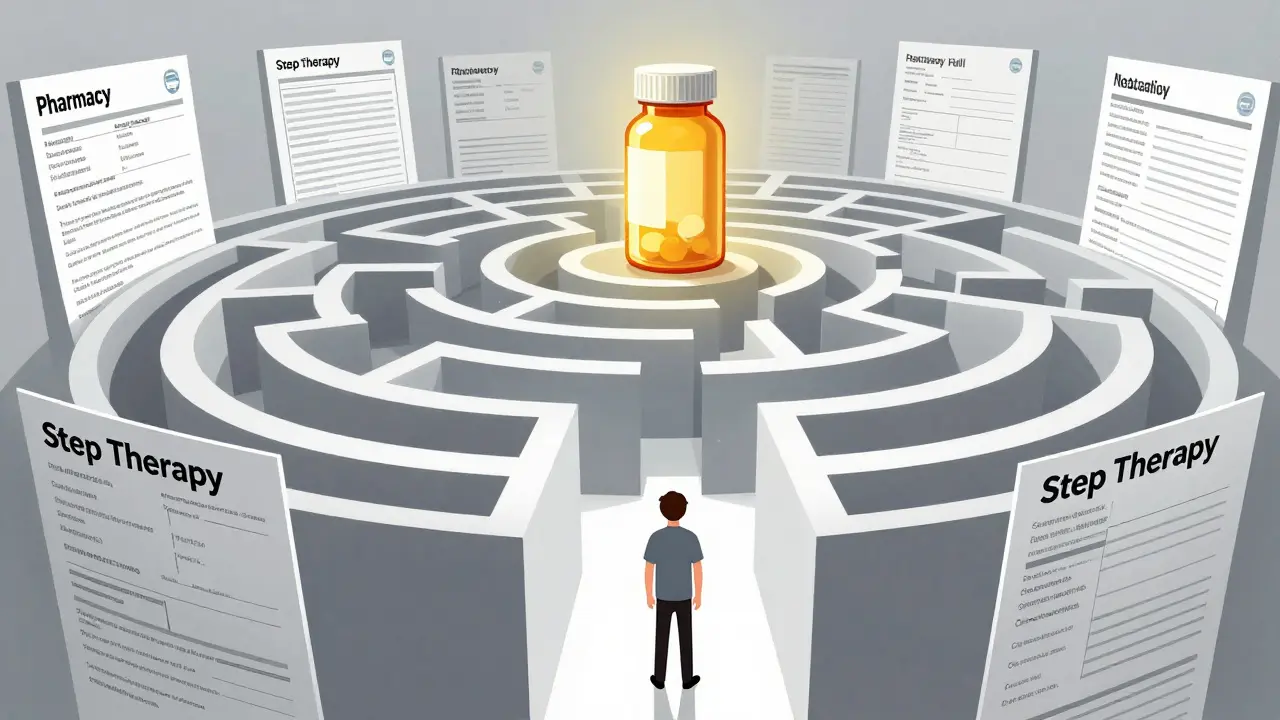
Let's be honest: the hardest part of OIC treatment isn't the medicine; it's the pharmacy bill. Many patients find that PAMORAs cost between $500 and $900 per month without insurance. Even with insurance, you'll likely run into "step therapy," where the company forces you to fail on three different cheap generics before they'll pay for the medication that actually works.
If you're hitting a wall with costs, ask your doctor about prior authorization requests. Many insurance companies require a specific documented failure of first-line laxatives before approving a PAMORA. Keep a detailed log of what you've tried-dates, dosages, and why it didn't work-to speed up this process. Some patients have also found success with patient assistance programs offered by the manufacturers like AstraZeneca or Salix Pharmaceuticals.
A Checklist for Your Next Doctor Visit
Managing OIC is a partnership between you, your doctor, and your pharmacist. To get the best results, stop treating your bowel movements as a "secondary" issue. Use this framework to guide your next appointment:
- Log Your Frequency: Note how many days pass between movements and the consistency of the stool.
- The "Bowel Function Index" (BFI): Ask your provider if you should be tracked via a BFI score; a score over 30 usually means it's time to escalate treatment.
- Review All Meds: Check if any other medications you're taking (like certain antidepressants or calcium channel blockers) are making the constipation worse.
- Discuss Proactive Timing: If you're starting a new opioid dose, ensure a laxative is prescribed for the exact same day.
Will my body eventually stop being constipated on opioids?
Unfortunately, no. Unlike nausea or sedation, there is no known "tolerance" for opioid-induced constipation. The receptors in your gut remain sensitive, meaning the constipation will persist as long as you continue taking the medication. This is why long-term management strategies are necessary.
Are PAMORAs safe to take long-term?
Generally, yes, provided you do not have a bowel obstruction. They are designed to work only in the gut and do not interfere with the pain-killing effects of opioids in the brain. However, you should always report any severe abdominal pain or fever to your doctor immediately to rule out perforation.
Can I just use a lot of fiber to fix this?
Fiber is great for healthy guts, but in OIC, the "pipes" are effectively frozen. Adding too much bulk (fiber) to a gut that isn't moving can actually make the problem worse and potentially lead to a blockage. Use fiber in moderation and prioritize osmotic or stimulant agents that actually move the waste.
What is the fastest-acting option for severe constipation?
For immediate relief, subcutaneous Methylnaltrexone (Relistor) is often cited as one of the fastest, sometimes working within 30 minutes. For non-prescription options, glycerin suppositories or enemas provide the quickest results for lower-rectum impaction, though they don't treat the underlying cause.
Do all opioids cause constipation?
Almost all of them do. Whether it's morphine, oxycodone, or fentanyl, the binding to μ-opioid receptors in the GI tract is a hallmark of the drug class. While the severity varies by person and dose, about 40-60% of non-cancer patients and up to 100% of hospitalized cancer patients experience OIC.


© 2026. All rights reserved.