ACE Inhibitor Risk Assessment Tool
Select a clinical scenario to visualize how ACE inhibitors impact kidney filtration pressure in patients with renal artery stenosis.
Patient Scenario
Physiological Impact
Imagine taking a pill to lower your blood pressure, only to find out a week later that your kidneys have suddenly stopped working properly. For most people, ACE inhibitors is a class of medication used to treat hypertension, heart failure, and diabetic kidney disease by blocking the conversion of angiotensin I to angiotensin II. But for a specific group of patients, these drugs aren't just ineffective-they can be dangerous. The danger lies in a condition called renal artery stenosis, where the arteries supplying the kidneys narrow, choking off blood flow.
The Core Conflict: Blood Pressure vs. Kidney Filtration
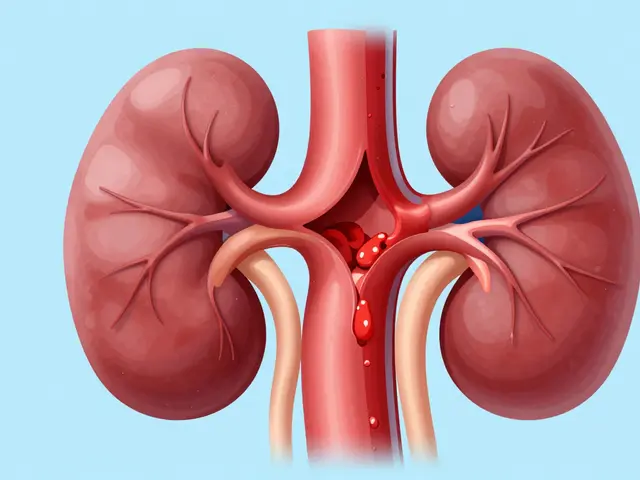
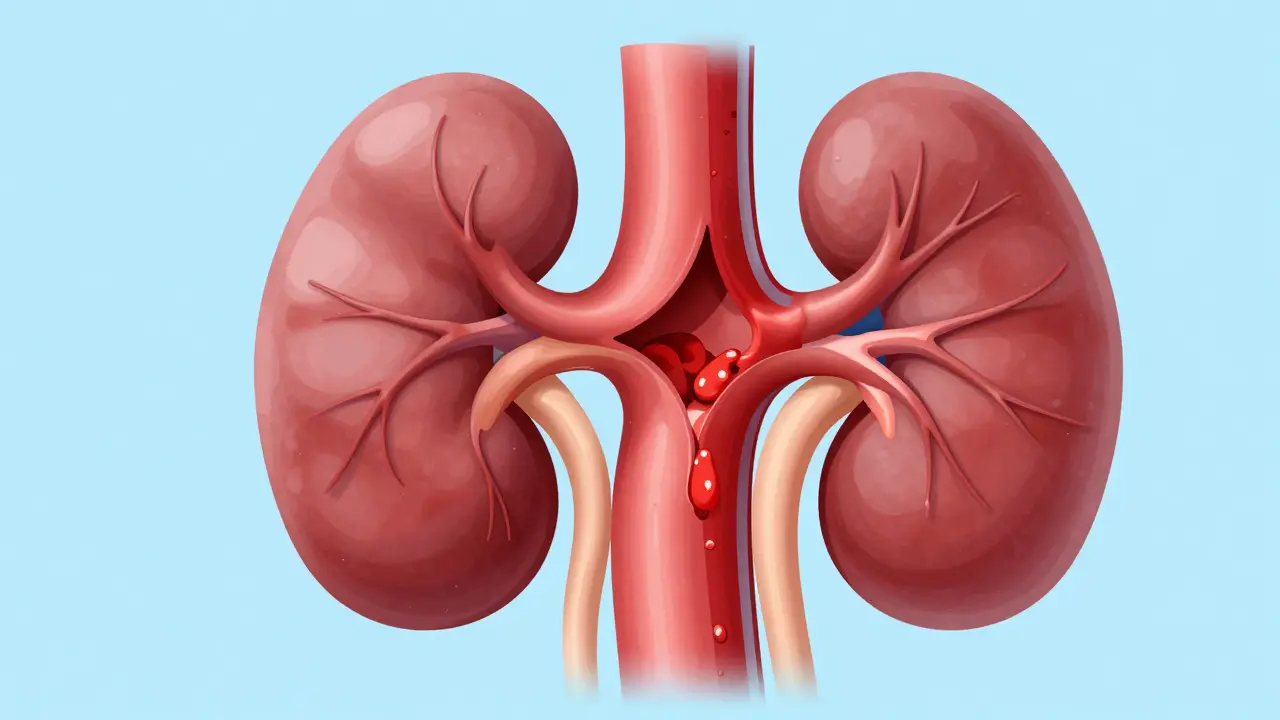
To understand why this happens, we have to look at how the kidney keeps itself alive when blood flow is low. In a healthy body, the kidney manages its internal pressure to ensure it can filter waste from the blood. When a renal artery narrows-a condition known as Renal Artery Stenosis (the narrowing of one or both arteries that carry blood to the kidneys)-the kidney feels like it's starving for oxygen and pressure. To fight this, the body releases renin, which eventually creates Angiotensin II, a powerful vasoconstrictor.
Here is the trick: Angiotensin II doesn't just raise your overall blood pressure; it specifically squeezes the efferent arteriole (the exit door of the kidney's filter). By tightening the exit, the kidney builds up back-pressure inside the glomerular capillaries. This is a survival mechanism. It keeps the glomerular filtration rate (GFR) high enough to keep the kidney functioning, even though the incoming blood flow is restricted.
What Happens When You Add an ACE Inhibitor?
When you introduce an ACE inhibitor like Lisinopril or Ramipril, you essentially cut the brake lines. The medication blocks the production of Angiotensin II. Suddenly, the "exit door" (the efferent arteriole) flops open. The pressure that was keeping the filter working vanishes almost instantly.
In a kidney with severe stenosis, this leads to a precipitous drop in filtration pressure. Research using micropuncture studies has shown that in stenotic kidneys, Angiotensin II increases resistance at the exit by about 37.5%, compared to only 8.3% in healthy kidneys. When you remove that resistance, intraglomerular pressure can drop by 25-30%, and the kidney simply stops filtering. This manifests as a sharp rise in serum creatinine levels-often more than 30%-within 7 to 10 days of starting the drug.
| Stenosis Type | Mechanism | Clinical Outcome | Recommendation |
|---|---|---|---|
| Bilateral (Both Kidneys) | Total loss of filtration pressure in both organs | High risk of Acute Kidney Injury (AKI) | Strictly Contraindicated |
| Unilateral (One Kidney) | The healthy kidney compensates for the failing one | Stable eGFR in most cases | Use with Caution |
| Solitary Kidney (One existing kidney is stenotic) | No backup organ to maintain waste filtration | Rapid renal failure | Strictly Contraindicated |
The "Bilateral" Distinction: Why Some People Are Safe
You might hear that some people with renal artery stenosis actually *do* take these meds. This is because there is a huge difference between having one narrowed artery and two. If only one kidney is affected (unilateral stenosis), the other healthy kidney can usually pick up the slack. In fact, the ASTRAL trial follow-up showed that people with unilateral stenosis had almost no significant difference in their kidney function decline when using ACE inhibitors compared to those who didn't.
However, if both kidneys are narrowed (bilateral), or if you only have one kidney and that one is narrowed, you have no safety net. In these cases, the medication can trigger acute renal failure. A landmark study in the New England Journal of Medicine documented that 12 out of 15 patients with bilateral stenosis developed acute renal failure after taking captopril. This is why the FDA and other health bodies maintain such a strict warning.
Spotting the Warning Signs and Screening
How do doctors prevent this? They look for "red flags" before prescribing. If a patient has accelerated hypertension (blood pressure that spikes suddenly or is very hard to control), an abdominal bruit (a whooshing sound heard with a stethoscope over the kidney area), or unexplained kidney impairment, they are considered high-risk. In these cases, a Renal Artery Duplex Ultrasound is the go-to tool, boasting about 86% sensitivity in detecting significant narrowing.
If you've already started the medication, the most critical window is the first two weeks. The National Institute for Health and Care Excellence (NICE) recommends checking renal function and potassium levels approximately 10 days after the first dose. If your creatinine jumps by more than 30% in that window, it's a major signal to investigate for bilateral renal artery stenosis immediately.
Are ARBs a Safe Alternative?
A common question is whether Angiotensin Receptor Blockers (ARBs), like Losartan or Valsartan, can be used instead. The short answer is no. While ARBs work differently (they block the receptor instead of the enzyme), they still stop the action of Angiotensin II. Because the problem is the lack of pressure in the kidney, and both drug classes remove that pressure, ARBs carry the same contraindications. If an ACE inhibitor causes kidney failure in a patient with stenosis, switching to an ARB will not fix the problem; it will likely continue it.
Recovery and Long-Term Outlook
The good news is that this type of kidney damage is usually reversible. If the medication is stopped quickly, the body can resume its own production of Angiotensin II, the efferent arterioles will constrict, and filtration pressure returns. However, there is a clock ticking. If the kidney remains severely under-perfused for more than 72 hours, permanent tissue damage can occur, meaning the kidney may never fully recover its previous function.
Can I take an ACE inhibitor if only one of my renal arteries is narrowed?
Generally, yes, but with caution. If you have unilateral renal artery stenosis and the other kidney is healthy, the functioning kidney usually compensates. However, your doctor will likely monitor your creatinine and potassium levels more closely to ensure your overall kidney function remains stable.
What are the most common symptoms of ACE inhibitor-induced kidney failure?
Many patients don't feel any symptoms initially. The "failure" is often detected during routine blood tests as a significant rise in serum creatinine (typically >30%). Some may experience decreased urine output or swelling (edema) in the legs and ankles as waste and fluid build up in the body.
Is it safe to switch from an ACE inhibitor to an ARB if I have bilateral stenosis?
No. ARBs (Angiotensin Receptor Blockers) block the same pathway as ACE inhibitors. They both prevent Angiotensin II from constricting the efferent arteriole, which is the primary cause of the pressure drop in stenotic kidneys. Therefore, ARBs are also contraindicated for bilateral renal artery stenosis.
How is renal artery stenosis diagnosed before starting these medications?
The most common initial screening tool is a renal artery duplex ultrasound. For more definitive confirmation, doctors may use a CT angiography (CTA) or an MR angiography (MRA) to visualize the narrowing of the arteries.
Will my kidney function return to normal if I stop the drug?
In most cases, the decline in function is reversible once the medication is discontinued. However, if the kidney has been severely under-perfused for more than 72 hours, some permanent damage may occur. Quick detection and discontinuation are key to a full recovery.