
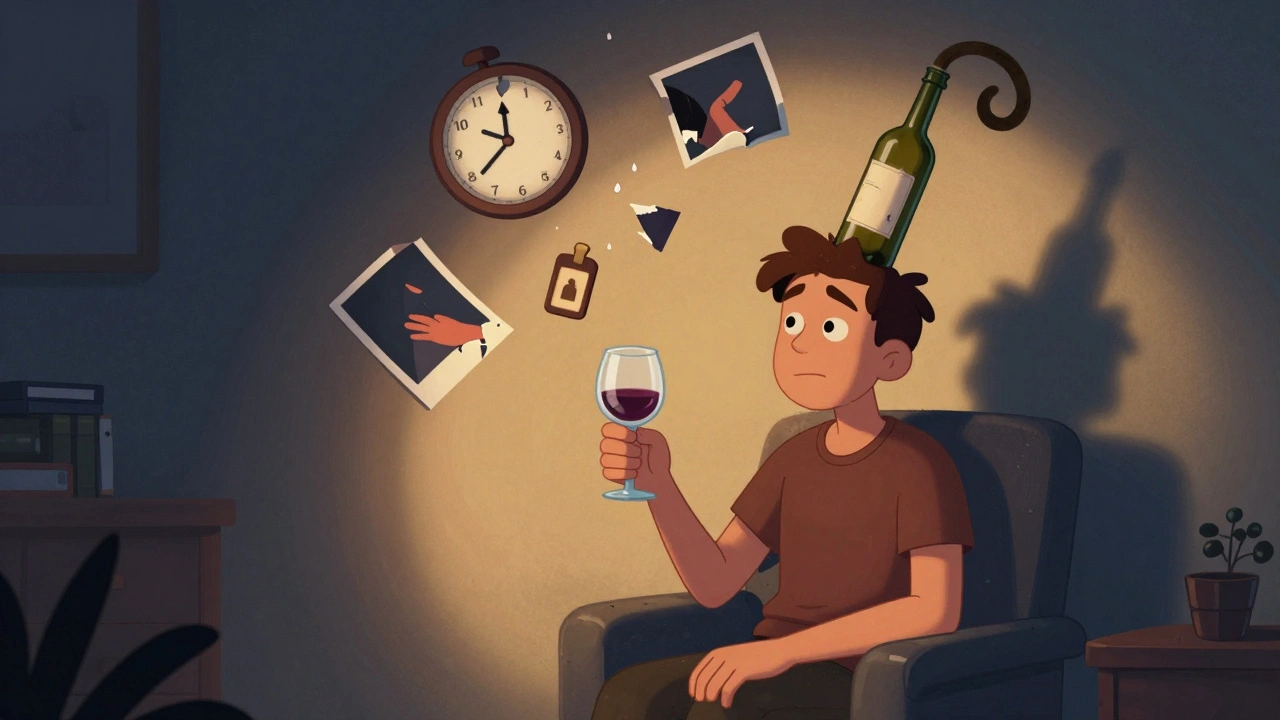
Chronic Alcohol Use Disorder isn’t just about drinking too much. It’s a medical condition where your brain and body get stuck in a cycle you can’t break, even when it’s destroying your health, relationships, and life. You might not realize it at first. Maybe you started with a drink after work, then two, then a bottle of wine every night. Then you needed it to sleep, to calm down, to feel normal. Now, you’re waking up shaky, anxious, or sick-and you know you shouldn’t drink, but you can’t stop. That’s not weakness. That’s disease.
What Happens to Your Body When You Drink Too Much for Too Long
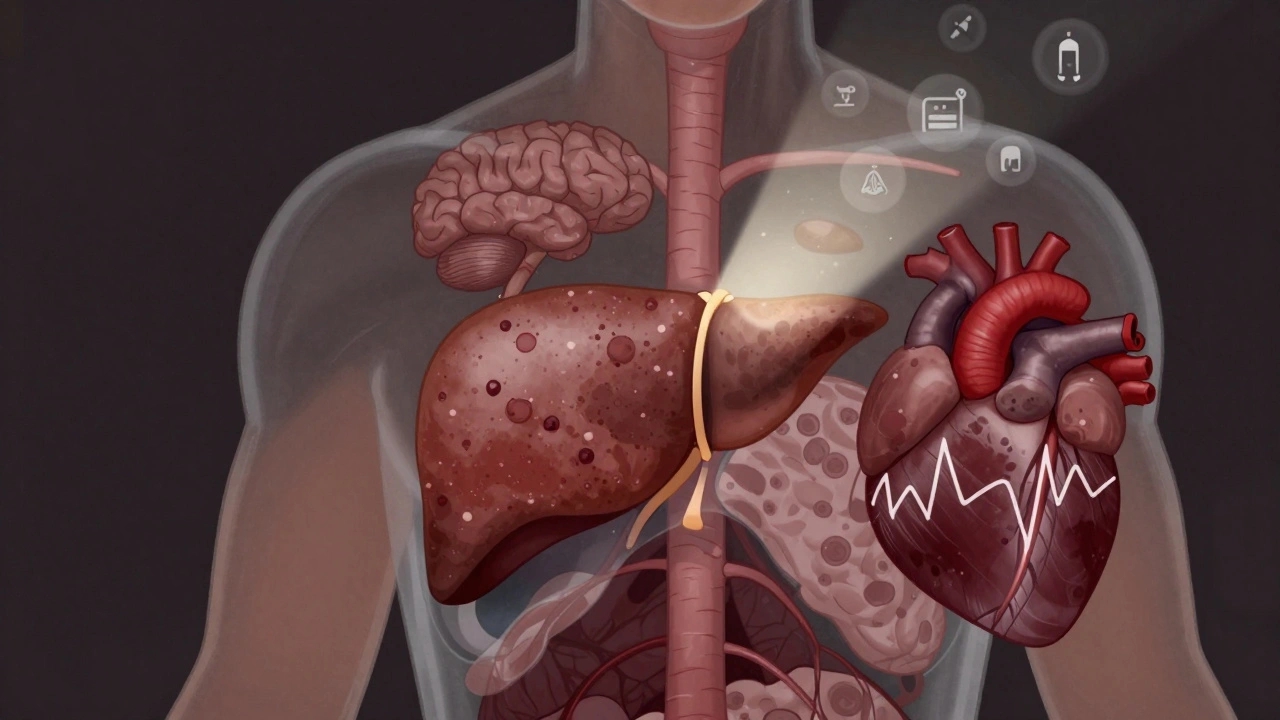
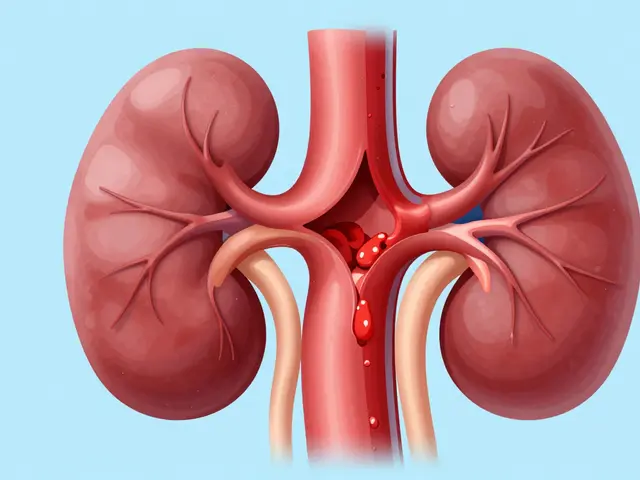
Your liver takes the first hit. After years of heavy drinking, almost everyone develops fatty liver. It’s reversible-if you stop. But if you keep going, inflammation sets in: alcoholic hepatitis. Your liver cells die. Scar tissue builds up. Eventually, cirrhosis sets in. At this point, your liver can’t filter toxins, make proteins, or store energy. Some damage can heal if you quit, but not all. Once it’s gone, it’s gone.Alcohol doesn’t just hurt your liver. It messes with your brain. Long-term use shrinks brain tissue. Memory fades. You forget names, dates, even where you left your keys. Thinking gets slow. Decision-making? Gone. Some people develop Wernicke’s encephalopathy-a brain disorder from vitamin B1 deficiency. Symptoms: confusion, wobbly walking, strange eye movements. Left untreated, it can turn into Korsakoff syndrome, a permanent form of dementia.
Your heart doesn’t escape either. Heavy drinking raises your blood pressure. It causes irregular heartbeats-atrial fibrillation. That increases your stroke risk by 34%. It weakens your heart muscle. You’re more likely to have a heart attack. And if you’ve ever had a blackout after a night out, that’s not just memory loss. It’s your brain shutting down from too much alcohol poisoning.
Alcohol also weakens your immune system. You’re 2.7 times more likely to get pneumonia. Colds last longer. Infections hit harder. Even minor cuts take longer to heal. And your risk for cancer? It goes up. Mouth, throat, liver, breast, bowel. One drink a day? That’s a 12% higher chance of breast cancer. Five drinks a day? Five times the risk of mouth cancer.
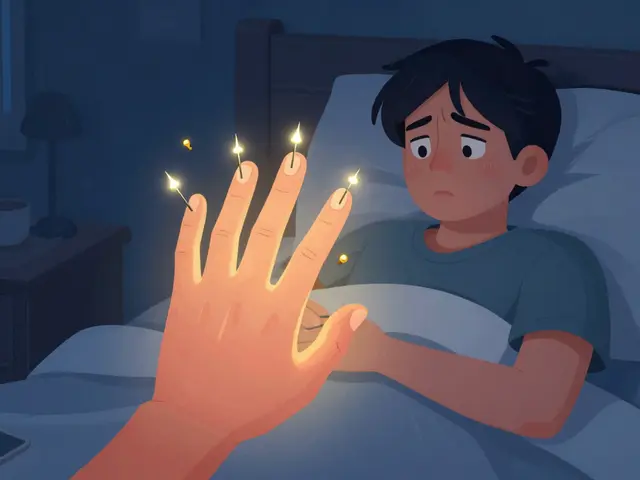
Then there’s the physical toll. Your face gets red, puffy. Blood vessels burst under your skin. Your hands shake in the morning. You stumble walking. Your balance is off. You fall more. And when you try to quit? Withdrawal hits hard: sweating, racing heart, nausea, seizures, hallucinations. This isn’t a bad hangover. This is your nervous system screaming for alcohol.
It’s Not Just Physical-Your Mind Gets Trapped Too
People think alcohol use disorder is about willpower. It’s not. It’s brain chemistry. Alcohol floods your brain with dopamine-the feel-good chemical. Over time, your brain stops making dopamine on its own. You need alcohol just to feel normal. That’s dependence.Depression and anxiety don’t just come with AUD-they’re part of it. You drink to feel better. But alcohol is a depressant. It makes anxiety worse. It deepens sadness. You start feeling worthless. Isolated. Hopeless. You lose jobs. Relationships break. Money runs out. You lie to cover it up. You feel shame. And shame keeps you drinking.
It’s a loop: drink to cope → feel worse → drink more → feel worse. And the longer it goes on, the harder it is to break. That’s why quitting alone rarely works. Your brain has rewired itself. You need help.
How Is It Diagnosed? It’s Not Just ‘Drinking Too Much’
Doctors don’t diagnose AUD by counting drinks. They look at behavior. The DSM-5, the standard used by doctors since 2013, lists 11 criteria. If you have two or more in a year, it’s mild. Four to five? Moderate. Six or more? Severe.Examples:
- You’ve tried to cut down but couldn’t.
- You spend a lot of time getting alcohol, using it, or recovering from it.
- You keep drinking even though it’s hurting your health.
- You’ve given up hobbies or activities because of alcohol.
- You need more to get the same effect (tolerance).
- You get sick when you stop (withdrawal).
It’s not about how much you drink. It’s about what alcohol does to your life. Even someone who drinks one glass of wine a day can have AUD if it’s controlling them.
What Treatments Actually Work?
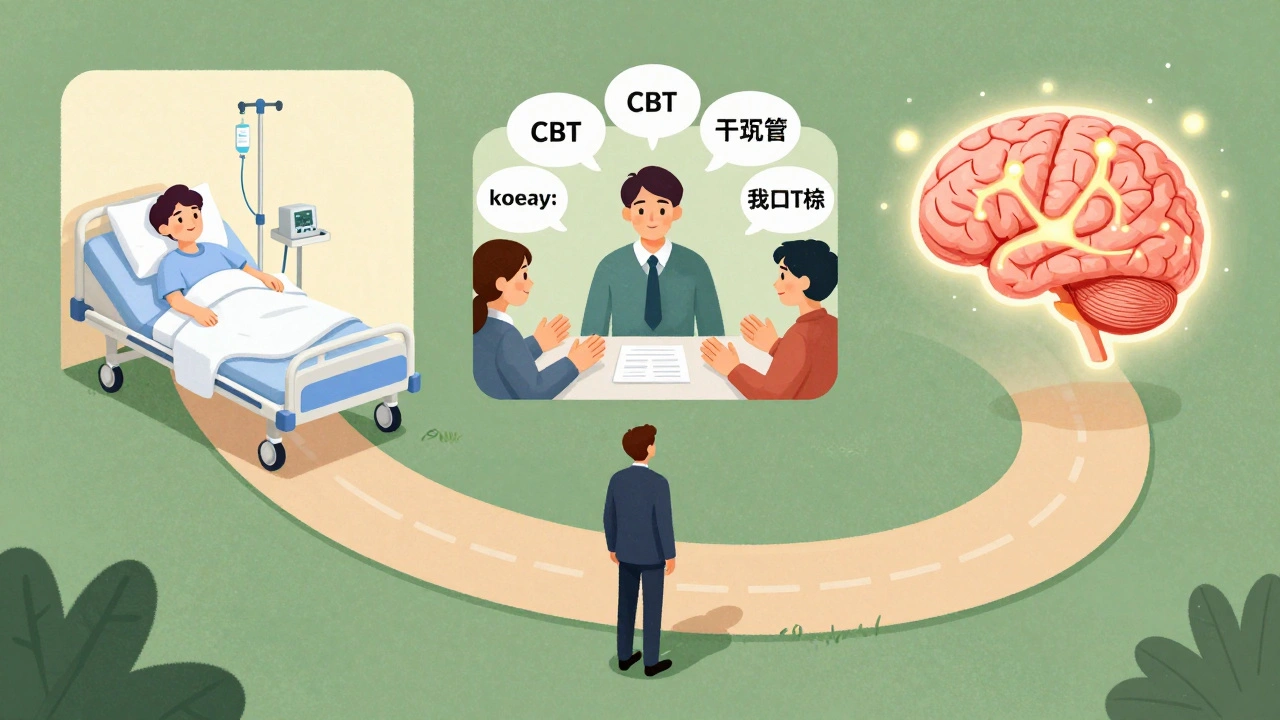
There’s no one-size-fits-all fix. But treatment works. And it’s not just about stopping drinking-it’s about rebuilding your life.Detox is step one-but it’s not treatment. If you’ve been drinking heavily for months or years, quitting cold turkey can be deadly. Seizures. Delirium tremens. Death. Medically supervised detox keeps you safe. Doctors monitor your vitals. They give you medicine to calm your nervous system. This usually takes 3-7 days.
Medications help rewire your brain. Three FDA-approved options exist:
- Naltrexone blocks the pleasurable effects of alcohol. You still drink, but it doesn’t feel good. Reduces cravings. Taken as a pill or monthly shot (Vivitrol).
- Acamprosate helps your brain chemistry settle after stopping. Stops the constant urge to drink. Best for people who’ve already quit.
- Disulfiram makes alcohol make you sick. Drink and you get nausea, vomiting, headache. Works as a deterrent. Not for everyone.
Therapy changes your thinking. Cognitive Behavioral Therapy (CBT) is the most studied. It teaches you to spot triggers-stress, boredom, parties-and replace drinking with healthier habits. Studies show CBT cuts heavy drinking days by 60%. Motivational Enhancement Therapy helps you find your own reasons to quit. It’s not about being told what to do. It’s about you deciding you want a different life.
Support groups aren’t optional-they’re essential. Alcoholics Anonymous (AA) has helped millions since 1935. It’s free, everywhere, and based on peer support. One-year abstinence rates? Around 27%. Not perfect. But better than going it alone. SMART Recovery is another option-more science-based, less spiritual. It’s about self-empowerment, not surrender.
New treatments are emerging. Transcranial Magnetic Stimulation (TMS)-a non-invasive brain stimulation technique-showed 50% abstinence in a 2022 study. Digital apps like reSET, approved by the FDA, give daily therapy through your phone. In trials, 40% of users stayed sober vs. 17% without the app.
The best results? Combining meds + therapy. One study showed 24% higher abstinence rates when both were used together.
Recovery Isn’t Perfect. Relapse Happens.
Many people think relapse means failure. It doesn’t. It’s part of the process. Like with diabetes or high blood pressure, AUD is a chronic condition. You manage it. Sometimes you slip. You get back up.What matters is what you do after. Did you reach out? Did you go to a meeting? Did you call your counselor? That’s recovery.
And yes-some damage is permanent. But stopping now means you stop more damage. Your liver can heal. Your brain can recover. Your relationships can mend. Your life can change.
Where Do You Start?
If you think you have AUD, don’t wait. Don’t wait until you lose your job. Your family. Your health.Start here:
- Call your doctor. Tell them you’re worried about your drinking. They can screen you, prescribe meds, or refer you to treatment.
- Visit the NIAAA’s Rethinking Drinking website. It’s free, science-based, and gives you tools to cut back or quit.
- Try a meeting. AA, SMART Recovery, or Refuge Recovery. You don’t have to speak. Just listen.
- If you’re in crisis-having withdrawal symptoms or thinking of suicide-go to the ER. Or call 999.
Recovery isn’t about being perfect. It’s about being willing. One day at a time. One choice at a time.
It’s Not a Moral Failing. It’s a Medical Condition.
You didn’t choose this. Your brain changed. But you can change it back-with the right help. Thousands of people in the UK and around the world are living sober lives. They didn’t have magic willpower. They got treatment. They stayed connected. They kept trying.You can too.

13 Comments
Man i never realized how much alcohol messes with your dopamine system until i read this. Its not even about willpower anymore its like your brain got hijacked by a chemical ghost. I used to think people who drank too much were just weak but now i get it - its a full neurochemical rewrite. Scary shit.
The way the brain adapts to chronic alcohol exposure is a perfect example of homeostatic dysregulation. The reward pathway becomes hypersensitive to cues while the prefrontal cortex atrophies - leading to a loss of executive control. It's not addiction as a moral failure, it's neuroplasticity gone rogue.
Yo this hits different. I’ve been sober 18 months and honestly? My brain feels like it finally woke up from a 10-year nap. The fog lifted. I remembered what coffee tasted like. I started liking walks again. It ain’t magic - it’s biology. Your body remembers how to be human if you give it half a chance.
It is imperative to underscore that medically supervised detoxification remains the cornerstone of intervention in cases of severe alcohol use disorder. Without appropriate pharmacological management, the risk of delirium tremens and subsequent mortality is nontrivial and clinically significant.
People just need to stop being weak. Back in my day we just quit. No meds no therapy. Just tough it out. This whole medicalization thing is just an excuse to avoid responsibility.
lol another sobriety post. i'm just here for the drama. 🤡
I’ve been thinking a lot about how the body holds trauma, and alcohol is such a strange coping mechanism - it’s like your nervous system is screaming for regulation but the only tool you’ve got is something that makes the screaming louder. It’s not that people don’t want to stop, it’s that their autonomic nervous system has forgotten how to calm down without it. And that’s why meds like naltrexone or acamprosate aren’t crutches - they’re temporary scaffolding while the brain relearns how to exist without chemical chaos.
It is deeply concerning that society has capitulated to the myth of 'disease' as a justification for chronic self-indulgence. This article romanticizes dependency. A person with discipline, moral fortitude, and proper upbringing would not succumb to such biochemical surrender. The solution is not pharmaceuticals - it is character.
Wait… so you're telling me Big Pharma, the AMA, and the government are all in cahoots to make us think alcoholism is a disease so they can sell us pills?!! I read on a forum that the FDA approves these drugs because they're funded by pharmaceutical lobbyists who also own distilleries!! And what about the 2022 TMS study?!! That was funded by the WHO and they're part of the UN's global depopulation agenda!! I've got emails!!
i think people just need to stop drinking. no need for all this fancy stuff. i know a guy who just quit cold turkey and he’s fine now. why make it so hard?
Too long. TL;DR: drink less. quit if you can't.
I just want to say - if you’re reading this and you’re scared to reach out, you’re not alone. I was in the exact same place two years ago. Shaking in the bathroom at 3am, terrified to call anyone. But I did. I called my sister. I went to a SMART Recovery meeting. I didn’t speak. I just sat there. And that was enough. Healing isn’t loud. It’s quiet. It’s showing up even when you feel broken. You don’t have to be fixed to be worthy of help. You already are.
It’s fascinating how the neurobiological substrate of addiction mirrors the epistemological crisis of late-stage capitalism - wherein the subject seeks solace in commodified intoxication as a palliative for alienation. The real tragedy isn’t the cirrhosis - it’s the ontological void that alcohol attempts, and fails, to fill. 🤔