
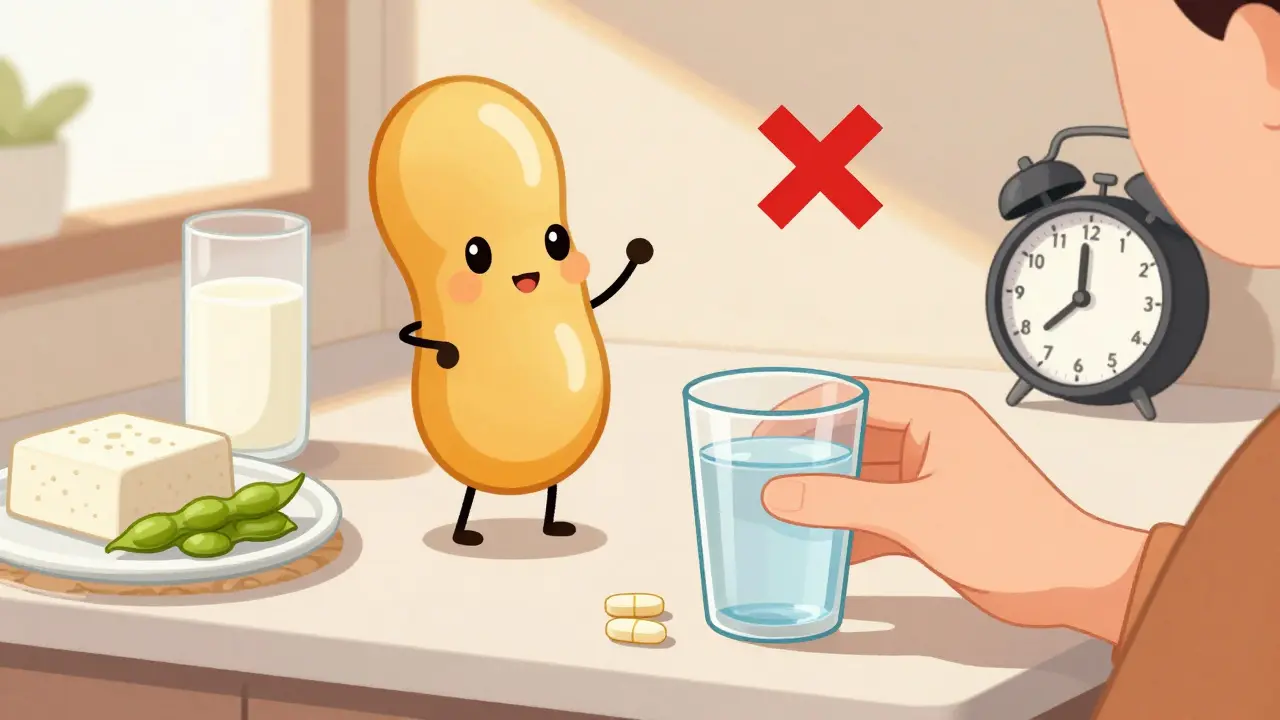
If you’re taking levothyroxine for hypothyroidism and you eat soy products like tofu, edamame, soy milk, or tempeh, you might be wondering: is soy blocking my medication? The answer isn’t yes or no-it’s timing. Soy doesn’t make your thyroid worse. It doesn’t cancel out your pills. But if you eat soy right after taking your medication, it can cut how much of the drug your body absorbs by up to 30%. That’s enough to throw your TSH levels out of whack, make you feel tired again, and send you back to the doctor for a dose adjustment.
Why Soy Interferes with Thyroid Medication
Soy contains compounds called isoflavones-mainly genistein and daidzein. These aren’t harmful on their own. In fact, they’re linked to lower cancer risk and better heart health. But when they meet levothyroxine in your gut, they bind to it like magnets. Think of it like a sponge soaking up water: the soy proteins soak up the thyroid hormone before it can get into your bloodstream. That’s why your body ends up with less of the medicine you just swallowed. This isn’t just theory. Back in the 1960s, doctors noticed babies on soy formula needed way higher doses of levothyroxine to stay healthy. Fast forward to today, and studies confirm it: if you take your pill and then chug soy milk, absorption drops by 9% to 30%. The effect is strongest when soy and medication are taken together. Separate them by even a couple of hours, and the interference shrinks dramatically.How Much Soy Is a Problem?
Not all soy is the same. Whole soy foods like tofu, edamame, and soy sauce have more protein and isoflavones, so they’re more likely to interfere. Soy milk? Same deal. A single cup of soy milk can trigger the same drop in absorption as a soy protein shake. Soy isoflavone supplements? They’re weaker offenders. Some studies show they cause less interference than whole soy foods. But if you’re popping pills with 100 mg of genistein every morning, don’t assume you’re safe. The evidence isn’t clear-cut, and your body might react differently than someone else’s. And here’s something surprising: fiber supplements like psyllium can interfere too-but soy is still worse. Calcium and iron? Those are the big ones. They can knock down absorption by 25% to 36%. Coffee? About 20%. So soy sits right in the middle of the most problematic foods and drinks for thyroid medication.What the Experts Say (And Why They Disagree)
You’ll hear different advice depending on who you ask. The Mayo Clinic says wait at least 2 hours after taking levothyroxine before eating soy. Johns Hopkins says 3 hours. Some doctors, like Dr. David Heber from UCLA, still recommend 4 hours. Why the gap? It comes down to who you are. If you’re an adult with stable hypothyroidism, 2 hours might be enough. But if you’re a child, pregnant, or just started medication, your body is more sensitive. A 2023 study in the European Thyroid Journal found that for most adults, waiting just 2 hours brought TSH levels back to normal-no change in free T4 or T3. That’s why Mayo updated their guidelines in March 2023. But here’s the catch: some people are just more sensitive. Reddit threads are full of stories like this: “I took Synthroid with soy milk for years. TSH was fine. Then I switched brands of soy milk and my TSH jumped to 5.2.” Another user said, “I had to up my dose by 25 mcg after adding daily soy yogurt.” The truth? Your body might handle soy fine. Your neighbor’s might not. That’s why the best advice isn’t “never eat soy.” It’s “know how your body reacts.”
Real-Life Scenarios: What Works
Most people who manage this well do one of two things:- Morning routine: Take your pill as soon as you wake up, with a full glass of water. Wait 60 minutes before eating or drinking anything else. Then wait another 2 to 3 hours before having soy. That means no soy lattes, no tofu scramble, no soy protein bars until after lunch.
- Bedtime routine: Take your pill at night, 2 to 3 hours after your last meal. That way, your last soy-containing dinner (say, stir-fried tofu) is long past by the time you take your pill. No waiting. No guessing.
What to Avoid (And What’s Safe)
Don’t:- Take levothyroxine with soy milk, soy yogurt, or soy protein shakes.
- Eat tofu, tempeh, or edamame within 2-3 hours of your pill.
- Use soy-based infant formula without adjusting dose-babies need higher amounts and close monitoring.
- Soy sauce (tiny amounts, low protein).
- Tempeh or tofu eaten 4+ hours after your pill.
- Soy isoflavone supplements taken at least 2 hours after medication (but check with your doctor).
- Other plant proteins like lentils, chickpeas, or almonds-these don’t interfere.
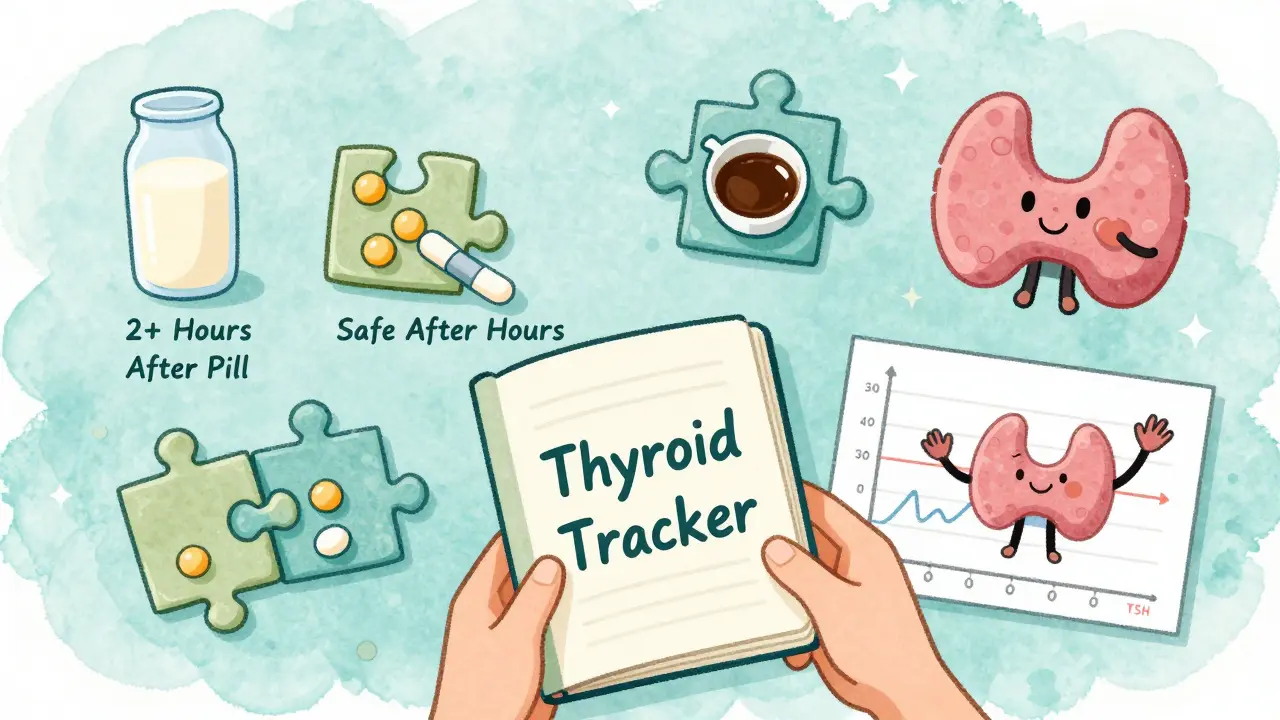
What If You’ve Been Eating Soy With Your Pill?
If you’ve been mixing soy and levothyroxine for months-or years-and you’ve felt fine, don’t panic. But get your TSH checked. A normal TSH doesn’t always mean you’re getting the right dose. Some people’s bodies compensate for poor absorption by producing more TSH. Others just stay under the radar. A 2023 Healthline survey of 1,200 hypothyroid patients showed:- 31% had elevated TSH after consuming soy within 1 hour of their pill.
- 42% saw no change when soy was spaced 2+ hours apart.
- 27% didn’t even realize soy could interfere.
How to Track Your Progress
Keep a simple log:- Date and time you took your pill
- What you ate or drank within 4 hours
- Any symptoms (fatigue, brain fog, weight gain)
- Your TSH levels from lab tests
The Bigger Picture
Soy consumption is rising. The global soy food market hit $16.2 billion in 2022. Levothyroxine is the most prescribed thyroid drug in the U.S.-over 123 million prescriptions a year. More people than ever are managing hypothyroidism while eating plant-based diets. The good news? You don’t have to give up soy. You just need to be smart about when you eat it. And you’re not alone. In 2015, only 42% of endocrinologists routinely talked to patients about soy. By 2023, that number jumped to 68%. Awareness is growing. Guidelines are improving. Research is moving toward personalized timing-maybe one day, a simple genetic test will tell you exactly how long to wait after your pill. For now, stick with the basics: take your pill on an empty stomach, wait at least 2 hours before soy, and get your TSH checked every 6 to 12 months. That’s how you stay in control-without giving up the foods you love.Can I eat soy if I take levothyroxine?
Yes, you can eat soy, but not right before or after your medication. Soy can reduce how much levothyroxine your body absorbs. To avoid this, wait at least 2 to 3 hours after taking your pill before eating soy products like tofu, soy milk, or edamame. Some people do better with a 4-hour gap, especially if they’re children, pregnant, or just starting treatment.
Does soy make hypothyroidism worse?
No, soy doesn’t make hypothyroidism worse. It doesn’t damage your thyroid. It just interferes with how well your body absorbs the medication. If you take your pill correctly and separate it from soy, your thyroid function stays stable. The real issue is inconsistent absorption leading to high TSH levels-not the soy itself.
How long should I wait after taking levothyroxine before eating soy?
Wait at least 2 hours. For most adults, 2 hours is enough to prevent significant interference. For children, infants, or people who’ve had thyroid surgery, 3 to 4 hours is safer. If you’re unsure, start with 3 hours and adjust based on your TSH results. Bedtime dosing can make this easier-take your pill 2 hours after your last meal, and soy won’t be an issue.
Can I take levothyroxine at night instead of in the morning?
Yes, and many people find it easier. Taking levothyroxine at bedtime, at least 2 hours after your last meal, avoids interference from morning soy foods like soy milk or tofu scrambles. Studies show nighttime dosing works just as well as morning dosing, as long as you’re consistent. Talk to your doctor before switching, but it’s a common and effective strategy.
What other foods interfere with levothyroxine?
Calcium supplements, iron supplements, and high-fiber foods like bran or psyllium can also block absorption. Coffee reduces absorption by about 20%. Wait at least 4 hours after your pill before taking calcium or iron. For coffee, wait 60 minutes. Fiber and soy need 2 to 3 hours. Always take levothyroxine with water on an empty stomach for best results.
Should I stop eating soy completely?
No. There’s no need to quit soy unless your doctor tells you to. Many people eat soy daily and manage their thyroid levels just fine by timing their medication correctly. The goal isn’t elimination-it’s consistency. Find a routine that works-morning with a 3-hour wait, or nighttime after dinner-and stick with it.



10 Comments
Soy and levothyroxine? I’ve been doing the bedtime thing for two years now. No more weird fatigue, no more TSH spikes. Just take the pill after dinner, wait two hours, and sleep. Works like a charm. No need to overthink it.
I used to swear by morning soy lattes until my TSH jumped to 8.3. I thought it was stress, then I thought it was the new Synthroid brand. Turned out? My soy milk was the silent saboteur. I switched to almond milk and started taking my pill at 10 p.m. Six weeks later, my endo said I was ‘textbook normal.’ Honestly? I’m shocked it took me this long to connect the dots. People need to know this isn’t just anecdotal-it’s biochemistry.
And don’t get me started on calcium supplements. I used to take my iron and my thyroid pill together like some kind of health warrior. Turns out I was just poisoning my absorption. Now I have a little chart taped to my fridge. It’s ridiculous, but it works.
The real win? I didn’t have to quit tofu. I just had to stop eating it with my pill. That’s the difference between restriction and strategy. You don’t give up your life-you just rearrange the pieces.
Also, I’ve noticed that fermented soy like tempeh seems less aggressive than soy milk. Not sure if that’s placebo or science, but I’ve been eating it for lunch and it’s fine. Maybe the fermentation breaks down the isoflavones? Just a thought.
And for the love of god, stop taking your pill with coffee. I’ve seen people do this like it’s a ritual. One cup of joe drops absorption by 20%. That’s like throwing away a quarter of your dose. You wouldn’t do that with insulin. Why do it with levothyroxine?
Bottom line: consistency > perfection. Pick a time. Stick to it. Track your TSH. And if your doctor brushes you off? Find a new one. This stuff matters.
The data is clear: soy protein reduces levothyroxine absorption by up to 30%. A two-hour gap is sufficient for most adults, as demonstrated in the 2023 European Thyroid Journal study. Adherence to timing protocols significantly improves TSH stability. This is not speculation-it is evidence-based practice.
ok so i read this whole thing and now im like… what if soy is actually GOOD for you but the pharma companies made up this whole thing so people keep buying their pills?? like i swear i feel better when i eat tofu with my med… maybe its all a scam??
My mom switched to nighttime levothyroxine after 10 years of bad TSH levels 🙌 She’s been eating soy since the 90s and never thought twice. Now she’s energized, sleeping better, and her doctor said she’s ‘in the green zone.’ If you’re struggling, just try moving your pill to bedtime. No cost. No diet change. Just timing. Life-changing.
EVERYTHING IS A COVER-UP. Soy is genetically modified to suppress thyroid function. The FDA knows. The WHO knows. That’s why they recommend ‘waiting 2 hours’-it’s not to help you, it’s to make you think you’re safe while they slowly drain your energy. Look up ‘thyroid suppression program’ on archive.org. They’ve been doing this since the 70s. 🧠💀
It’s fascinating how a simple biochemical interaction-protein binding to hormone-can have such profound clinical consequences. The body doesn’t distinguish between ‘natural’ and ‘synthetic’; it responds to molecular structure. Soy isoflavones aren’t evil-they’re just… in the way. This isn’t about demonizing food. It’s about understanding physiology. We’re not machines, but we’re not magic either. Timing isn’t a suggestion-it’s a law of pharmacokinetics.
And yet, we treat it like a lifestyle hack. We want rules that are flexible, but biology doesn’t negotiate. Maybe the real lesson here is humility: our bodies are complex systems we barely comprehend, and sometimes the best thing we can do is follow the science, even when it’s inconvenient.
As someone who grew up in a household where tofu was a weekly staple and levothyroxine was a daily ritual, I’ve seen both sides. My grandmother took her pill with soy milk for 20 years and never had an issue. My cousin? TSH skyrocketed after switching to organic soy yogurt. Same drug. Same soy. Different bodies.
That’s the real takeaway: individual variability trumps blanket advice. The guidelines are a starting point, not a scripture. Track your labs. Notice your energy. Adjust. If you’re stable, don’t fix what isn’t broken. But if you’re tired, bloated, or your TSH is creeping up? Try the 3-hour gap. It’s free. It’s simple. And it might just be the missing piece.
Also, psyllium is a sneaky one. I didn’t realize my fiber gummies were sabotaging me until I swapped them for oat bran. Big difference.
Why are we even talking about this like its a crisis? You take a pill. You eat food. Your body figures it out. The medical industry wants you to believe you need a 3 hour window and a spreadsheet just to eat breakfast. It’s control. It’s fear. It’s profit. The real issue? You’re being taught to distrust your own body. Just take the pill. Eat what you want. Let your thyroid do its job. Or don’t. Who cares?
There is a profound metaphysical irony in the fact that a substance so deeply woven into the tapestry of plant-based sustenance-soy-should become, in the context of modern pharmacology, an unwitting adversary. It is not the soy that is the problem, but the collision of ancient dietary wisdom with the precision of synthetic endocrinology. We have elevated medication to a sacrament, and yet we treat food as a mere distraction. Perhaps the true healing lies not in separating pill from protein, but in reestablishing a harmonious rhythm between ingestion and assimilation. The body, in its infinite intelligence, seeks equilibrium. The question is: are we listening, or merely scheduling?