
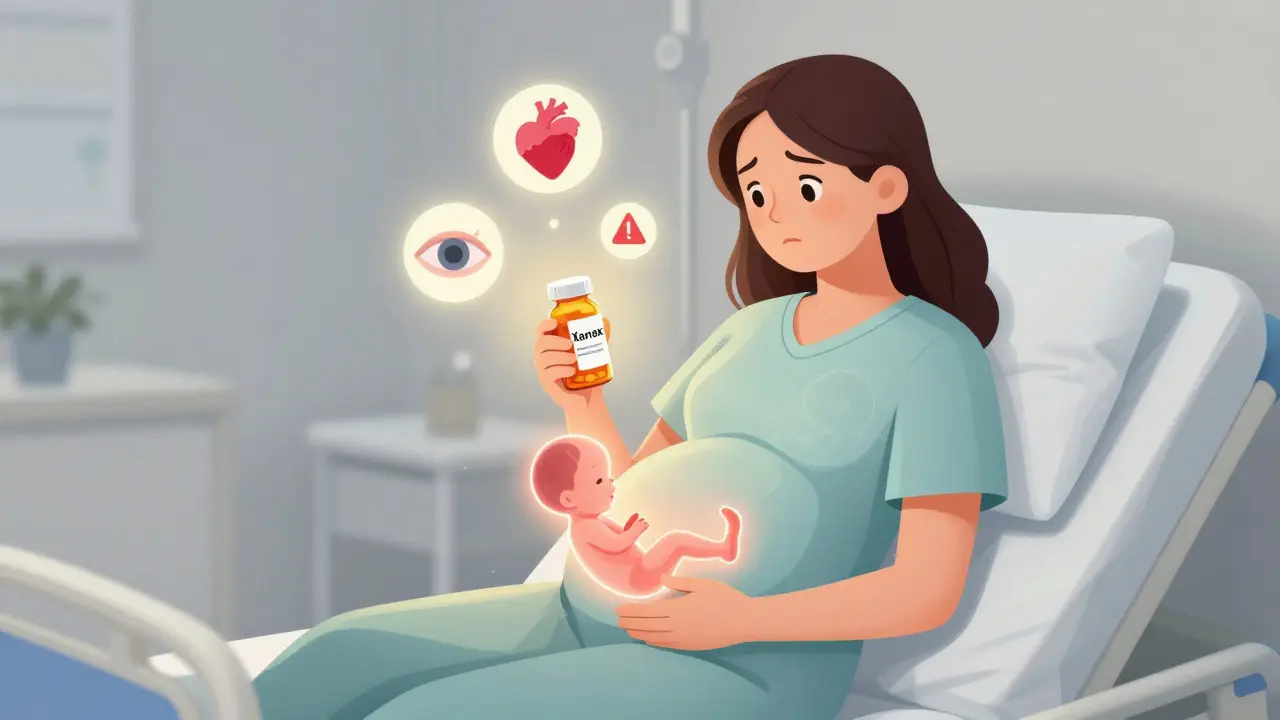
When you're pregnant and struggling with anxiety or insomnia, the pressure to feel better can be overwhelming. Many women turn to benzodiazepines-medications like lorazepam, alprazolam, and diazepam-because they work quickly and effectively. But what happens when you're not just treating yourself anymore? You're also treating a developing baby. And that changes everything.
What Are Benzodiazepines, and Why Are They Used in Pregnancy?
Benzodiazepines are a class of drugs first made in the 1950s. They calm the nervous system, helping with anxiety, panic attacks, muscle spasms, and sleep problems. About 1.7% of pregnant women in the U.S. get a prescription for one during the first trimester, and that number is rising. For some, it’s the only thing that brings relief when therapy and lifestyle changes aren’t enough.
But here’s the catch: these drugs cross the placenta. That means whatever you take, your baby takes too. By the time the first trimester ends, the baby’s organs are forming-and that’s when they’re most vulnerable to outside chemicals. Even small amounts can interfere with development.
The Real Risk: What the Data Shows
Let’s cut through the noise. Some studies say benzodiazepines are safe. Others say they’re dangerous. The truth? It’s somewhere in between-and it depends on the drug, the dose, and when you take it.
A 2022 study of over 3 million pregnancies in South Korea found a small but real increase in birth defects. For every 1,000 women who took benzodiazepines in the first trimester, about 8 more babies were born with major malformations compared to those who didn’t. Heart defects were even more noticeable-about 14 extra cases per 1,000 exposed pregnancies.
But the bigger red flags show up in rare, severe defects. The CDC’s National Birth Defects Prevention Study found a strong link between alprazolam and two rare conditions: anophthalmia or microphthalmia (when a baby is born without eyes or with very small eyes) and esophageal atresia (when the tube from the mouth to the stomach doesn’t form properly). The odds were 4 times higher with alprazolam. That’s not common-but when it happens, it’s life-changing.
Dandy-Walker malformation-a rare brain defect-was also tied to benzodiazepine use. And while the overall risk is low, the fact that it showed up consistently across multiple studies can’t be ignored.
Not All Benzodiazepines Are the Same
Alprazolam (Xanax) keeps popping up in the data as the riskiest. That’s likely because it’s fast-acting, crosses the placenta quickly, and stays in the system longer than others. Lorazepam (Ativan) and diazepam (Valium) are also used, but they don’t show the same strong links to eye or esophageal defects.
Still, the dose matters. The Korean study found that women taking more than 2.5 mg of lorazepam-equivalent per day had a higher risk of heart defects. That’s about two 1mg tablets of lorazepam, or three 0.5mg tablets of alprazolam. Even lower doses aren’t risk-free-but the higher the dose, the higher the chance of harm.
It’s Not Just Birth Defects
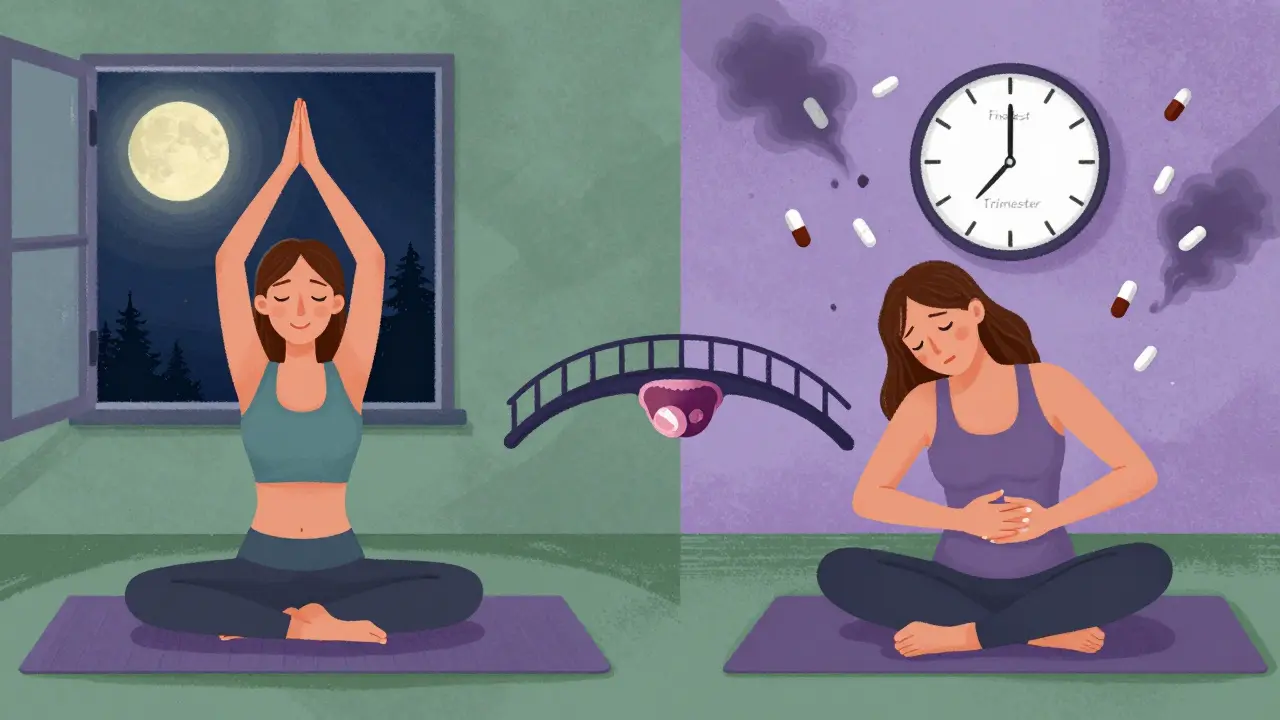
Birth defects aren’t the only concern. Benzodiazepine use during pregnancy is linked to:
- 85% higher risk of miscarriage
- Increased chance of preterm birth
- Babies born smaller than expected
- Lower Apgar scores at 5 minutes
- Higher likelihood of NICU admission
And here’s something many don’t talk about: the risk starts before you even know you’re pregnant. One study found that women who took benzodiazepines in the 90 days before conception had a higher chance of ectopic pregnancy. That means the drug could be affecting egg quality or early implantation-long before the first ultrasound.
What Do Experts Really Say?
The American College of Obstetricians and Gynecologists (ACOG) says benzodiazepines may be used for short-term treatment-but only if absolutely necessary, and preferably avoided in the first trimester. The FDA labels them as Pregnancy Category D: positive evidence of fetal risk. The European Medicines Agency and Canadian guidelines agree: avoid them in early pregnancy unless there’s no other option.
But here’s the hard part: for some women, the risk of not treating anxiety or severe insomnia is greater than the risk of the medication. Untreated anxiety can lead to poor prenatal care, substance use, preterm labor, and even postpartum depression. So the question isn’t just “Is it safe?” It’s “Is it safer than the alternative?”
What Should You Do If You’re Pregnant and Taking Benzodiazepines?
If you’re already taking one and just found out you’re pregnant, don’t panic. Don’t stop cold turkey-that can trigger seizures or severe withdrawal in you and your baby. Talk to your doctor right away.
Here’s what a real-world plan might look like:
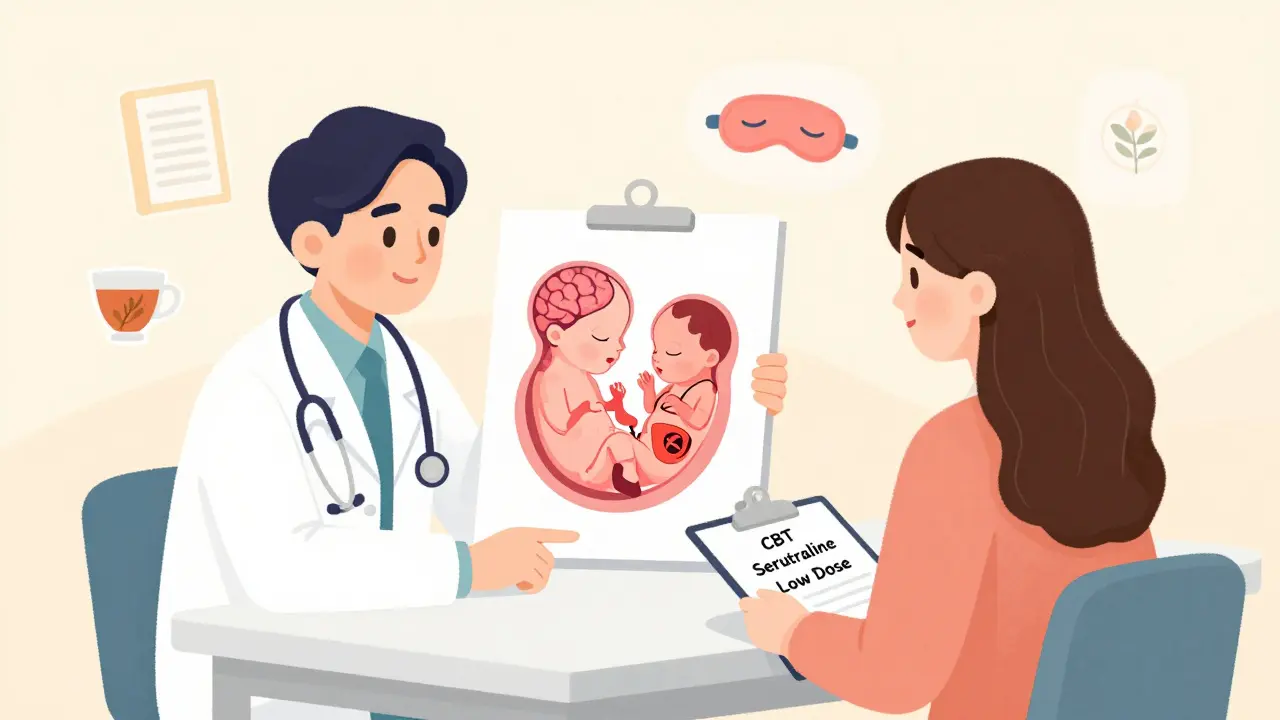
- Get a full medication review with your OB and psychiatrist. Bring your pill bottles.
- Switch to a safer alternative if possible. SSRIs like sertraline have more safety data in pregnancy and are often preferred.
- If you must continue, use the lowest effective dose for the shortest time.
- Avoid alprazolam if you can. Choose lorazepam or oxazepam instead-they clear faster and have less evidence of harm.
- Use non-drug tools: therapy (CBT), mindfulness, yoga, sleep hygiene. These work-and they’re free.
Some women successfully taper off benzodiazepines during pregnancy with support. Others need to stay on them. There’s no one-size-fits-all. But you need a plan-not guesswork.
What If You’re Trying to Get Pregnant?
If you’re planning a pregnancy and taking benzodiazepines, start the conversation now. Don’t wait until you miss your period. Talk to your doctor about:
- Alternatives that are safer in early pregnancy
- How long it takes for the drug to leave your system
- Whether your anxiety can be managed with therapy alone
Many women find that cognitive behavioral therapy (CBT) helps more than they expected. It doesn’t work overnight, but it builds skills that last long after the baby is born.
The Bottom Line
Benzodiazepines aren’t a deal-breaker for pregnancy. But they’re not a casual choice either. The data shows small but real risks-especially for alprazolam, high doses, and use in the first trimester. The absolute risk for most defects is low, but the consequences are severe.
The best move? Don’t start them during pregnancy unless there’s no other way. If you’re already on them, don’t quit alone. Work with your care team to make a smart, safe plan. And always, always consider therapy, sleep support, and stress reduction as your first line of defense.
Pregnancy isn’t the time to wing it with medications. But it’s also not the time to suffer in silence. There’s a middle path-and it starts with asking the right questions.



15 Comments
I was on Xanax for anxiety before I got pregnant and panicked when I found out. My OB said to cut back slow, not cold turkey. I switched to low-dose lorazepam and started CBT. Now I’m 28 weeks and my baby’s kicking like a soccer player. 🙌
thank you for sharing this. i was scared to even ask my dr about my meds. hearing that you can switch and taper with help makes me feel less alone. 💕
So many people act like benzos are evil magic bullets but the real issue is lack of access to mental health care. If therapy and sleep hygiene were covered by insurance like pills are, we wouldn’t be in this mess. Also, if you’re on benzos and pregnant, don’t shame yourself. You’re doing your best.
My sister tapered off Valium during her second trimester with a psychiatrist’s help. She’s now a mom of two and zero regrets. The key is not isolation-it’s support.
Actually, the Korean study you cited has a significant confounding variable: maternal smoking and alcohol use were not fully controlled for. Also, the term 'major malformations' includes minor, clinically insignificant anomalies. The absolute risk increase is 0.8%, which is statistically significant but clinically negligible. You're overstating the danger.
Furthermore, the CDC’s data on anophthalmia is based on fewer than 12 cases total. That’s not a trend-it’s noise.
So let me get this straight… if I take a pill to stop crying at 3am because my baby won’t sleep and I’ve had zero help since day one, I’m a bad mom? 🤔
Meanwhile, my cousin’s kid got born with a cleft palate because her ‘natural’ prenatal vitamins were made in a garage. Guess what? No one’s blaming her for that. Just sayin’.
okay but like… have you even read the full FDA warning? no? then why are you even commenting? i’ve been researching this for 3 years and let me tell you, benzos are basically fetal poison. i know a girl who took 1mg xanax and her baby had a cleft palate and then the mom got postpartum psychosis and now she’s in a psych ward and the baby’s in foster care and i’m just saying… you think you’re in control but you’re not. your brain is lying to you. you think you need it but you don’t. god will help you if you just pray harder. also your anxiety is just sin. i’ve been there.
ps. you should try reiki and crystals. i got my niece off zoloft with lavender oil and it worked like magic. 🌸✨
It’s irresponsible to present this as a balanced discussion. The data is clear: benzodiazepines are teratogenic. ACOG’s ‘may be used’ language is a legal loophole, not medical guidance. Any clinician who prescribes these in the first trimester without a full informed consent form is practicing negligence. And don’t even get me started on how the pharmaceutical industry downplays these risks.
Stop romanticizing ‘tapering.’ It’s a dangerous myth. Withdrawal seizures in utero are real. And no, CBT won’t fix severe panic disorder.
My wife was on 1mg lorazepam daily when she got pregnant. We switched to sertraline at 6 weeks, added acupuncture, and did daily walks. She had zero anxiety flare-ups. Baby’s 18 months old and hitting all milestones. No defects, no NICU.
It’s not easy, but it’s possible. Just don’t do it alone.
Actually, the risk of birth defects from benzos is lower than the risk from untreated depression. Also, SSRIs have their own issues-like persistent pulmonary hypertension. So who’s to say one is better? You’re just picking the lesser evil without admitting it.
Also, why is alprazolam always the villain? It’s just the most prescribed. Correlation ≠ causation. 😏
They don’t want you to know this, but benzodiazepines are part of a global population control agenda. The FDA and WHO are in bed with Big Pharma to keep women docile. Those ‘birth defects’? They’re actually signs of microchips being implanted in the fetal nervous system. You think the 14 extra heart defects are coincidence? Think again.
Also, your OB is probably on their payroll. Ask for the ‘Pregnancy Toxin Disclosure Form’-it’s hidden in the 300-page consent packet. I found mine. I’m not crazy. I’m awake.
Dear Author, I appreciate the comprehensive nature of your article. However, I must respectfully point out that the statistical methodology employed in the South Korean cohort study lacks adjustment for maternal BMI, gestational diabetes, and genetic predisposition. Furthermore, the term 'dose-equivalent' is not standardized across jurisdictions. I recommend consulting the 2023 Cochrane Review on prenatal pharmacotherapy for a more rigorous analysis.
Yours sincerely,
Nidhi Rajpara, M.Sc. (Pharmacology)
Just wanted to say I’m so glad this exists. I was terrified to say anything about my meds. Now I’m talking to my therapist about tapering. It’s scary, but I don’t feel so alone anymore. Thank you.
And if you’re reading this and feeling guilty-you’re not a bad mom. You’re a mom trying to survive. That’s enough.
Oh, so now we’re supposed to feel bad for taking a pill that helps us breathe? Meanwhile, your ‘therapy’ costs $200/hour and you need a 6-month waitlist. How about we stop shaming women for surviving? 🙄
Ugh. Another ‘but what about the baby?’ lecture. Newsflash: I’m not a fetus delivery system. I’m a human with a brain that’s been on fire for 10 years. If I die from withdrawal, who’s gonna take care of my toddler? Hmm? 🤷♀️
My wife was on diazepam during her first trimester. We had a detailed plan with her OB and psychiatrist. We switched to oxazepam at week 8. She did mindfulness, yoga, and got a doula. Baby’s now 18 months old-healthy, happy, hitting milestones.
There’s no perfect choice. But there’s a thoughtful one.
And to the people saying ‘just pray’ or ‘it’s sin’-please don’t speak for everyone. This isn’t about morality. It’s about science and survival.