
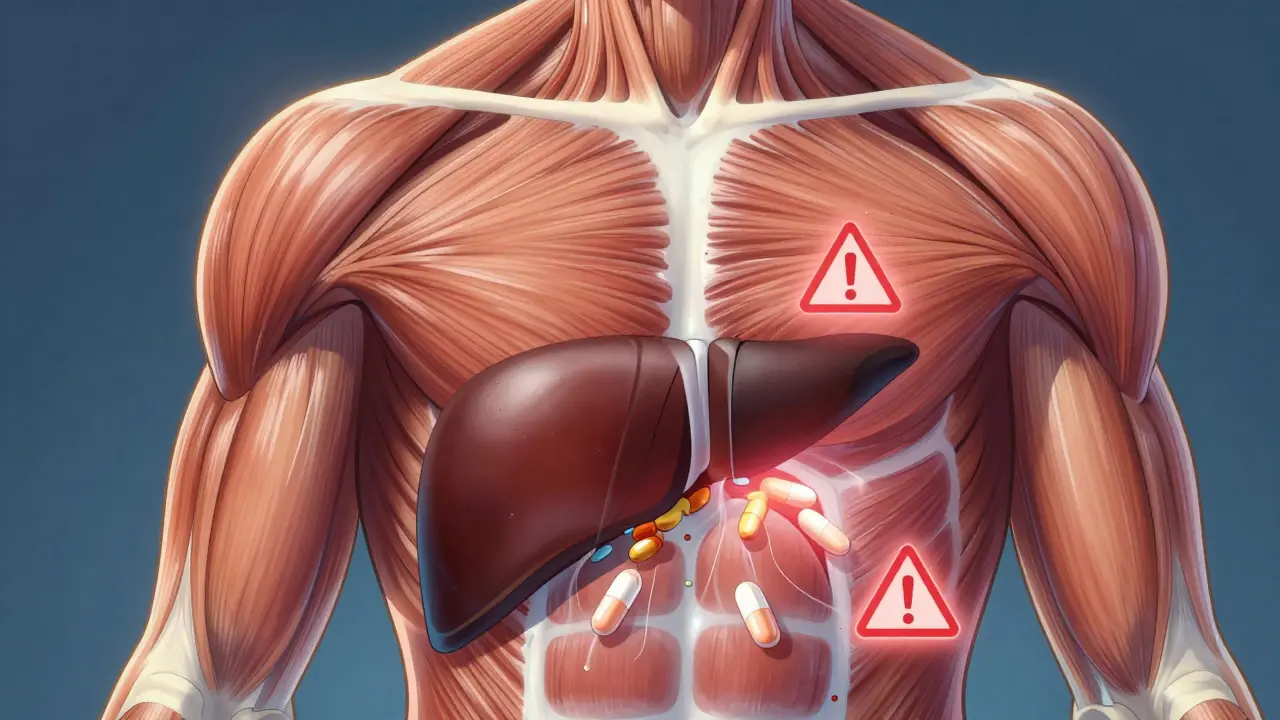
Statin Myopathy Risk Calculator
How to Use This Tool
Answer the questions below to assess your personal risk of statin-induced muscle damage. Based on your inputs, the tool will calculate your risk level and provide personalized recommendations.
Statins are one of the most common pills prescribed worldwide - millions take them daily to lower cholesterol and prevent heart attacks. But for some, the benefits come with a painful cost: muscle damage. Myopathy, a condition where muscles weaken and ache, is rare but real. And it doesn’t happen by accident. Often, it’s triggered by what you’re taking with your statin. The risk isn’t the same for everyone. It depends on the statin, the other meds, your age, and even your body type.
Why Some Statins Are Riskier Than Others
Not all statins are created equal. Some are more likely to cause muscle problems because of how they’re processed in your body. The key difference is whether they’re lipophilic (fat-soluble) or hydrophilic (water-soluble). Lipophilic statins like simvastatin, lovastatin, and atorvastatin slip easily into muscle tissue. That’s why they’re more likely to cause pain or weakness. Hydrophilic statins - pravastatin, rosuvastatin, and fluvastatin - stay mostly in the liver, where they’re meant to work, and don’t penetrate muscle as much.Real-world data shows this matters. Pravastatin has one of the lowest rates of muscle symptoms - around 0.6% to 1.4% of users. Rosuvastatin, even though it’s hydrophilic, has a higher reported rate - up to 12.7% in some studies. Why? Because it’s often prescribed at higher doses, and high doses = higher risk. Simvastatin at 80mg carries a 0.44% annual risk of myopathy. At 20mg, that drops to under 0.05%. That’s a tenfold difference.
The Big Culprits: Drugs That Boost Statin Levels
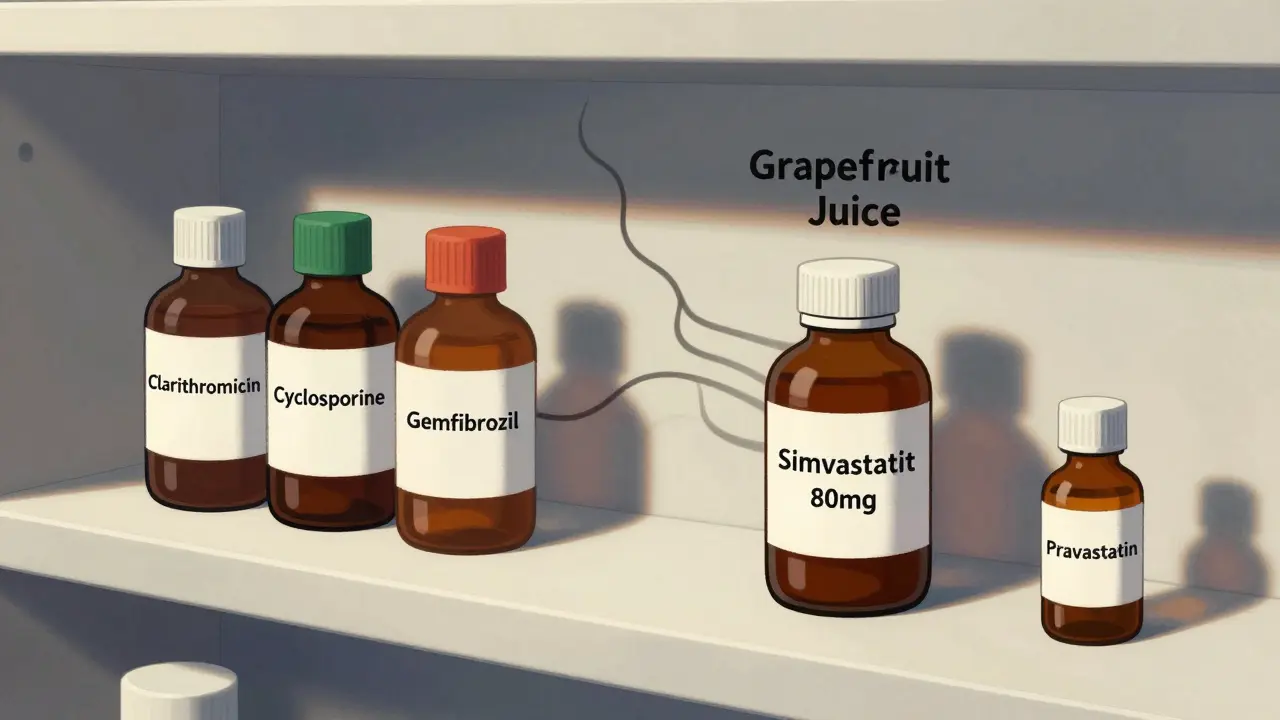
Your liver uses enzymes to break down statins. When another drug blocks those enzymes, the statin builds up in your blood. That’s when muscle damage becomes more likely. The biggest offenders are:- Clarithromycin and erythromycin - these macrolide antibiotics inhibit CYP3A4, the main enzyme that breaks down simvastatin and lovastatin. Clarithromycin can spike simvastatin levels by 10 times. That’s not a small bump - that’s a red flag.
- Cyclosporine - used after organ transplants, it can increase statin levels by 3 to 13 times. This combination is dangerous and often avoided.
- Gemfibrozil - a fibrate for triglycerides. It doubles statin levels and triples myopathy risk. Fenofibrate is safer.
- Diltiazem and verapamil - blood pressure meds that also block CYP3A4. The FDA now limits simvastatin to 20mg max if you’re on either.
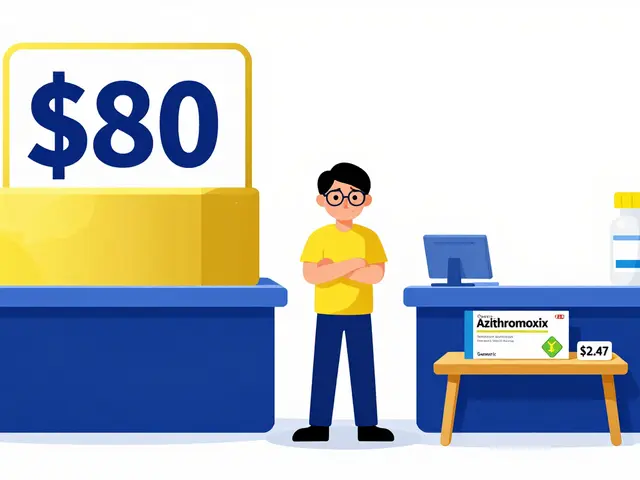
On the flip side, azithromycin - another antibiotic - doesn’t interfere with CYP3A4. So if you need an antibiotic and you’re on a statin, azithromycin is a much safer pick.
Who’s Most at Risk?
It’s not just about the drugs. Your body matters too. Seven key factors raise your chance of statin-related muscle damage:- Age over 75
- Small frame or low body weight
- Chronic kidney disease
- Hypothyroidism (underactive thyroid)
- Heavy alcohol use
- Intense exercise, especially if you’re not used to it
- Taking multiple interacting drugs
Someone over 80 with kidney issues, on simvastatin and diltiazem, is in the danger zone. A healthy 50-year-old on pravastatin with no other meds? Very low risk. The combination of factors is what makes the difference.
What to Do If You Have Muscle Pain
Muscle aches are common. But not all are statin-related. If you start feeling unexplained soreness, weakness, or cramping - especially in your thighs or shoulders - don’t ignore it. Check for these signs:- Pain that doesn’t go away after a few days
- Dark urine (a sign of myoglobin leaking from damaged muscles)
- Fatigue that feels deeper than normal
See your doctor. They’ll check your creatine kinase (CK) levels. If CK is more than 10 times the normal upper limit, you likely have myopathy. If it’s 5 times higher and you have symptoms, you may need to stop the statin. Even if CK is normal, but pain persists, switching statins might help.
Many people who quit statins because of muscle pain end up being able to restart them - just a different one. About 71% of statin-intolerant patients tolerate another statin at a lower dose. Pravastatin or fluvastatin are often the best choices for those with muscle issues.
How to Stay Safe on Statins
You don’t have to give up statins to avoid muscle damage. Here’s how to reduce your risk:- Know your statin. If you’re on simvastatin or lovastatin, ask if you could switch to pravastatin or rosuvastatin. Especially if you’re over 70 or on other meds.
- Check all your meds. Tell your pharmacist and doctor every pill you take - even OTC ones, supplements, and herbal teas. St. John’s wort, grapefruit juice, and some antifungals can also interfere.
- Avoid high-dose statins unless necessary. Simvastatin 80mg is no longer recommended for new patients because of its high myopathy risk. The FDA banned it for new starts in 2011.
- During antibiotic treatment, pause high-risk statins. If you’re prescribed clarithromycin or erythromycin, stop simvastatin or lovastatin for the duration of the course. Restart 3 days after finishing the antibiotic. Pravastatin and rosuvastatin (20mg or less) are usually safe to keep taking.
- Get a baseline CK test. Before starting a statin, especially if you’re high-risk, ask for a CK blood test. It’s a simple way to track changes later.
- Monitor after starting a new drug. If you begin a new medication, watch for muscle symptoms for the first 2-4 weeks. That’s when interactions are most likely to show up.
Alternatives If Statins Don’t Work for You
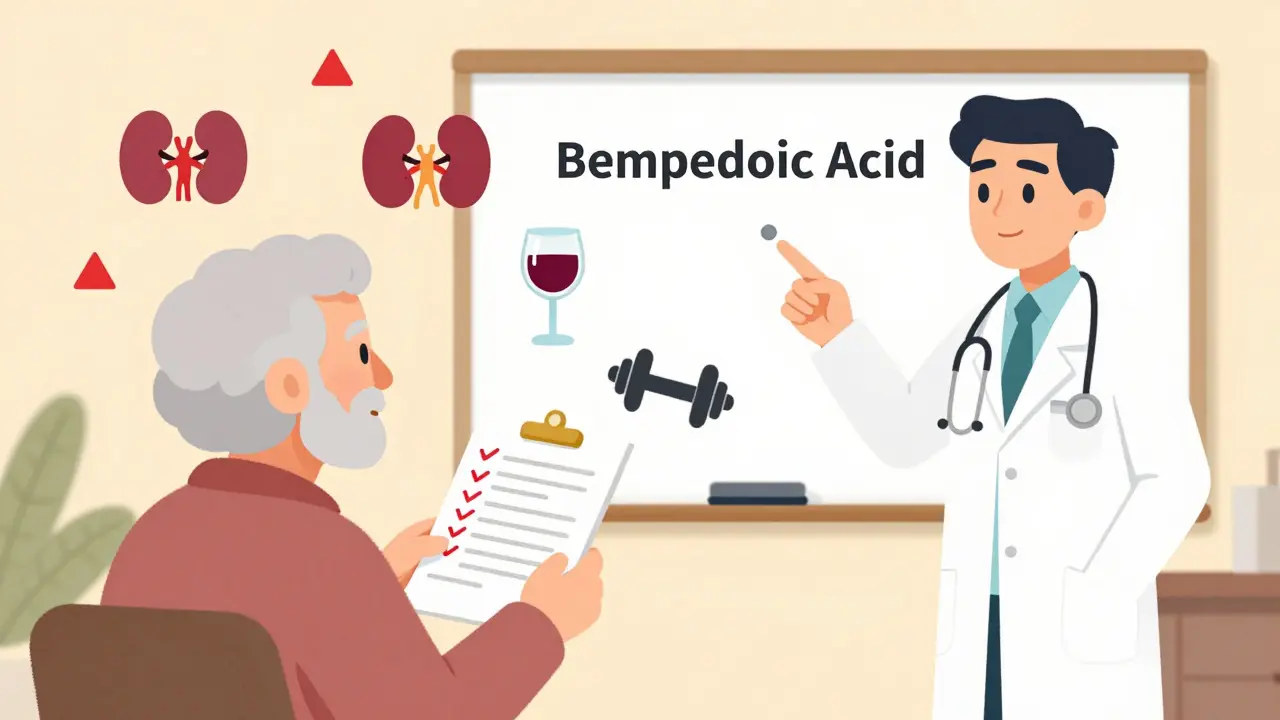
Some people just can’t tolerate statins - even the safest ones. That doesn’t mean you’re out of options. Bempedoic acid (Nexletol) is a newer drug that lowers cholesterol without entering muscle tissue. It’s not a statin, so it doesn’t cause myopathy. The downside? It costs about $4,000 a year. Generic atorvastatin? Around $6.60. But for someone with severe muscle pain, the cost may be worth it.Other options include ezetimibe, PCSK9 inhibitors (like Repatha or Praluent), or icosapent ethyl (Vascepa), which reduces triglycerides and inflammation. These aren’t replacements for statins in everyone, but they’re tools your doctor can use when statins fail.
The Bigger Picture: Statins Still Save Lives
It’s easy to focus on side effects. But don’t lose sight of the big picture. Statins reduce heart attacks and strokes by 25-35% in high-risk people. The risk of myopathy is low - less than 1 in 100 for most. The risk of a heart attack without treatment? Much higher.Regulators know this. The FDA, NHS, and European guidelines all agree: statins remain first-line therapy. The goal isn’t to avoid them - it’s to use them safely. That means picking the right statin, avoiding dangerous combos, and monitoring symptoms.
For every person who stops statins because of muscle pain, there are ten who avoid a heart attack by staying on them. The key is working with your doctor to find the balance - not quitting because of fear.
Can I take ibuprofen with statins if I have muscle pain?
Yes, ibuprofen and other NSAIDs like naproxen don’t interfere with statin metabolism. They won’t raise your risk of myopathy. But they also won’t fix the root cause if the pain is from the statin. If your muscles hurt because of a drug interaction, ibuprofen just masks the symptom. It’s better to address the cause - like switching statins or stopping an interacting antibiotic.
Does grapefruit juice really interact with statins?
Yes, especially with simvastatin, lovastatin, and atorvastatin. Grapefruit blocks the CYP3A4 enzyme in your gut, making your body absorb more of the statin. One glass can increase levels by up to 300%. You don’t need to quit it entirely - just avoid it completely if you’re on one of these three statins. Pravastatin, rosuvastatin, and fluvastatin are safe with grapefruit.
Can coenzyme Q10 help with statin muscle pain?
Some people swear by it, but the science is mixed. Statins lower CoQ10 levels in the body, and since CoQ10 helps produce energy in muscle cells, it makes sense to replace it. Studies show small improvements in muscle pain for some, but not all. If you want to try it, 100-200mg daily is the typical dose. It’s safe, inexpensive, and worth a 3-month trial if your pain is mild and you’re not on high-risk meds.
Is it safe to take statins with fish oil?
Yes. Fish oil supplements (omega-3s) don’t interfere with statin metabolism. In fact, combining them can be helpful - statins lower LDL cholesterol, while fish oil lowers triglycerides. The FDA-approved icosapent ethyl (Vascepa) is a prescription form of omega-3 and is often used with statins for high-risk patients. Over-the-counter fish oil is fine too, as long as you’re not taking more than 3 grams daily without medical advice.
Should I get genetic testing before starting a statin?
The SLCO1B1 gene variant increases simvastatin myopathy risk by 4.5 times. The FDA added this info to simvastatin’s label in 2011. But routine testing isn’t standard yet - it’s expensive, not widely available, and only useful if you’re considering simvastatin. If you’ve had muscle pain with statins before, genetic testing might help explain why. For most people, starting with a low-risk statin like pravastatin avoids the need for testing altogether.
Can I take statins every other day to avoid side effects?
Some studies suggest intermittent dosing - like rosuvastatin 40mg every other day - can lower muscle side effects while still controlling cholesterol. This isn’t FDA-approved for that use, but it’s being studied in trials like DECLARE (results expected late 2024). If you’re having side effects and your doctor agrees, this could be a reasonable option. Never change your dose without medical advice.
Next Steps: What to Do Today
If you’re on a statin:- Look at your prescription. Is it simvastatin or lovastatin? If so, ask your doctor if switching to pravastatin or rosuvastatin makes sense.
- Make a list of every medication and supplement you take. Bring it to your next appointment.
- If you’re starting a new antibiotic, ask if it interacts with your statin. If it’s clarithromycin or erythromycin, ask if you should pause your statin.
- If you’ve had muscle pain before, don’t assume you can’t take statins again. Try a different one - many people succeed on a second try.
Statins save lives. But they’re not harmless. The goal isn’t to avoid them - it’s to use them smartly. With the right choice and careful monitoring, you can lower your cholesterol without hurting your muscles.


13 Comments
Just got off the phone with my cardiologist after reading this - switched from simvastatin to pravastatin last week and my muscle pain is already gone. Seriously, this post saved me from quitting statins entirely. Don’t panic if you’ve got aches - just talk to your doc and ask about alternatives.
It’s alarming how many clinicians still prescribe simvastatin 80mg without considering pharmacokinetics. The CYP3A4 inhibition cascade is well-documented in clinical pharmacology literature - yet primary care providers continue to treat statins as ‘one-size-fits-all.’ This isn’t negligence - it’s systemic ignorance.
I’ve been on rosuvastatin for five years and never had an issue until I started taking omeprazole. Didn’t realize it could interfere until I read this. Now I’m switching to pantoprazole and feeling better. Thanks for the clarity - this is the kind of info you don’t get in a 10-minute appointment.
Statins are a pharmaceutical illusion. They don’t cure anything - they mask symptoms while the real problem - inflammation from processed food, sedentary lifestyle, and chronic stress - grows unchecked. You think lowering LDL is healing? It’s just chemical suppression. The body doesn’t need statins. It needs food, movement, and peace.
For anyone considering CoQ10 - I tried 200mg daily for three months after statin-induced fatigue. No magic fix, but my sleep improved and the occasional cramps lessened. Worth a shot if you’re not on high-risk meds. Also - never, ever mix grapefruit with simvastatin. I learned that the hard way.
Wait - so azithromycin is safe but clarithromycin isn’t? Why does no one ever tell you this when you’re sick and they hand you a script? I’ve had two rounds of antibiotics while on statins and never asked. This is terrifying.
People who say ‘statins save lives’ are ignoring the fact that 90% of those ‘saved’ are already in their 70s with multiple comorbidities. Meanwhile, healthy 50-year-olds are being drugged into a false sense of security. This isn’t prevention - it’s medical overreach disguised as care.
As a British GP, I can confirm that NHS guidelines have shifted significantly since 2016. Simvastatin 80mg is now strictly contraindicated for new patients. We routinely screen for SLCO1B1 in patients with prior myopathy. The UK has led in this area - shame the US lags behind.
There’s something poetic about how medicine has become so specialized that we forget the body is an ecosystem. Statins aren’t just drugs - they’re signals. They tell our cells to slow down cholesterol production. But what if the signal is wrong? What if the liver isn’t the problem - but the gut? The microbiome? The stress response? We treat the molecule, not the person.
OMG I KNEW IT. My aunt took simvastatin + gemfibrozil and ended up in the hospital with rhabdo. They didn’t even check for interactions. I’ve been screaming about this for years. Now I’m sending this to every family member on statins. This is life-saving info.
So if I’m on rosuvastatin and take ibuprofen for a headache, I’m fine? Cool. I’ve been avoiding painkillers for years thinking they’d wreck my muscles. This changes everything.
Let me be blunt: the pharmaceutical industry doesn’t care if you get myopathy - they care if you stay on the drug long enough to pay for it. Every study that says statins are safe is funded by a drug company. Every guideline that downplays muscle damage is written by someone with ties to Big Pharma. You think your doctor is looking out for you? He’s getting paid to push pills. Read the financial disclosures. Then ask yourself: who really benefits here?
My dad died of a heart attack at 62. He was on simvastatin for 10 years. He never had muscle pain. So what’s the point of all this fear? We’re scaring people away from the one thing that actually works. If you want to live to 80, take your statin. Don’t let a blog post make you quit.