Every parent knows the panic of seeing their child’s skin red, itchy, or sore. You reach for a cream-maybe one you used yourself, or one left over from a previous illness-and apply it without thinking. But what seems like a quick fix could be dangerous. Children aren’t small adults. Their skin absorbs medicine differently, and even a small amount of the wrong topical product can lead to serious harm. In the U.S. alone, over 6,500 children under 5 end up in emergency rooms each year because of mistakes with topical medications. This isn’t about scare tactics. It’s about knowing what’s safe, what’s not, and how to use these products correctly.
Why Children’s Skin Is Different
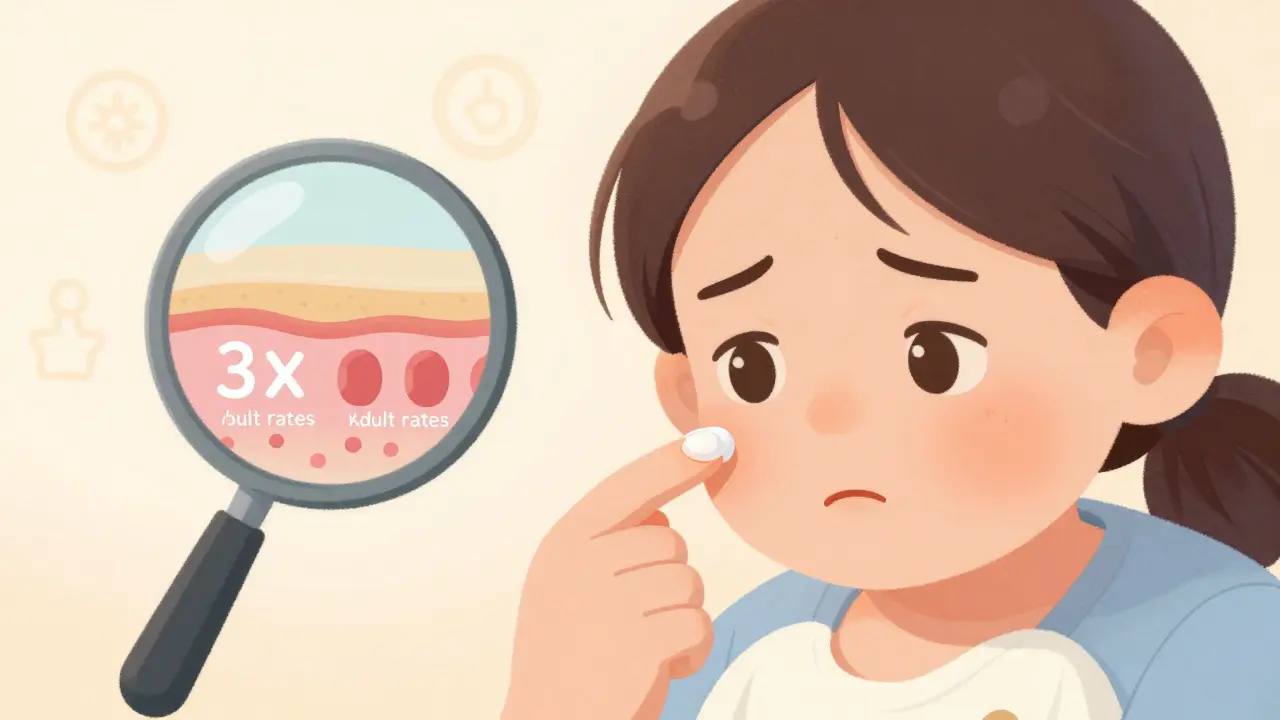
Children’s skin, especially in babies under one year, is thinner and more porous than adult skin. Their surface-area-to-body-weight ratio is much higher, meaning a cream applied to a small patch of skin can enter the bloodstream in much larger amounts than you’d expect. Studies show kids absorb topical medications 3 to 5 times more than adults. In infants with eczema or broken skin, that absorption can jump to 10 to 15 times higher. That’s why a pea-sized dab of hydrocortisone on a toddler’s cheek might be fine-but the same amount spread over half their body can shut down their hormone system.Topical Corticosteroids: Powerful, But Risky
Corticosteroid creams are among the most common treatments for eczema, rashes, and inflammation in kids. But not all steroids are created equal. They’re ranked from Class I (strongest) to Class VII (weakest). Using a high-potency steroid like betamethasone or clobetasol on a child-even for a few days-can suppress the adrenal glands, leading to fatigue, low blood sugar, or even life-threatening hormone imbalances. The American Academy of Pediatrics says: Never use Class I or II steroids on children under 2. Even low-potency hydrocortisone (Class VII) needs caution. A 2022 review of over 12,000 pediatric patients found that 15.8% of kids using strong steroids developed adrenal suppression, compared to just 2.3% using mild ones. That’s why doctors now recommend using the lowest strength possible for the shortest time. If a mild cream doesn’t work after a week, see a doctor-not a pharmacy.What About Lidocaine and Benzocaine?
You’ve probably seen teething gels with benzocaine on the shelf. They promise quick relief-but they’re banned for kids under 2 by the FDA. Why? Benzocaine can cause methemoglobinemia, a rare but deadly condition where the blood can’t carry oxygen properly. Symptoms show up fast: blue lips, rapid breathing, drowsiness. In documented cases, oxygen levels dropped from 98% to 75% in under 30 minutes after application. Lidocaine creams are safer, but still risky. The FDA allows 4% lidocaine for newborns, but only if you stick to strict limits: no more than 1.2 grams in 24 hours, and no more than 3 applications. That’s about the amount you’d squeeze from a tube the size of a pea. Apply it to broken skin? Absorption jumps from 3% to 60%. That’s enough to trigger seizures in small children. For teething, skip the gel. Use a chilled (not frozen) rubber teether. It works just as well-and doesn’t risk your child’s life.The Fingertip Unit: How Much Is Too Much?
Parents often think “more cream = faster healing.” That’s wrong. Applying too much increases absorption and side effects without improving results. The standard measurement doctors use is the fingertip unit (FTU). One FTU is the amount of cream squeezed from a standard tube, from the tip of the index finger to the first crease. That’s about 0.5 grams. One FTU covers an area equal to two adult palms. For a 10kg (22lb) child, the maximum daily dose of topical steroid should be no more than 2 grams total-about 4 FTUs. And you should never treat more than 10% of their body surface at once. That’s roughly the size of their face and neck combined. If you’re covering their whole back, arms, and legs, you’re in dangerous territory.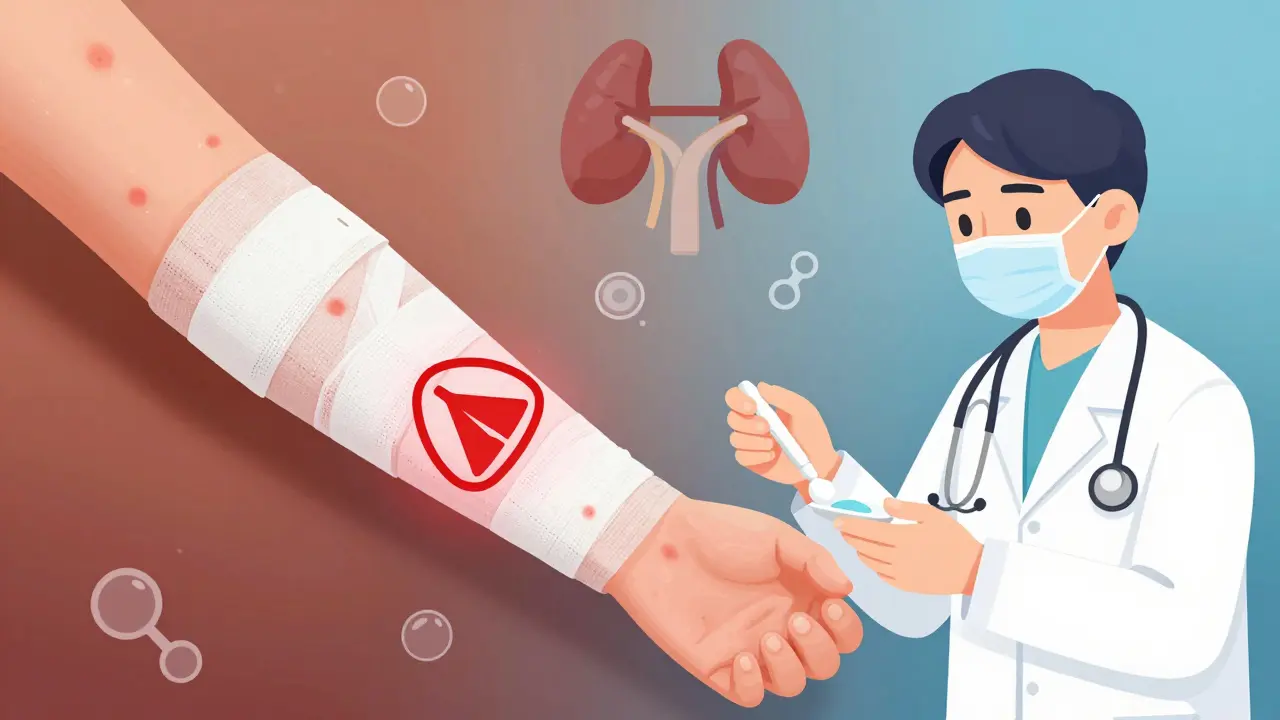
Occlusion: The Hidden Danger
Some parents cover the area with plastic wrap or a bandage to “help the cream work better.” That’s called occlusion. And it’s one of the most dangerous mistakes you can make. Occlusion can increase absorption by 300% to 500%. For a child with eczema, whose skin is already compromised, this can turn a safe treatment into a medical emergency. A study showed that using Tegaderm over hydrocortisone on an infant’s legs led to adrenal suppression within days. Never use plastic wrap, Saran Wrap, or tight clothing to seal in topical meds-unless your doctor specifically tells you to.Alternatives to Steroids: What Works?
If you’re worried about steroids, there are safer options. Topical calcineurin inhibitors like tacrolimus 0.03% and pimecrolimus are approved for kids as young as 3 months. They don’t suppress the adrenal system and are just as effective for facial eczema. The FDA added black box warnings to these because of theoretical cancer risks-but after 15 years of use, not a single confirmed case of skin cancer has been linked to them. They’re a proven, low-risk alternative. For mild irritation, plain moisturizers with ceramides or colloidal oatmeal can soothe without any medication. Look for fragrance-free, hypoallergenic formulas. They’re often enough to keep flare-ups under control.Storage and Safety: Keep It Out of Reach
Most accidental poisonings happen because the medicine was left out after use. The American Association of Poison Control Centers found that 78% of childhood exposures occurred when topical products were left on counters, nightstands, or bathroom sinks. Even if you think you’re being careful, a curious toddler can reach higher than you think. Always put creams back in their child-resistant packaging immediately after use. If the bottle doesn’t have a safety cap, buy a new one. Many OTC lidocaine products still don’t meet the 1994 CPSC safety standards-despite the law. Check the label: if it says “child-resistant packaging,” it should be hard to open without pressing and twisting.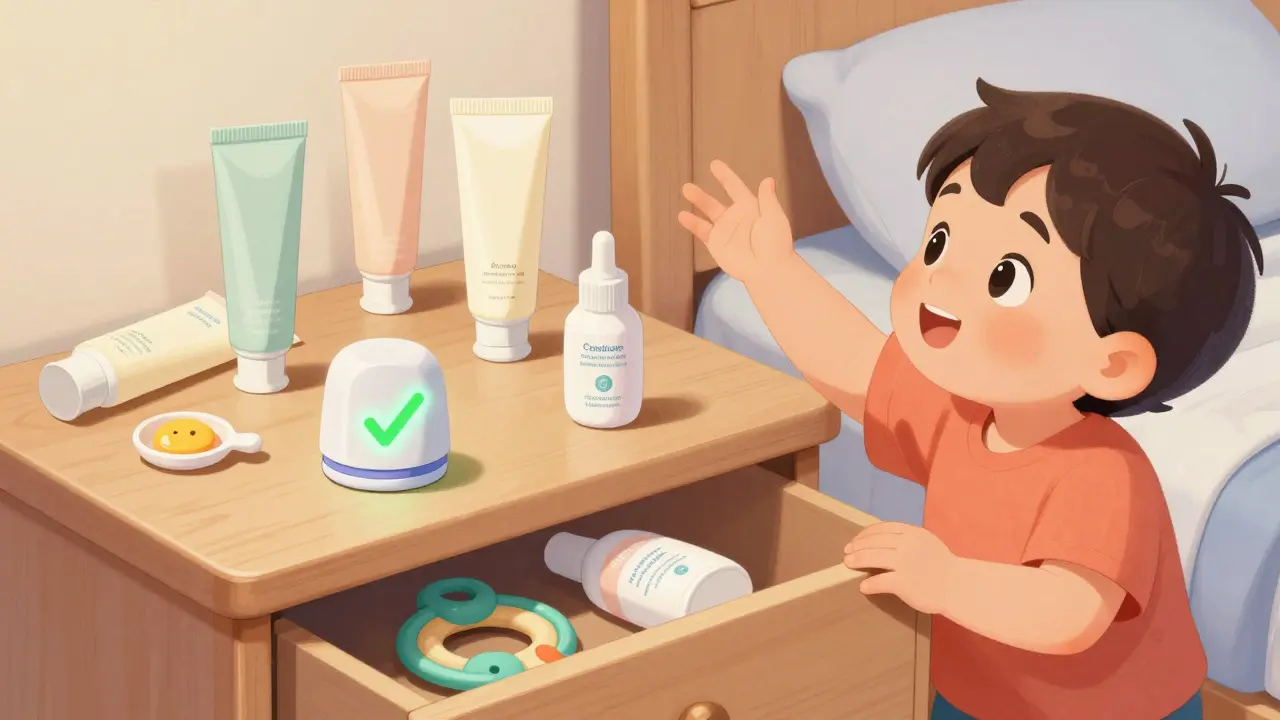
What to Do If Something Goes Wrong
If your child shows any of these symptoms after using a topical cream:- Drowsiness or confusion
- Blue or gray skin, especially around lips or fingernails
- Difficulty breathing
- Seizures or unresponsiveness
What’s Changing in 2025?
The FDA is pushing for better labeling on all pediatric topical products. Starting in 2025, new products must clearly state:- Minimum age for use
- Maximum daily dose
- Maximum body surface area allowed
- Duration limits (e.g., “do not use for more than 7 days”)
Final Rule: Less Is More
The biggest mistake parents make is thinking topical meds are harmless because they’re “just a cream.” They’re not. Every drop counts. Use the smallest amount possible. Use the weakest strength that works. Never use adult products on children. And always, always store them out of reach. If you’re unsure, ask your pediatrician or pharmacist. Don’t rely on internet advice or what worked for another child. Your child’s skin, their weight, their condition-those all matter. When it comes to topical medications in kids, caution isn’t overprotective. It’s essential.Can I use my hydrocortisone cream on my baby?
Only if it’s low-potency (1% hydrocortisone, Class VII) and approved by your doctor. Never use it on infants under 2 without medical advice. Apply no more than one fingertip unit per day, and only on small areas. Avoid using it on broken skin or under occlusion. If the rash doesn’t improve in 3-5 days, see a doctor.
Is benzocaine ever safe for teething babies?
No. The FDA prohibits benzocaine in teething products for children under 2 because it can cause methemoglobinemia-a condition that prevents blood from carrying oxygen. Even a small amount can be deadly. Use chilled (not frozen) teething rings or gently massage gums with a clean finger instead.
How do I measure the right amount of cream?
Use the fingertip unit (FTU). Squeeze a line of cream from the tube, from the tip of your index finger to the first crease. That’s about 0.5 grams. One FTU covers two adult palm-sized areas. For a child, you usually need 1-2 FTUs per day, depending on size and area treated. Never guess-measure.
Can I use a steroid cream longer if the rash comes back?
No. Topical steroids should never be used continuously for more than 7-14 days in children. Long-term use-even of mild creams-can cause skin thinning, stretch marks, or adrenal suppression. If the rash returns, it may mean the treatment didn’t address the root cause. See a dermatologist or pediatrician to figure out why it’s recurring.
Are over-the-counter creams safer than prescription ones?
Not necessarily. Many OTC creams contain hidden potent steroids or anesthetics not listed clearly on the label. A 2021 study found only 37% of OTC topical pain relievers included pediatric dosing instructions. Prescription creams come with detailed safety guidelines. If you’re unsure, ask your pharmacist to check the active ingredients.
What should I do if my child swallows some cream?
Call Poison Control immediately at 1-800-222-1222 (U.S.) or your local emergency number. Do not wait for symptoms. Even small amounts of lidocaine or benzocaine can be toxic. Keep the product container handy to tell them exactly what was ingested.
Can grandparents share their topical creams with my child?
Never. Topical medications are prescribed or labeled for specific people and conditions. A cream that works for an adult’s psoriasis could be dangerous for a toddler. Sharing creams is a leading cause of accidental poisoning in children. Keep all medications locked away and out of reach-not just from your child, but from visitors too.