
Why Losing Weight with PCOS Feels Impossible
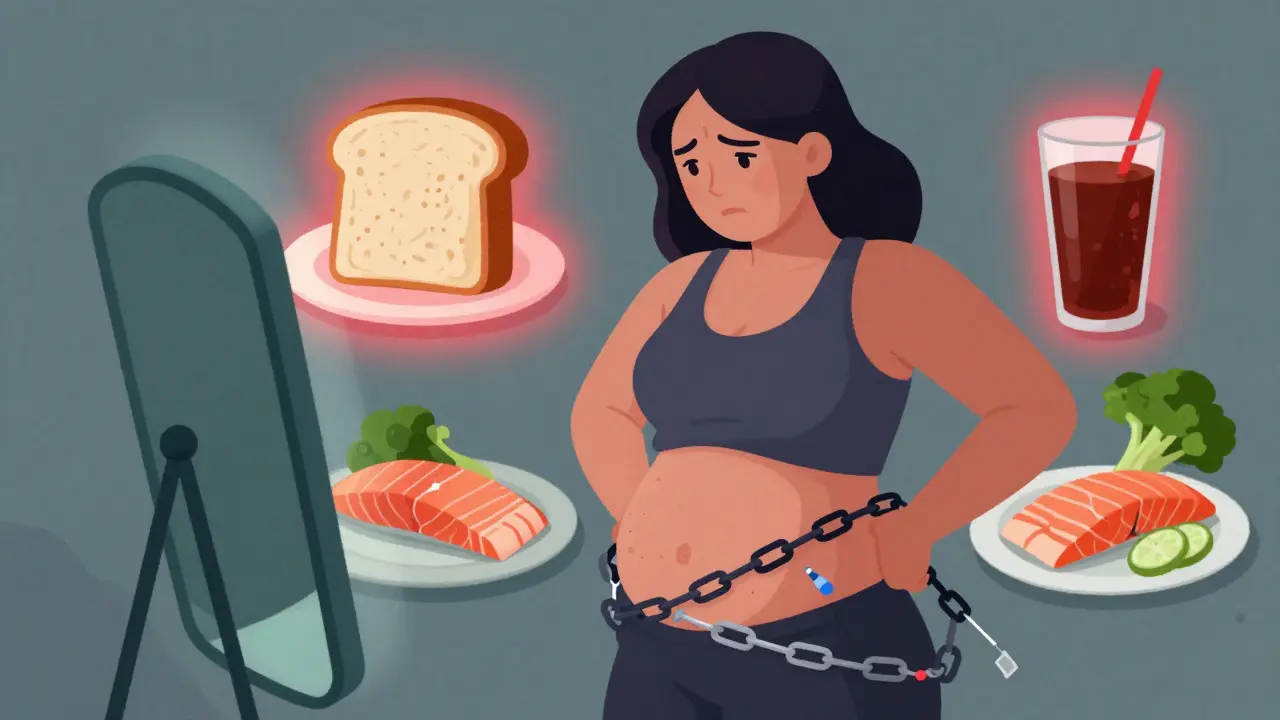
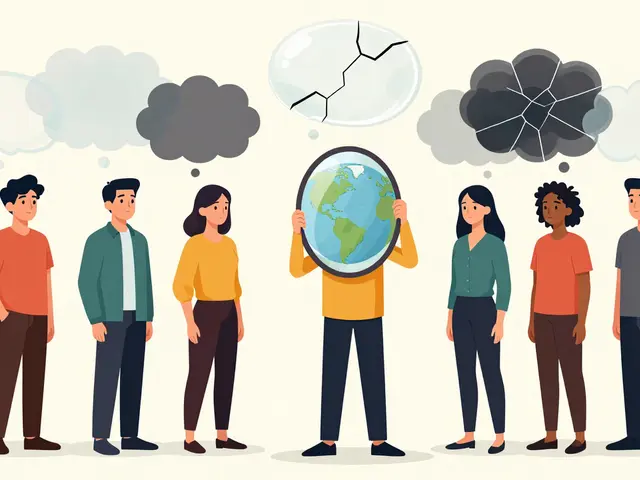
If you have PCOS and have tried every diet out there only to watch the pounds creep back on, you’re not failing. You’re fighting a biological trap. The problem isn’t willpower. It’s insulin resistance-a hidden driver behind stubborn belly fat, constant hunger, and cycles of frustration that feel endless.
Polycystic Ovary Syndrome affects about 1 in 10 women of childbearing age. But what most people don’t realize is that PCOS isn’t just about irregular periods or acne. At its core, it’s a metabolic disorder. Up to 95% of women with PCOS who are overweight have insulin resistance. Even lean women with PCOS? Around 70% still struggle with it. That’s not a coincidence. That’s the root cause.
Here’s how it works: when your body can’t use insulin properly, your pancreas pumps out more to compensate. That extra insulin doesn’t just mess with your blood sugar-it tells your body to store fat, especially around your middle. It also tells your ovaries to make more testosterone. More testosterone means more abdominal fat, more cravings, and less chance of ovulating. And the more fat you store, the worse your insulin resistance gets. It’s a loop with no easy exit.
The Cycle That Keeps You Stuck
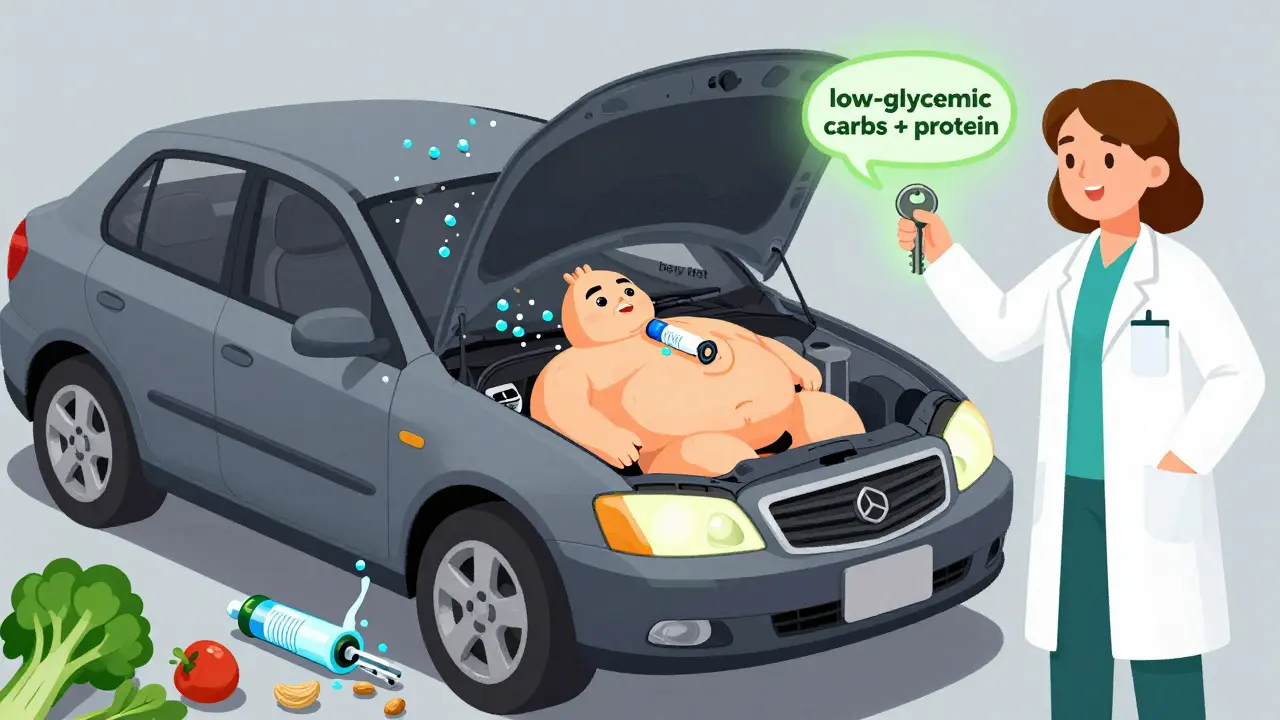
Think of your body like a car with a faulty fuel system. Insulin is supposed to be the key that unlocks your cells so glucose (sugar) can get in and be used for energy. But with insulin resistance, the key doesn’t turn. The glucose stays in your blood. Your body panics and makes even more insulin to force the door open. But instead of burning energy, your body now stores it as fat-mostly in your belly.
This isn’t just about appearance. Abdominal fat is metabolically active. It releases inflammatory chemicals that make insulin resistance worse. It raises blood pressure. It lowers good cholesterol. It increases your risk of type 2 diabetes by up to four times. The CDC confirms this: women with PCOS and excess weight are far more likely to develop diabetes than those without PCOS.
And then there’s the hunger. High insulin doesn’t just store fat-it blocks the hormone leptin, which tells your brain you’re full. At the same time, it spikes ghrelin, the hunger hormone. That’s why you feel ravenous after eating a bowl of pasta, even though you just ate. You’re not weak. You’re biochemically wired to crave more.
Emotional eating? It’s real. But it’s not just stress. It’s your blood sugar crashing after a sugary snack, then your body screaming for another hit. This isn’t a lack of discipline. It’s a hormonal storm.
What You Should Be Eating (And What to Avoid)
The goal isn’t to starve yourself or cut out carbs forever. It’s to stabilize your insulin. That means choosing foods that don’t spike your blood sugar-and pairing them smartly.
- Focus on low-glycemic carbs: Swap white bread, pasta, and rice for quinoa, oats, barley, sweet potatoes, and legumes. These digest slowly, so insulin doesn’t spike.
- Always pair carbs with protein or fat: Eat an apple with almond butter. Have rice with grilled chicken and broccoli. Fat and protein slow down sugar absorption. This single trick can cut insulin spikes by up to 50%.
- Choose fiber-rich vegetables: Broccoli, spinach, kale, Brussels sprouts, and cauliflower are your best friends. They fill you up, feed good gut bacteria, and help clear excess estrogen.
- Include healthy fats: Avocados, olive oil, nuts, seeds, and fatty fish like salmon reduce inflammation and improve insulin sensitivity.
- Avoid sugary drinks and processed snacks: Soda, juice, candy, and even "healthy" granola bars are loaded with hidden sugars that trigger insulin crashes and cravings.
There’s no magic diet. But research shows that a Mediterranean-style eating pattern-rich in vegetables, lean protein, healthy fats, and whole grains-works better for PCOS than low-fat diets. A 2022 study in the Journal of Clinical Endocrinology & Metabolism found that women with PCOS who followed this approach lost more belly fat and improved their insulin sensitivity compared to those on low-fat diets.
Timing Matters More Than You Think
It’s not just what you eat. It’s when.
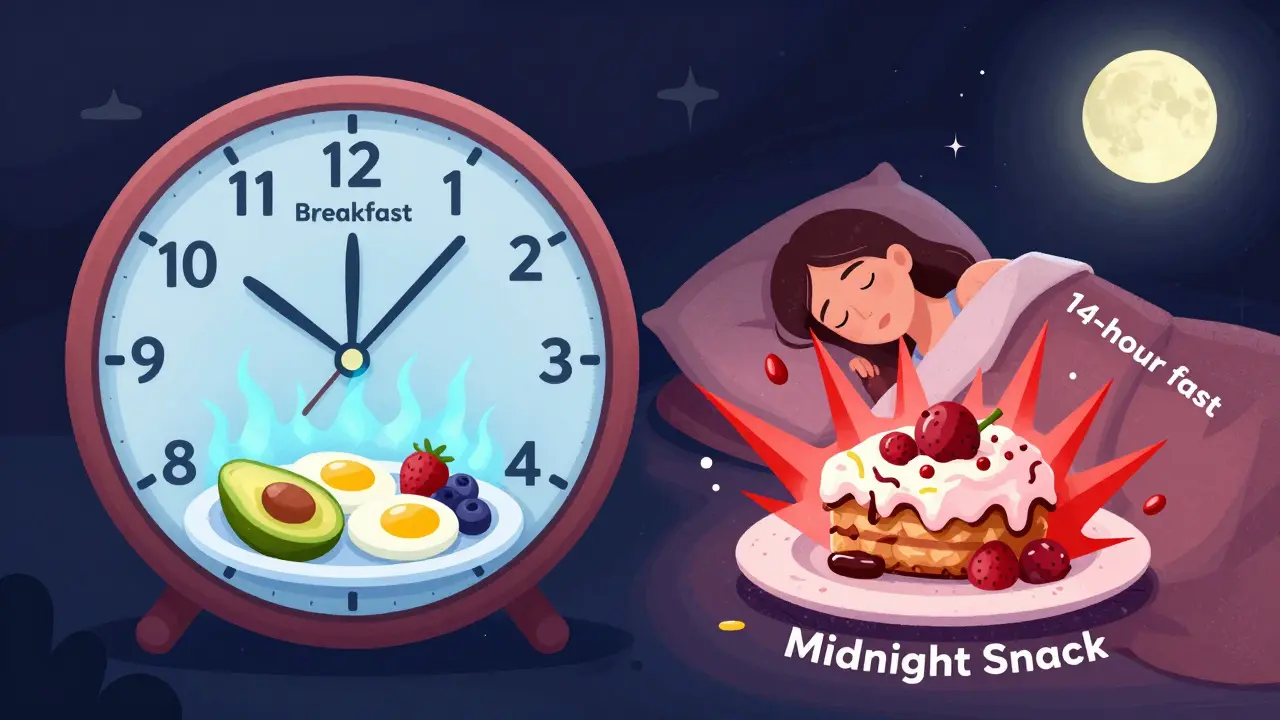
Skipping breakfast? That’s a common mistake. Eating a protein-rich meal within an hour of waking helps set your insulin tone for the day. A study from the University of California found that women with PCOS who ate a large breakfast and smaller dinner lost more weight and had better hormone balance than those who ate the opposite.
Try this: 40% of your daily calories at breakfast, 35% at lunch, 25% at dinner. Don’t snack late. Your body’s insulin sensitivity drops after 7 p.m. Eating carbs after dark? It’s like pouring fuel on a fire.
Intermittent fasting isn’t a trend here-it’s a tool. Many women with PCOS benefit from a 12- to 14-hour overnight fast. That means finishing dinner by 8 p.m. and not eating again until 8 or 9 a.m. This gives your insulin levels time to reset. You don’t need to go 16:8. Start small.
What Doesn’t Work (And Why)
Low-fat diets? They often backfire. When you remove fat, manufacturers add sugar. You end up eating more carbs, which spikes insulin-and that’s the last thing you need.
Extreme calorie restriction? It makes insulin resistance worse. Your body thinks it’s starving. It holds onto fat. Your thyroid slows down. Your hormones go haywire. You lose muscle, not fat. You feel exhausted. And the weight comes back harder.
Detox teas, fat-burning supplements, or juice cleanses? They’re distractions. They don’t touch insulin resistance. They might make you lose water weight, but they won’t fix the root problem.
And don’t fall for the myth that you need to lose 20 pounds to see results. Losing just 5-7% of your body weight-say, 8 pounds if you weigh 150-can restore ovulation, lower testosterone, and improve insulin sensitivity. Small changes create big shifts.
It’s Not Just Diet-Movement Matters Too
You don’t need to run marathons. But movement is non-negotiable.
Strength training is the most powerful tool for PCOS. Muscle tissue is the body’s main site for glucose uptake. The more muscle you have, the better your body handles insulin. Two to three sessions a week of lifting weights, bodyweight exercises, or resistance bands can dramatically improve insulin sensitivity.
Walking helps too. A 30-minute walk after dinner lowers post-meal blood sugar better than any supplement. It’s simple, free, and works.
Don’t overdo cardio. Long, intense cardio can raise cortisol, which increases belly fat and worsens insulin resistance. Keep it moderate. Focus on consistency, not intensity.
What to Expect When You Start
It’s not linear. You might lose a pound one week, gain two the next. That’s normal. Your hormones are adjusting. Your body is healing.
Look for non-scale victories:
- Less bloating in the morning
- More energy after meals
- Fewer sugar cravings
- Regular periods returning
- Clearer skin
These are the real signs your insulin is coming under control. Weight loss follows. It’s not the goal-it’s the side effect of fixing your metabolism.
When to Ask for Help
Diet and lifestyle are the foundation. But sometimes you need support.
If you’ve tried for 6 months and seen no change, talk to your doctor about metformin. It’s not a magic pill, but it helps lower insulin levels and can make dieting easier. It’s been used for decades in PCOS and is backed by solid research.
Consider working with a registered dietitian who specializes in PCOS. Generic nutrition advice won’t cut it. You need someone who understands insulin resistance, hormonal cycles, and the emotional toll of this condition.
And don’t ignore your mental health. The stress of constant weight struggles can make everything worse. Therapy, mindfulness, or even just talking to others who get it can be part of your healing.
You Can Break the Cycle
PCOS doesn’t mean you’re doomed to struggle with weight. It means your body needs a different approach. One that works with your biology, not against it.
Stop chasing quick fixes. Start building a lifestyle that calms your insulin, reduces inflammation, and gives your hormones a chance to rebalance. It won’t happen overnight. But every meal you choose wisely, every walk you take, every night you give your body a break from food-it all adds up.
You’re not broken. You’re just dealing with a metabolic puzzle. And once you understand the pieces, you can finally put them together.
Can you lose weight with PCOS without medication?
Yes, many women lose weight with PCOS using diet and lifestyle changes alone. The key is targeting insulin resistance through low-glycemic foods, protein and fat pairing, regular movement, and consistent meal timing. Losing just 5-7% of body weight can improve ovulation and hormone balance. Medication like metformin can help, but it’s not required to see results.
Why do I crave sugar so badly with PCOS?
High insulin blocks leptin (the fullness hormone) and boosts ghrelin (the hunger hormone). When your blood sugar crashes after eating carbs, your body begs for quick energy-sugar. This isn’t weakness. It’s biology. Pairing carbs with protein or fat helps stabilize blood sugar and reduces cravings over time.
Is keto good for PCOS?
Some women with PCOS benefit from a low-carb or ketogenic diet because it lowers insulin. But it’s not for everyone. Very low-carb diets can stress the adrenal system and disrupt thyroid function, especially if you’re already under stress or under-eating. A moderate low-glycemic approach is often more sustainable and safer long-term.
Does losing weight cure PCOS?
No, PCOS is a lifelong condition. But losing weight can reverse many of its symptoms. Many women see their periods return, acne improve, and fertility increase with just a small amount of weight loss. It doesn’t cure PCOS, but it takes the pressure off your hormones and lets your body function better.
How long does it take to see results with a PCOS diet?
You might notice less bloating and fewer cravings within 2-4 weeks. Hormonal changes, like regular periods or improved skin, often take 3-6 months. Weight loss is slower than with other diets because your body is healing, not just burning fat. Patience and consistency matter more than speed.


11 Comments
Just wanted to add that the Mediterranean diet isn't just good for PCOS-it's one of the most studied dietary patterns for metabolic health overall. The olive oil, nuts, and fatty fish aren't just "healthy fats," they're anti-inflammatory powerhouses that directly counter the chronic low-grade inflammation tied to insulin resistance. I've seen patients reverse prediabetes just by switching to this way of eating. No magic, just consistency.
OMG YES. I lost 12 lbs in 3 months just by eating protein with every carb and walking after dinner. No crazy workouts, no keto, no supplements-just stopped eating cereal like a zombie at 10pm. My skin cleared up, my cravings vanished, and I actually woke up without wanting to cry. It’s not about willpower-it’s about stopping the biological sabotage. You’re not broken, you’re just being fed poison disguised as food.
It's alarming how many people still believe in the myth that weight loss is simply a matter of calories in versus calories out. This article correctly identifies insulin resistance as the core issue, yet most nutritionists and even endocrinologists continue to prescribe low-fat, high-carb diets-exactly the wrong approach. The science has been clear for over a decade. If you're prescribing pasta to someone with PCOS, you're not helping-you're perpetuating a systemic failure in medical education.
Oh wow, another "eat this, avoid that" list. How original. Let me guess-you also think drinking green juice and doing yoga three times a week will "cure" your insulin resistance? Newsflash: if your body is this broken, no amount of avocado toast is going to fix it. Maybe the real issue is that you're too lazy to take metformin like a responsible adult instead of chasing food hacks like it's a TikTok trend.
Interesting how this article frames insulin resistance as the villain, yet ignores the role of chronic stress and cortisol dysregulation-which is often the *real* driver behind the insulin spikes. You can eat all the quinoa and salmon in the world, but if your nervous system is stuck in fight-or-flight mode, your body will still hoard fat. The diet advice is technically correct, but it’s incomplete. Without addressing trauma, sleep, and emotional regulation, you’re just rearranging deck chairs on the Titanic.
u/6683 u r so right!! i started doing the protein+carb thing and my cravings just…stopped. no joke. i used to eat 3 bags of gummy bears a week. now i eat an apple with peanut butter and i’m good. also, walking after dinner? game changer. my husband thinks i’m weird for pacing the living room after spaghetti, but whatever. my skin is clearer and i actually feel like a human again.
I tried keto for 6 months. Lost 15 lbs. Then my periods stopped. My energy crashed. I felt like a zombie. Turns out my adrenals were fried. This article nailed it-moderation beats extremism. I switched to low-glycemic + protein pairing and my body finally stopped screaming at me. No more 3pm breakdowns crying over a bag of chips. Just…peace.
Let’s be real-most of you are just looking for an excuse to eat carbs. You don’t want to hear that you need to cut out sugar forever. You want a loophole. "Oh, just pair it with fat!" No. Just stop. If your body can’t handle glucose, don’t feed it glucose. Simple. Hard. Real. Stop romanticizing "balanced eating" when your biology is screaming for a reset.
Interesting how all this "PCOS advice" comes from the same handful of wellness influencers who’ve never had to work two jobs, raise kids, and still find time to meal prep. Meanwhile, real people are surviving on microwave meals and coffee because they’re exhausted. Telling someone to eat salmon and quinoa when they’re on food stamps is not helpful-it’s elitist. Maybe fix the system before preaching diets.
Thank you for writing this with such clarity and scientific grounding. Too often, women with PCOS are told they’re lazy or undisciplined. This article acknowledges the biological reality without judgment. I’ve shared it with my entire support group-finally, someone spoke the truth without selling a supplement.
What if the real question isn’t how to lose weight with PCOS-but why we’ve been conditioned to believe weight is the only measure of health? The body doesn’t need to be small to be functional. It needs to be regulated. Insulin sensitivity, hormonal balance, mental peace-these are the true victories. The scale is just a noisy bystander. Maybe the goal isn’t to shrink, but to restore. And restoration takes time, compassion, and patience-not another diet.