
Every year, thousands of people in the U.S. die from opioid overdoses - and many of those drugs weren’t even prescribed to them. They came from someone’s medicine cabinet. A 2019 national survey found that 70% of misused prescription opioids were taken from friends or family members. That’s not a statistic about drug dealers or illegal supply chains. It’s about unused pills sitting in bathrooms, kitchen drawers, and nightstands. If you’ve been prescribed opioids for pain after surgery, an injury, or a chronic condition, and you have leftover pills, you’re holding a potential danger. Not for you - for your kids, your neighbors, your visitors. The good news? You can stop that before it starts. Here’s exactly how to dispose of unused opioids safely, quickly, and without risk.
First, Know Your Options
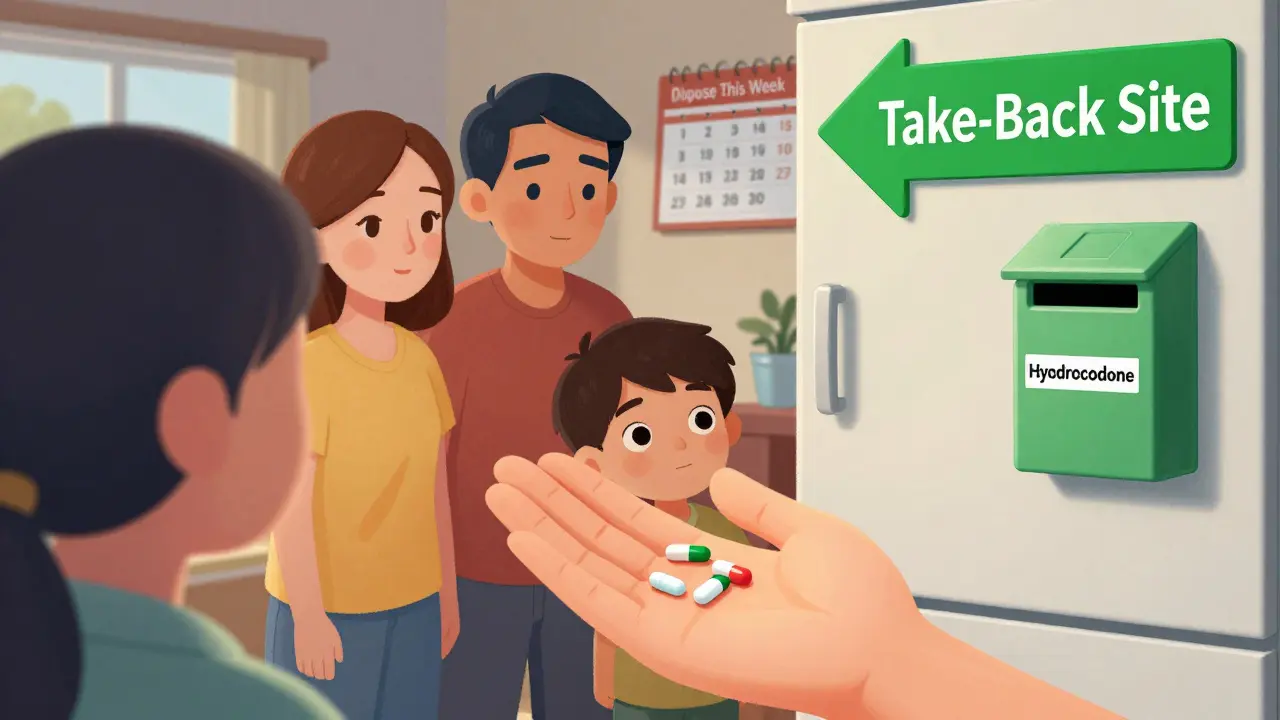
There are four proven ways to get rid of unused opioids. Not all are equally effective, and not all are equally easy to access. But one of them will work for you. Don’t just flush them. Don’t throw them in the trash without taking steps. Don’t leave them where anyone can find them.The best method? Drug take-back programs. These are official collection sites run by pharmacies, hospitals, and police departments. They’re free, secure, and destroy the drugs completely. As of September 2023, there were over 16,900 of these sites across the country. Most are open during regular business hours. You don’t need to be a patient. You don’t need to show ID. Just bring your unused pills, patches, or liquids in their original containers. No need to remove labels - but you can black them out with a marker if you’re worried about privacy.
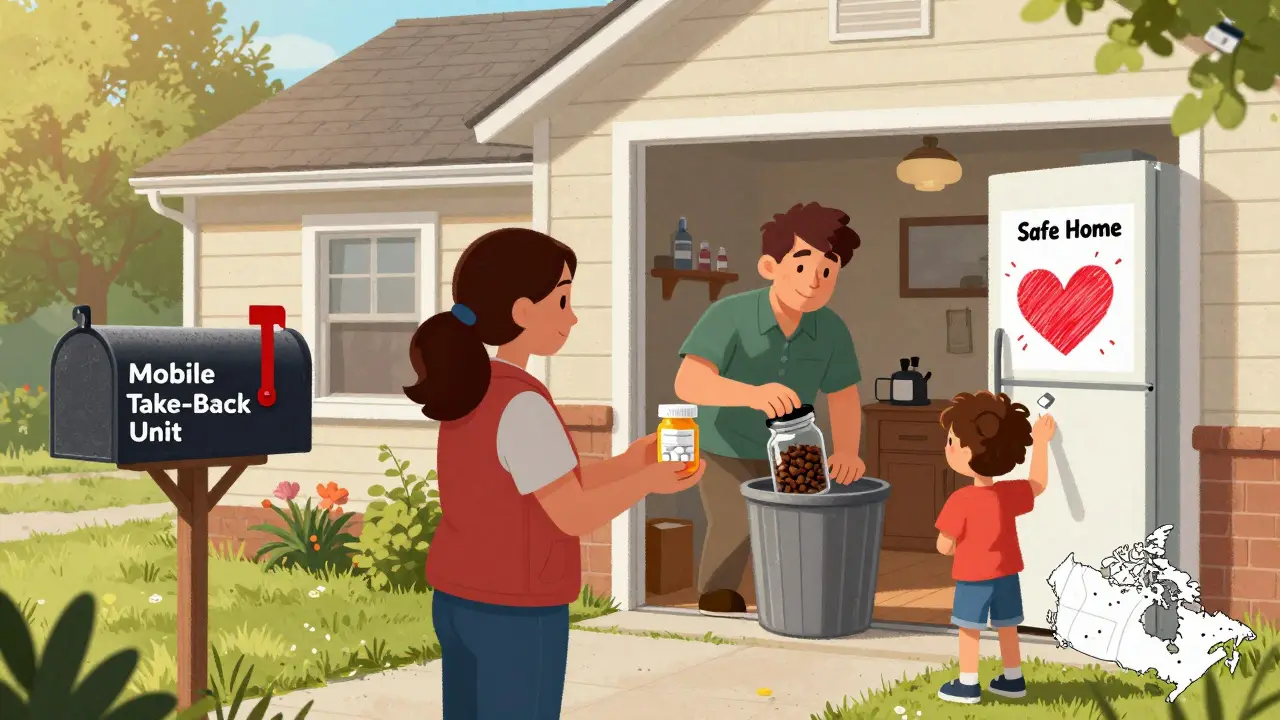
Where to find one? Use the DEA’s Drug Disposal Locator tool. Type in your ZIP code. It pulls up nearby sites in under 30 seconds. Walmart and Walgreens alone have over 13,000 drop boxes combined. If you live in a city or suburb, there’s almost certainly one within 10 miles. In rural areas, it’s harder - but still possible. Some mobile collection units visit small towns on scheduled days. Check with your local health department.
Deactivation Pouches: The Easy Alternative
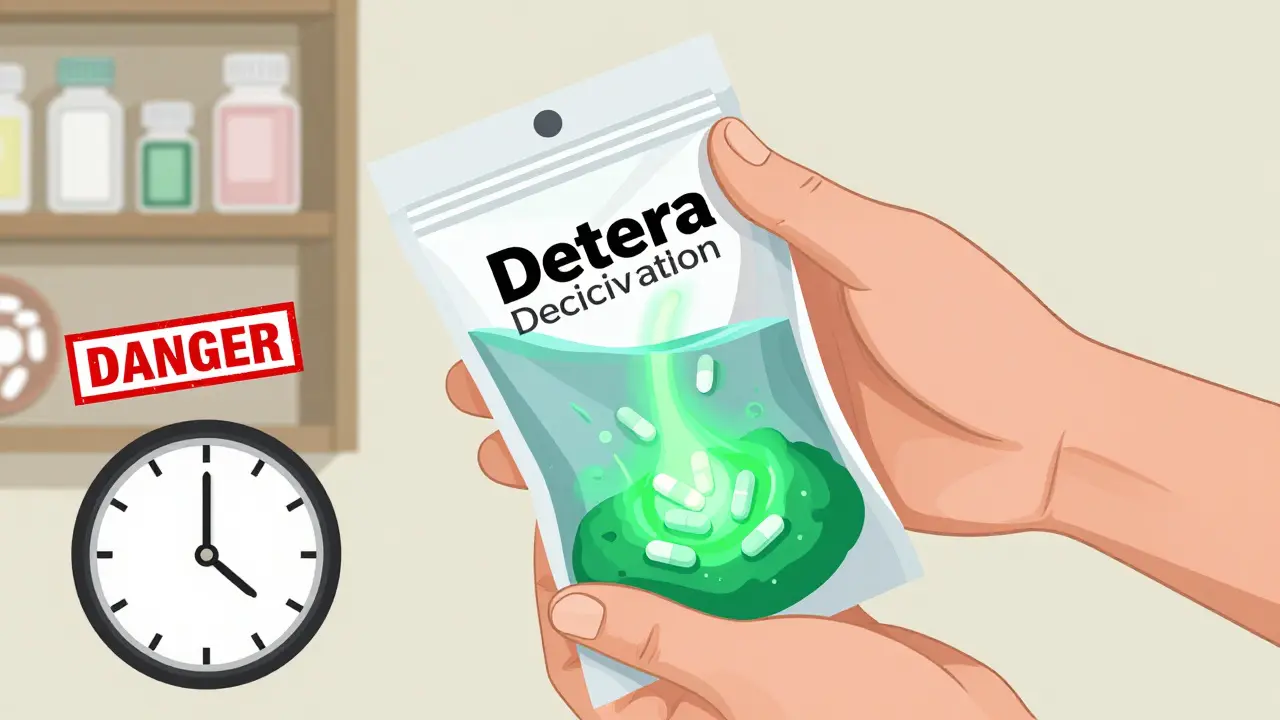
If you can’t get to a take-back site, or you’re worried about waiting until the next collection day, use a deactivation pouch. These are small, biodegradable bags with activated carbon inside. You drop your pills or patches in, add warm water, seal it, and shake. In 30 minutes, the opioids are chemically neutralized. No more high. No more danger. Just a harmless sludge you can throw in the trash.Brands like Deterra and SUDS are sold at most major pharmacies - CVS, Walgreens, Rite Aid, Kroger. They cost between $2.50 and $5 per pouch. That’s less than a coffee. You can buy them over the counter, no prescription needed. Some hospitals give them out for free when you’re discharged after surgery. If you’re prescribed opioids, ask your pharmacist: “Do you have disposal pouches?”
One common mistake? Not using enough water. Users in University of Pittsburgh studies found that 28% of people didn’t add enough liquid, so the pills didn’t fully deactivate. Use the amount marked on the pouch. Don’t guess. If you’re unsure, watch the video on the packaging. It’s less than a minute long.
Household Disposal: When Nothing Else Works
Maybe you live far from a pharmacy. Maybe you can’t afford a pouch. Maybe you’re in a hurry. You can still dispose of opioids safely at home - but you have to do it right.Follow the FDA’s simple steps:
- Take the pills out of their original bottle.
- Mix them with something unappetizing - used coffee grounds, cat litter, or dirt. Don’t use sugar or candy. That’s tempting for kids or pets.
- Add half a cup of water to make a slurry.
- Stir it well.
- Pour the mixture into a sealable plastic bag or container - like a jar with a tight lid or a ziplock bag.
- Seal it tightly.
- Throw it in the trash.
- Scratch out your name and prescription info on the empty bottle with a permanent marker before recycling it.
This method reduces the chance of someone stealing your pills by 82%, according to a 2020 study in Lake County, Indiana. It’s not perfect - but it’s better than leaving them on the counter. And it’s better than flushing.
Flushing: Only for These 15 Opioids
Don’t flush everything. Only flush if the drug is on the FDA’s official Flush List. That’s because flushing can contaminate water systems. But for certain high-risk opioids, the danger of accidental overdose - especially in children - is greater than the environmental risk.These are the only opioids you should flush:
- Fentanyl patches
- Oxycodone (OxyContin, Percocet)
- Morphine sulfate
- Hydrocodone (Vicodin, Norco)
- Hydromorphone (Dilaudid)
- Meperidine (Demerol)
- Methadone
- Tapentadol (Nucynta)
- Propoxyphene (Darvon - discontinued but still in some homes)
- Tramadol (Ultram - not always on the list, check current FDA updates)
- Codeine (in combination products)
- Levorphanol
- Buprenorphine (Suboxone - only the sublingual films, not the tablets)
- Butorphanol
- Nalbuphine
If your opioid isn’t on this list, don’t flush it. Use a take-back site, a pouch, or the household method instead. The FDA updated this list in 2020 based on evidence that flushing these specific drugs prevents 95% of accidental pediatric exposures. That’s a big deal - kids don’t know what pills are. They see colorful tablets and think they’re candy.
Why This Matters More Than You Think
You might think, “I’m not a drug user. I’m just getting rid of extra pills.” But you’re not just protecting your own home. You’re helping prevent addiction in someone else’s child. You’re reducing the chance that a teenager will find a pill and try it out of curiosity. You’re lowering the risk that a relative with a history of substance use will relapse.Dr. Nora Volkow, head of the National Institute on Drug Abuse, says safe disposal is one of the most underused tools in preventing opioid misuse - and it could reduce youth initiation by up to 40%. That’s not speculation. It’s backed by data. Communities that combine take-back programs, pouches, and education have seen opioid diversion drop by 37%.
And here’s something most people don’t realize: Doctors aren’t always telling patients how to dispose of opioids. A 2022 report found that only 38% of prescribers routinely discuss disposal. That means the responsibility falls on you. If your doctor didn’t mention it, don’t assume they forgot. Assume they assumed you knew. So ask.
What to Avoid
Don’t do these things:- Don’t pour pills down the sink unless they’re on the FDA Flush List.
- Don’t throw pills in the trash without mixing them with something bad-tasting.
- Don’t try to dissolve pills in vinegar or bleach - that doesn’t work and can be dangerous.
- Don’t store unused opioids for “next time.” Pain doesn’t come back the same way twice.
- Don’t give them to someone else, even if they’re in pain. That’s illegal and deadly.
Some people worry about privacy. They don’t want anyone to know they were prescribed opioids. That’s valid. Take-back sites and pouches protect your anonymity. You don’t have to say why you’re dropping off pills. No one asks. The containers are labeled “Medication Disposal Only.”
What to Do Next
Right now, go to your medicine cabinet. Look for any unused opioids. Check the labels: oxycodone, hydrocodone, morphine, fentanyl, codeine. If you find any, act.Step 1: Check if there’s a take-back site near you. Use the DEA locator. If yes, go this week.
Step 2: If not, buy a deactivation pouch at your pharmacy. They’re cheap. They work.
Step 3: If you can’t get either, use the household method. Mix with coffee grounds. Seal. Trash.
Step 4: Tell someone you know who’s been prescribed opioids. Send them this article. Ask them if they’ve disposed of theirs. Most haven’t.
It’s not complicated. It’s not expensive. It’s not time-consuming. But it saves lives. Every unused pill you dispose of is one less chance for someone to die from an overdose they never meant to have.
Can I flush any opioid pills down the toilet?
No - only 15 specific opioids are approved for flushing by the FDA, including fentanyl patches, oxycodone, and morphine sulfate. Flushing other opioids can contaminate water supplies. Always check the FDA’s current Flush List before flushing. If your medication isn’t on the list, use a take-back program, deactivation pouch, or household disposal method instead.
Are deactivation pouches really effective?
Yes. Lab tests from the University of Pittsburgh show deactivation pouches like Deterra neutralize 99.9% of opioids within 30 minutes when used correctly. They’re as safe as take-back programs and more convenient for people in rural areas. Just make sure you add the right amount of warm water and seal the pouch tightly.
Where can I find a drug take-back site near me?
Visit the DEA’s Drug Disposal Locator at dea.gov/drug-disposal and enter your ZIP code. It will show you nearby pharmacies, hospitals, and police stations that accept unused medications. Most are open during regular business hours. Walmart and Walgreens alone have over 13,000 drop boxes nationwide.
What if I live in a rural area with no disposal sites nearby?
You’re not alone - 14 million Americans live more than 50 miles from a take-back site. In those cases, use a deactivation pouch (available at most pharmacies) or follow the FDA’s household disposal method: mix pills with used coffee grounds or cat litter, seal in a container, and throw it in the trash. This reduces diversion risk by 82% when done correctly.
Is it safe to recycle empty opioid pill bottles?
Yes - but only after removing all personal information. Use a permanent marker to black out your name, prescription number, and doctor’s name. Then remove the label or cut it off. Most recycling programs accept plastic pill bottles, but only if they’re completely anonymous. Never recycle a bottle with readable labels - it’s a privacy risk.
Why don’t doctors always tell patients how to dispose of opioids?
A 2022 report found only 38% of prescribers routinely discuss disposal during opioid prescriptions. Many assume patients already know, or they’re pressed for time. But research shows patients given disposal instructions - especially with visual guides or pouches - are 3.8 times more likely to dispose of their meds safely. Don’t wait for your doctor to bring it up. Ask: “How do I get rid of these pills safely?”

14 Comments
just threw my leftover oxycodone in the trash with coffee grounds like the article said. felt weird but also kinda proud. like i just saved some kid from a bad decision.
Let’s be real - this whole ‘safe disposal’ narrative is just a distraction. The real problem is overprescribing. Doctors handed out opioids like candy in the 90s, and now we’re expected to play cleanup crew? You don’t fix a leak by mopping the floor while the pipe bursts.
The DEA’s take-back program? Convenient. But how many of those sites are actually staffed by people who care? Half of them are just locked boxes in the back of a Walgreens with a sign that says ‘meds only.’ No conversation. No follow-up. No accountability.
And don’t get me started on those deactivation pouches. $5 for a plastic bag that turns pills into sludge? That’s corporate greenwashing disguised as public health. The real cost isn’t the pouch - it’s the systemic failure that put those pills in your cabinet to begin with.
Meanwhile, the pharmaceutical companies who pushed this crisis? Still making billions. They don’t care if you flush or mix with cat litter. They just want you to feel like you’re doing your part so you stop asking why the supply never stopped.
Y’all need to stop overthinking this. I’m a nurse. I’ve seen kids OD on pills they found in their grandma’s drawer. I’ve held teenagers while they vomit from fentanyl poisoning. This isn’t theoretical. It’s real. Take the damn pills to the pharmacy. Buy the pouch. Mix with coffee grounds. Don’t wait for permission. Don’t wait for a doctor to remind you. Do it now. Your neighbor’s kid might be one search away from your medicine cabinet.
I’ve handed out 200+ Deterra pouches at my clinic. Every single one saved a life. Not someday. Right now.
So you’re telling me I can’t just flush my Vicodin? I always thought that was fine. I mean, it goes down the drain - where else would it go? 😅
Also, why do we need a whole list of 15 pills that can be flushed? Can’t we just flush everything and let the scientists sort it out? Sounds like a lot of bureaucracy for something simple.
thank you for this. i live in a small village in india and we dont have take back sites. but i learned the coffee grounds trick from a friend who worked in a us hospital. its simple. its safe. its human.
My dad was prescribed hydrocodone after knee surgery. He didn’t even know he had leftovers until I found them in his sock drawer. I used a Deterra pouch. Took 10 minutes. Cost $3.50. He didn’t even ask why I did it. That’s the problem - nobody talks about this until it’s too late.
Now I keep a pouch in my first aid kit. Just in case. If you’re reading this and you’ve got pills sitting around - go do it. Don’t wait for a crisis. Just do it.
In India, we rarely see opioid prescriptions outside hospitals. But I understand the fear of misuse. The real issue is not disposal - it is awareness. People do not know what opioids are. They think all painkillers are the same. Education must come before disposal.
Still, the methods described are practical. Even if we don’t have take-back bins, the coffee grounds method is universal. It works with any culture, any language, any home.
Oh wow, another feel-good PSA for middle-class white people who worry about their neighbor’s kids but never ask why their own insurance won’t cover non-opioid pain management. Let’s all feel virtuous while the real systemic rot continues.
You know what’s really dangerous? A 72-year-old woman on Medicare who can’t afford gabapentin so she takes leftover Percocet because her doctor didn’t give her a refill. But hey - at least she didn’t flush it. Good job, Karen.
This article treats disposal like the solution. It’s not. It’s a Band-Aid on a severed artery.
82% reduction in diversion? That number is from a 2020 study with a sample size of 120 households in Lake County. That’s not statistically significant. Also, they didn’t control for socioeconomic factors. Most people who use the household method are low-income. That’s why they don’t have access to pouches or take-back sites. The data is being manipulated to sell products.
And why is the FDA list so arbitrary? Tramadol is on the list sometimes but not always? That’s not science - that’s political compromise.
I appreciate the practical advice. I’ve used take-back sites before - they’re quiet, no questions asked. I like that. But I also think we need to normalize asking for disposal help. If you’re prescribed opioids, your doctor should give you a pouch or a flyer. Period. No excuses.
Also - if you’re reading this and you’re scared to ask because you think people will judge you - don’t be. Nobody cares why you’re disposing of them. They just care that you’re doing it safely.
Just bought a Deterra pouch today 💚 I felt like a superhero. Like, I just saved the world one pill at a time. 🙌
wait so you’re saying I can’t just give my leftover pain pills to my cousin who’s hurting after his car accident? he’s in so much pain and i don’t want him to suffer… he’s family… why are you being so mean?
you’re telling me to throw them away but what if someone needs them? i don’t want to be the bad guy…
disposable pills? nah man. i live in lagos, we just sell them at the corner shop. if you need painkiller, you pay 200 naira. problem solved. why make it complicated? 😎
THIS IS ALL A LIE. THE GOVERNMENT DOESN’T WANT YOU TO KNOW - THE TAKE-BACK PROGRAMS ARE JUST COVER FOR THEM TO TRACK YOUR MEDICATION HISTORY AND PUT YOU ON A SURVEILLANCE LIST. THEY’RE USING THESE POUCHES TO INSERT MICROCHIPS. I SAW IT ON A FORUM. THEY’RE COMING FOR THE PILLS… THEN THEY’RE COMING FOR US.
THE FDA LIST? FAKED. FENTANYL PATCHES ARE SAFE TO FLUSH BECAUSE THEY’RE ALREADY INFUSED WITH TRACKING AGENTS. THAT’S WHY THEY’RE THE ONLY ONES ALLOWED. DON’T BELIEVE THE NARRATIVE.