
Dry Eye Treatment Finder
Find your ideal dry eye treatment options based on your symptoms, budget, and treatment history. This tool analyzes your unique situation to recommend the most effective solutions.
What's your dry eye situation?
How This Works
Based on your symptoms and budget, we analyze which treatments align with your specific dry eye type and needs. Each recommendation includes:
- Onset of relief timeline
- Cost range
- Common side effects
- Who it's best for
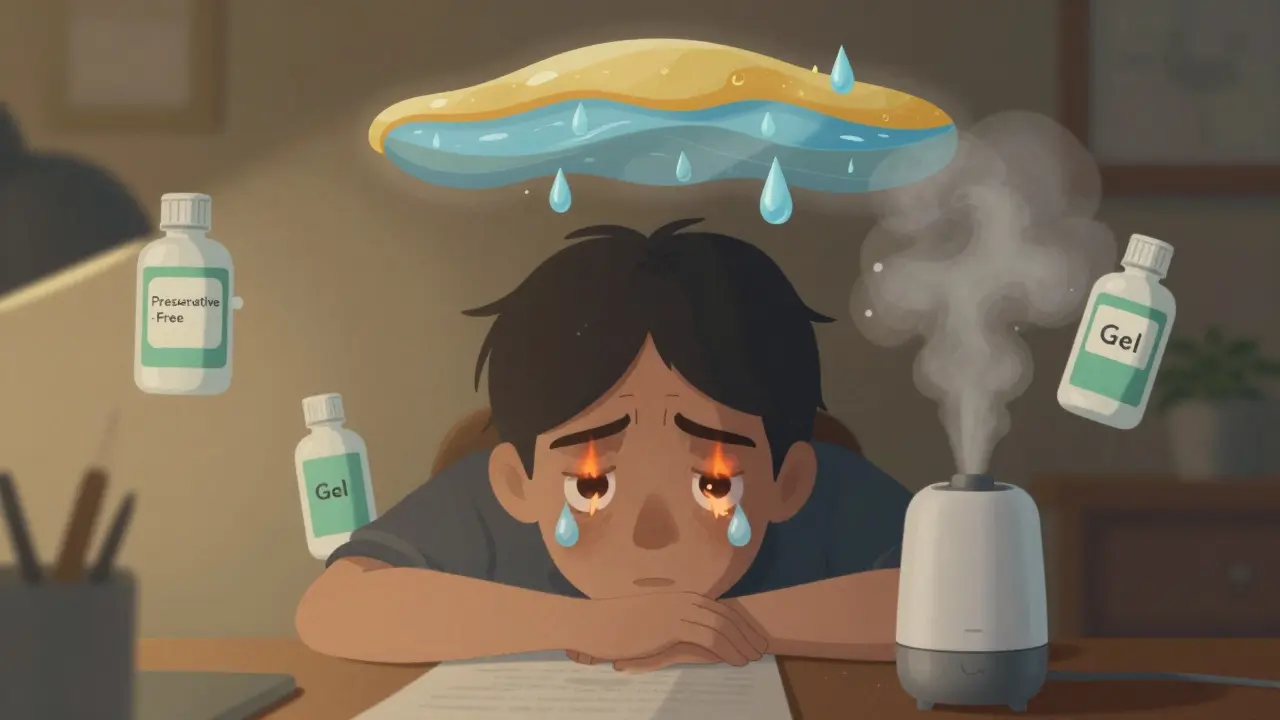
When your eyes feel gritty, burn after staring at a screen, or water uncontrollably in cold wind, it’s not just tiredness. It’s dry eye disease - and it’s more common than you think. Nearly 1 in 5 adults in the U.S. deals with it daily. For many, it starts with over-the-counter eye drops, but for others, it spirals into prescription meds, expensive treatments, and the quiet struggle of managing symptoms that never fully go away. The truth? Dry eye isn’t just an annoyance. It’s a chronic condition that can wreck your focus, sleep, and even your confidence. And while there’s no magic cure, the right mix of lubricants and environmental tools like humidifiers can turn survival into real relief.
What’s Really Going On With Your Eyes?
Your eyes need a stable tear film to stay comfortable and see clearly. That film has three layers: oil, water, and mucus. When any of them fail - usually the oily layer - tears evaporate too fast. This is called evaporative dry eye, and it makes up 86% of all cases. The rest? Your tear glands just don’t make enough fluid. Either way, the result is the same: redness, burning, blurred vision, and that awful feeling like sand is stuck under your eyelids. The 2017 International Dry Eye Workshop II report laid out the science behind this. Since then, treatments have shifted from just adding water to fixing the root causes. That’s why today’s best approach isn’t one-size-fits-all. It’s layered.Artificial Tears: The First Line of Defense
Most people start here. Over-the-counter artificial tears are the gateway to dry eye management. They’re cheap, easy to find, and work fast - if you pick the right one. Low-viscosity drops like Refresh Tears or Systane Ultra contain ingredients like carboxymethylcellulose or polyethylene glycol. These are great for mild symptoms. You can use them 2-4 times a day without blurring your vision. They’re your daily hydration fix - like drinking water when you’re just a little thirsty. But if your eyes feel parched all day, even after using those, you might need something thicker. High-viscosity gels like Refresh Celluvisc or GenTeal Gel stick around longer - up to 6 hours. The trade-off? They blur your vision for a few minutes after use. That’s why most people use them at night, or before important meetings where a quick blur won’t matter. And here’s the kicker: not all OTC drops are created equal. Some contain preservatives like benzalkonium chloride, which can irritate your eyes over time. If you’re using drops more than 4 times a day, switch to preservative-free single-use vials. They cost a bit more, but they’re gentler on damaged surfaces.Prescription Lubricants: Beyond Just Adding Moisture
When OTC drops aren’t enough, doctors turn to prescription medications. These aren’t just lubricants - they’re anti-inflammatories, immune modulators, or barrier protectors. They fix the problem, not just the symptom. Cyclosporine (Restasis, generic cyclosporine ophthalmic emulsion) is the OG prescription for dry eye. Approved in 1998, it works by calming down the immune system’s attack on your tear glands. Sounds complicated? It is. But here’s the catch: it takes 3 to 6 months to work. That’s why so many people quit. They expect instant relief, get burning on application (68% report it), and give up before the real benefits kick in. The good news? Generic versions now cost $150-$250 for a month’s supply - a huge drop from the $500-$600 brand price. And clinical trials show a 13.9-point improvement on the Ocular Surface Disease Index (OSDI) after 6 months - that’s a real jump in comfort. Lifitegrast (Xiidra) came next in 2016. It blocks a different inflammatory pathway. You might notice relief in as little as 2 weeks. That’s why some patients prefer it over cyclosporine. But it comes with its own problem: 25% of users report stinging or irritation right after putting it in. It’s faster, but rougher. Reviews on Drugs.com average 5.6/10 - mixed, but better than Restasis’s 5.0/10. Then there’s Miebo (perfluorohexyloctane), approved in 2023. This one’s different. It doesn’t add water. It doesn’t reduce inflammation. It forms a thin, invisible shield over your eye that stops tears from evaporating. You feel relief immediately - often within minutes. In FDA trials, users reported 1.5 times more improvement in dryness symptoms than those using a placebo. Only 0.16% of patients stopped using it because of side effects. That’s unheard of in dry eye meds. The downside? It costs $650 for a 30-day supply. Insurance often requires you to try cheaper options first. But for people who’ve tried everything else, it’s a game-changer. And don’t forget Tyrvaya, the nasal spray. Yes, you spray it up your nose. It stimulates nerves that tell your eyes to make more tears. It’s $200 a month and works in 2-4 weeks. It’s not for everyone, but for those who can’t tolerate eye drops, it’s a smart alternative.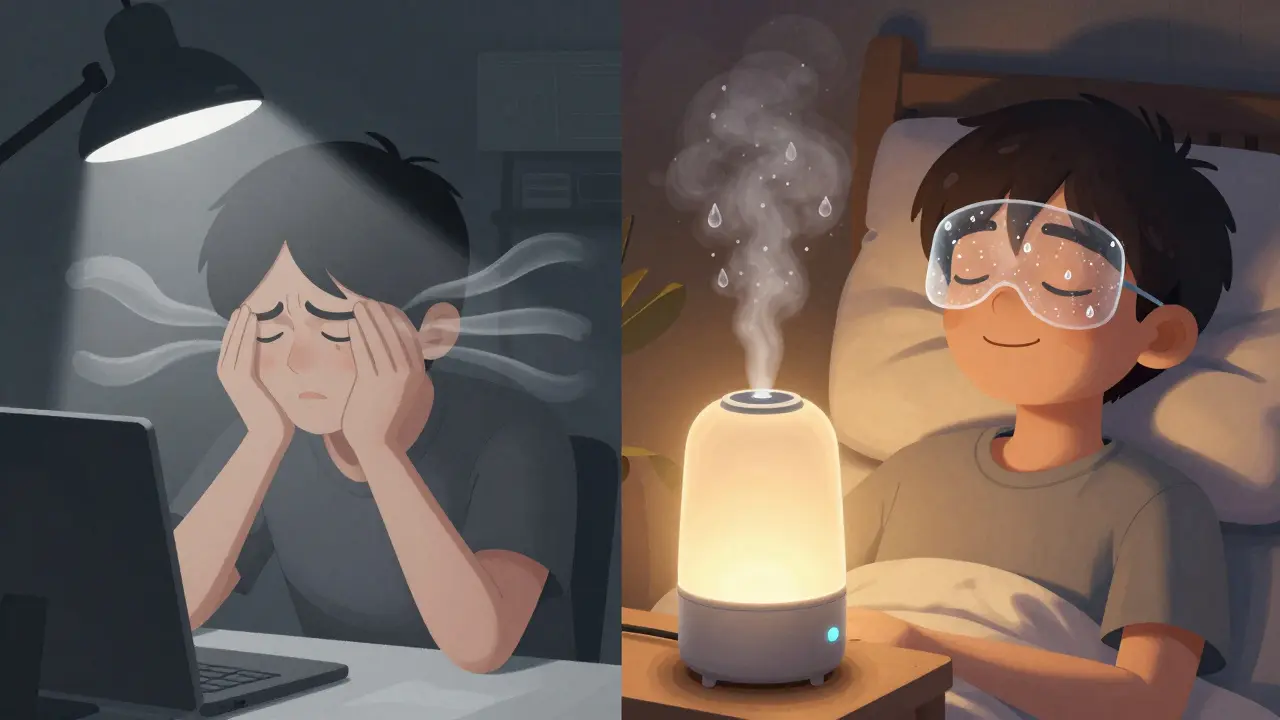
Humidifiers: The Quiet Hero
You might think a humidifier is just for winter. But if you live in a dry climate, work in an air-conditioned office, or spend hours in front of screens, your eyes are drying out faster than you realize. A 2024 Dry Eye Zone survey found that 72% of users saw big improvements in nighttime symptoms when they ran a humidifier set between 40% and 60% humidity. That’s not a coincidence. Low humidity makes your tears evaporate faster. A humidifier adds moisture back into the air - the same way steam helps a stuffy nose. You don’t need a fancy device. A simple cool-mist humidifier near your bed or desk works. Clean it weekly - mold in a humidifier is worse than dry eyes. And don’t crank it above 60%. Too much moisture invites dust mites and mold, which can trigger allergies and make your eyes worse. Combine a humidifier with a screen break routine. Every 20 minutes, look 20 feet away for 20 seconds. Blink fully. That’s the 20-20-20 rule. It’s not a myth. It’s science. And paired with a humidifier, it cuts dry eye flare-ups by half for many people.What Works Best? A Real-World Breakdown
Here’s how these options stack up in real life:| Treatment | How It Works | Onset of Relief | Cost (Monthly) | Common Side Effects | Best For |
|---|---|---|---|---|---|
| Low-viscosity artificial tears | Adds moisture | Immediate | $10-$20 | None (if preservative-free) | Mild symptoms, daily use |
| High-viscosity gels | Longer-lasting moisture | Immediate | $15-$30 | Temporary blurring | Moderate-severe symptoms, nighttime |
| Cyclosporine (generic) | Reduces inflammation | 3-6 months | $150-$250 | Burning, stinging | Chronic inflammatory dry eye |
| Xiidra (lifitegrast) | Blocks immune response | 2 weeks | $450-$550 | Stinging, bitter taste | People needing faster relief |
| Miebo | Forms protective barrier | Minutes | $650 | Minimal | Evaporative dry eye, failed other treatments |
| Humidifier (40-60% humidity) | Reduces tear evaporation | Days to weeks | $30-$100 (one-time) | None (if cleaned) | Everyone, especially screen users |

Why People Fail - And How to Succeed
The biggest reason dry eye treatments fail? Inconsistency. Only 52% of people on cyclosporine stick with it after 6 months. Why? The burning. The waiting. The cost. But here’s what works: combine treatments. A patient in the Dry Eye Warriors Facebook group wrote: “I use Miebo in the morning for instant relief, Restasis at night to fix the root cause, and a humidifier while I sleep. My eyes haven’t felt this good in 10 years.” That’s the model. Other tips:- Refrigerate your drops. Cold drops reduce stinging.
- Use punctal plugs if your doctor recommends them. These tiny inserts block tear drainage, so your drops last longer.
- Wear wraparound sunglasses outdoors. Wind is a major trigger.
- Stop rubbing your eyes. It makes inflammation worse.
What’s Coming Next?
The dry eye market is exploding. New drugs are in trials, like Reproxalap, which targets oxidative stress - a hidden cause of inflammation. TearLab’s osmolarity test lets doctors measure your tear salt levels to personalize treatment. And nasal sprays, eyelid devices, and even light therapy are gaining traction. But the core won’t change: lubricants and humidifiers remain the foundation. Even with new tech, you still need to hydrate your eyes and the air around them.Bottom Line: You Can Manage This
Dry eye isn’t something you “get over.” It’s something you manage. And you don’t need to spend hundreds a month to feel better. Start with preservative-free artificial tears and a $50 humidifier. If that’s not enough, talk to your eye doctor about generic cyclosporine. If you’re still struggling, Miebo might be worth the cost - especially if your eyes dry out fast in air-conditioned rooms or while working on screens. It’s not about finding the perfect drop. It’s about finding the right combination - and sticking with it. Your eyes will thank you.Can I use artificial tears every day?
Yes, you can use preservative-free artificial tears multiple times a day without harm. If you’re using drops with preservatives more than 4 times daily, switch to single-use vials to avoid irritation. Daily use is standard for dry eye management.
Why do my eyes water if they’re dry?
This is a classic sign of evaporative dry eye. When your tear film is unstable, your eyes send a distress signal to produce more tears. But those reflex tears lack the right balance of oil and mucus, so they don’t coat your eye properly - they just run down your cheeks. That’s why lubricating drops that restore the oil layer help more than just watering your eyes.
How long does it take for Restasis to work?
Restasis (cyclosporine) typically takes 3 to 6 months to show full effect. It doesn’t add moisture - it reduces inflammation so your body can start making its own tears again. Many people stop too early because they don’t feel immediate relief. Stick with it. Clinical trials show significant improvement after 6 months of consistent use.
Are humidifiers really helpful for dry eyes?
Yes. Studies and user reports show that maintaining indoor humidity between 40% and 60% significantly reduces dry eye symptoms, especially at night or in air-conditioned spaces. A simple cool-mist humidifier near your bed or desk can cut flare-ups by half. Just clean it weekly to prevent mold.
Is Miebo worth the $650 price tag?
For people who’ve tried everything else and still struggle with rapid tear evaporation - especially from screens, wind, or dry air - yes. Miebo works immediately, has almost no side effects, and targets the root of evaporative dry eye. If your insurance covers it or you have a health savings account, it’s a valid option. But it’s not a first-line treatment. Start with cheaper options first.
Can dry eye cause permanent damage?
Left untreated, chronic dry eye can lead to corneal scratches, infections, and scarring. While rare, these complications can affect vision. That’s why consistent management matters. Even mild symptoms shouldn’t be ignored - early intervention prevents long-term damage.






14 Comments
OMG I thought I was the only one crying from dry eyes in winter 😭 My humidifier is basically my third roommate now. I got the $40 one from Target and it’s life-changing. Also, cold drops? Genius. I keep mine in the fridge and it feels like a tiny ice pack for my soul.
so like… we’re paying $650 for a clear liquid that sits on your eye like a tiny oil slick? and the ‘science’ is… it stops evaporation? bro. we’ve had eyelids for 500 million years. maybe stop overcomplicating it with pharma magic dust.
YOU’RE ALL MISSING THE POINT. MIEBO IS A SCAM. IT’S JUST A CHEAP CHEMICAL THAT COSTS 2 CENTS TO MAKE AND THEY MARKET IT AS ‘FUTURISTIC.’ I WORK IN PHARMA. THEY TARGET PEOPLE WHO’RE DESPERATE. CYCLOSPORINE WORKS IF YOU’RE PATIENT. AND HUMIDIFIERS? YES. BUT DON’T BELIEVE THE 72% STAT - IT’S FROM A FACEBOOK GROUP SURVEY. NO CONTROL GROUP. NO PEER REVIEW. STOP BEING MANIPULATED.
Just wanted to say thank you for writing this - it’s the most balanced thing I’ve read on dry eye. I’ve been using generic cyclosporine for 8 months now and yeah, it burned at first, but now my eyes feel… normal again. Also, the 20-20-20 rule? I set a timer on my phone. It’s weirdly satisfying. 😊
Look I’ve tried everything and I’m telling you if you’re not using punctal plugs you’re doing it wrong. I had like 30% improvement just from that one tiny procedure. My doctor said my tear ducts were basically draining my eyes like a leaky faucet. Now I don’t even need drops during work hours. Why isn’t this in the main article? Because nobody wants to talk about the boring stuff. Also, I use the gel at night and it’s like a spa treatment for my eyeballs. I don’t care if I can’t see for 3 minutes. Worth it.
Who gave you permission to write this like a pharmaceutical ad? You’re just recycling marketing copy from Allergan’s sales team. Miebo? That’s a placebo with a fancy name. And ‘dry eye warriors’ Facebook group? That’s not evidence, that’s an echo chamber. Your entire post is a monetized clickbait trap disguised as medical advice.
From India - we don’t have access to most of these fancy drops here. We use rose water and coconut oil (yes, really) on our eyelids at night. It sounds weird but it works. Also, we don’t have humidifiers - we just hang wet clothes in the room. Simple, cheap, and surprisingly effective. Your article helped me realize I’m not crazy for doing this. Thanks!
As a clinical optometrist, I appreciate the nuance here. The tear film lipid layer dysfunction is underdiagnosed - most patients think it’s just ‘dryness’ and don’t realize it’s an inflammatory cascade. Miebo’s mechanism is legit, but insurance denials are brutal. I’ve had patients cry because they couldn’t afford it. The real solution? Systemic anti-inflammatories + behavioral mods. Humidifiers are the unsung hero. Always recommend them first.
Just use eye drops. Stop overthinking it.
Hey, I’m a nurse and I’ve seen so many patients give up on Restasis because of the burn. Here’s what I tell them: ‘It’s like a workout for your tear glands - painful at first, but it gets stronger.’ I also recommend refrigerating them. And yes, humidifiers are magic. I have one next to my laptop and I swear my eyes don’t feel like sandpaper anymore. You’re not alone. 💙
Let’s be real - this entire dry eye epidemic is a product of our screen-saturated, air-conditioned, screen-optimized dystopia. We’ve evolved to stare at glowing rectangles for 12 hours a day while breathing artificially dehumidified air. Of course our eyes are screaming. We’ve abandoned natural rhythms. The solution isn’t a $650 drop - it’s a cultural reset. Put down your phone. Go outside. Blink. Breathe. Let your body do what it was designed to do. We’ve outsourced our biology to Big Pharma and now we’re paying the price. Miebo is just another Band-Aid on a broken system.
Oh look, another American medical influencer with a $650 solution for a problem caused by living in a climate-controlled box. In the UK, we just use a damp flannel and a cup of tea. Simple. Elegant. No pharmaceuticals required. You people turn every minor discomfort into a $200/month subscription service.
Evaporative dry eye = meibomian gland dysfunction. Lipid layer disruption. Tear hyperosmolarity. Inflammatory cytokines IL-17, TNF-alpha. You need to treat the root, not the symptom. OTC drops are just palliative. Cyclosporine modulates T-cell activation. Lifitegrast inhibits LFA-1/ICAM-1 binding. Miebo is a surface-active fluorinated compound that reduces surface tension. Stop calling it ‘magic.’ It’s biochemistry.
My dad used to say ‘if your eyes burn, blink more.’ He was right. I started doing the 20-20-20 thing religiously and also stopped rubbing my eyes. I still use the gel at night, but now I don’t feel like I need Miebo. Just a humidifier, some discipline, and a little patience. You don’t need to spend a fortune. You just need to stop ignoring your eyes until they’re screaming.