
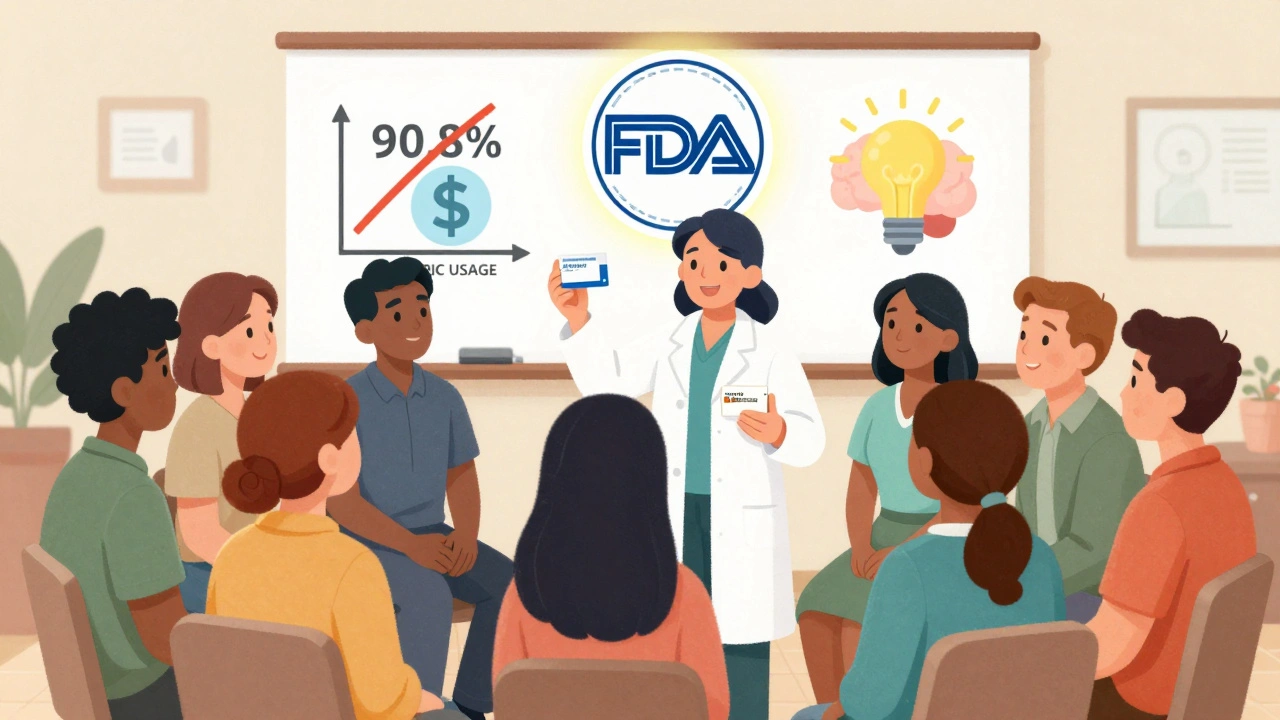
Most people don’t realize that generic drugs are the same as brand-name medicines in every way that matters-except the price. Yet, nearly half of Americans still believe generics are weaker, less safe, or don’t work as well. This isn’t just a myth. It’s a barrier to better health, especially for people on tight budgets. Community health presentations are stepping in to fix this gap-with real tools, real data, and real conversations that stick.
Why Generic Drugs Are Just as Good
The U.S. Food and Drug Administration (FDA) doesn’t approve a generic drug unless it matches the brand-name version exactly in active ingredient, strength, dosage form, and how it’s taken. That’s not a suggestion. It’s a legal requirement. The FDA tests every generic to prove it delivers the same amount of medicine into your bloodstream as the brand-name version. The acceptable range? 80% to 125% of the brand’s concentration. That’s not a wide margin-it’s tight enough to guarantee the same effect.Think of it like this: two different brands of aspirin both contain 325 mg of acetylsalicylic acid. One costs $5. The other costs 50 cents. They’re chemically identical. The difference? The logo on the bottle.
And it’s not just theory. In 2022, 90.8% of all prescriptions filled in the U.S. were for generic drugs. That’s over 6.8 billion prescriptions. If generics were risky or ineffective, that number wouldn’t be so high. It would be plummeting.
The Real Cost Difference
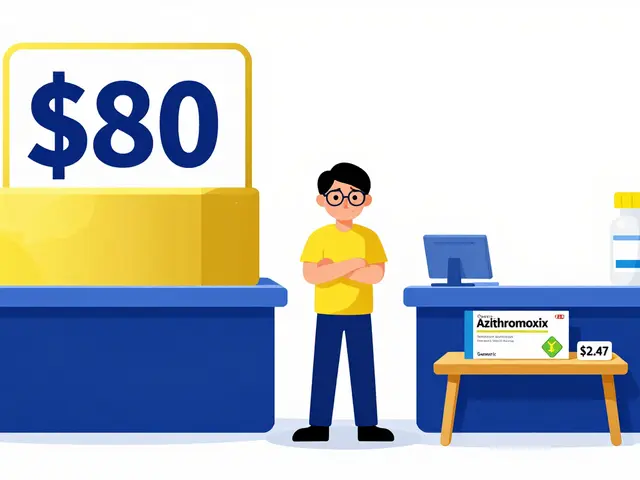
Generic drugs cost 80% to 85% less than their brand-name counterparts. That’s not a small saving. It’s life-changing. For someone taking a blood pressure pill every day, switching from brand to generic could mean saving $300 a year. For someone on multiple medications? That’s $1,000 or more.Collectively, generics saved the U.S. healthcare system $377 billion in 2022 alone. That’s money that stays in patients’ pockets, reduces insurance premiums, and keeps clinics running. Yet, many people don’t know this. They see the lower price and assume something’s wrong. That’s where education comes in.
Why People Still Doubt Generics
The biggest reason? Appearance. Generics often look different-different color, shape, or size. That’s because trademark laws prevent them from copying the brand’s look. But that doesn’t mean they’re different inside. A 2022 University of Michigan survey found that 23% of patients questioned whether their medication was working just because it looked different.Then there’s the nocebo effect-when you expect something to cause side effects, your brain starts to feel them. A 2021 study in Annals of Internal Medicine showed that patients told they were switching to a generic reported side effects 18.7% more often than those who weren’t told. It wasn’t the drug. It was the belief.
And yes, there are rare exceptions. Some patients with epilepsy who switched from brand to generic antiseizure meds had slightly higher seizure rates in one 2023 study. But the American Academy of Neurology says this is an outlier. For 99% of drugs, generics work just as well. The exception doesn’t invalidate the rule.
What Works in Community Health Presentations
The FDA’s Generic Drugs Stakeholder Toolkit gives community health workers a clear playbook. It’s not about handing out brochures. It’s about conversation.One proven method is the “Teach-Back” technique. Instead of saying, “Generics are safe,” you ask: “Can you tell me in your own words why your new pill is just as good as the old one?” If they can explain it, they’ve understood it. If not, you clarify.
Another key tactic: use the FDA’s own words. “The FDA requires generic drugs to have the same active ingredient, strength, and dosage form as brand-name drugs.” That’s clear. That’s authoritative. That’s not marketing. That’s regulation.
Community Health Center of Burlington used this approach in 2021. Within six months, patient acceptance of generics jumped 37%. Why? Because they stopped talking at people and started talking with them.
Doctors and Pharmacists Matter
Patients trust their doctors. And they trust their pharmacists. But trust doesn’t happen automatically. It has to be built.A 2022 study in JAMA Internal Medicine found that when a doctor said, “I’m prescribing this generic because it’s just as good and will save you money,” patient acceptance jumped from 52% to 89%. That’s the power of endorsement.
Pharmacists, meanwhile, are the frontline. In a 2021 survey, 97% of pharmacists said they had full confidence in generics. Yet, many don’t proactively explain that to patients. That’s a missed opportunity. A simple phrase at pickup-“This is the generic version of your usual pill. It’s the same medicine, just cheaper”-can make all the difference.
Who’s Left Behind
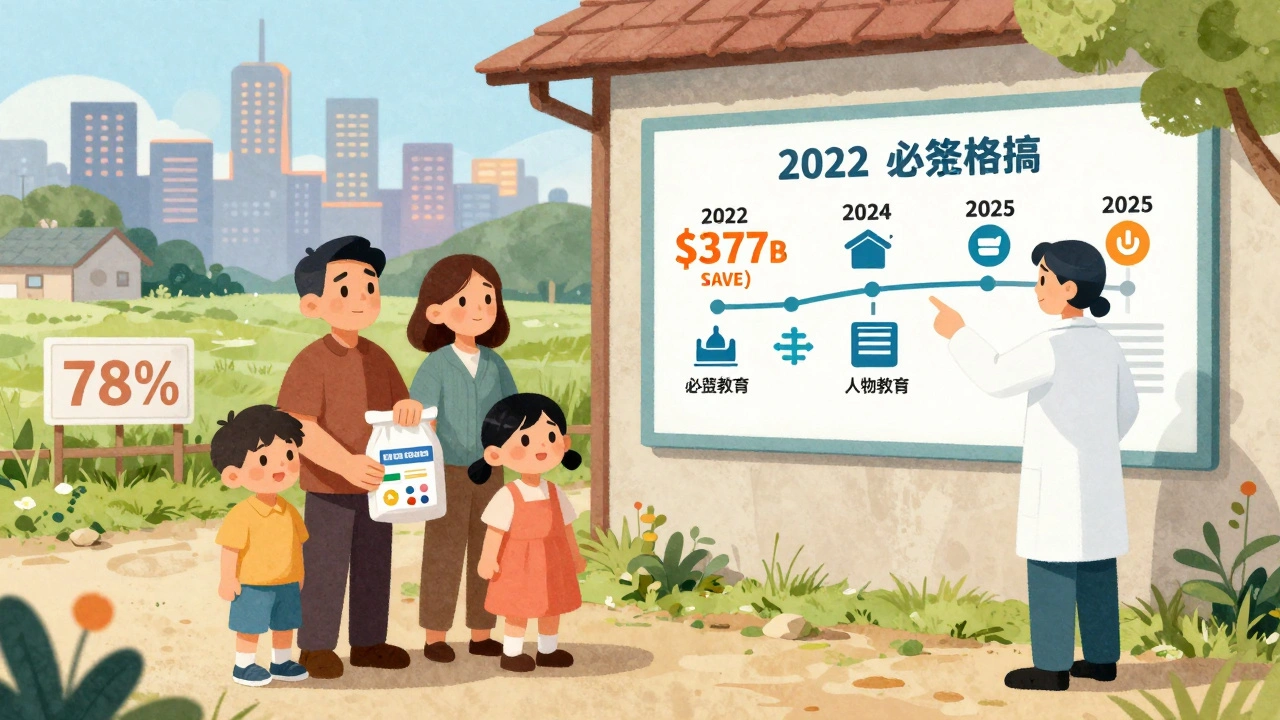
Not everyone benefits equally. Rural communities have only 78% generic drug use, compared to 93% in cities. Why? Fewer pharmacies. Less access to health education. Longer wait times to talk to a provider.Low-income patients face another hurdle: even if they know generics are cheaper, they might still skip doses because they’re unsure if the drug will work. A 2021 study tracking 3.2 million patients found that switching to generics improved medication adherence by 22% in low-income groups. That’s not just savings. That’s fewer hospital visits, fewer complications, longer lives.
Starting in January 2024, the National Association of Community Health Centers made generic education mandatory in all patient counseling sessions. It’s not optional anymore. It’s part of care.
What’s Next
The FDA launched “Generics 101” in 2023-a series of short videos aimed at Medicare beneficiaries. Early results? Viewers aged 65+ improved their knowledge retention by 31%. That’s huge. Older adults are the biggest users of prescription drugs. If they understand generics, they’re more likely to stick with their meds.Also, new complex generics-like inhalers, injectables, and topical creams-are hitting the market. These aren’t as simple as a pill. They need special education. The FDA’s 2023 survey found patient confusion rates are 40% higher for these products. That’s the next frontier.
And by January 2025, every Medicare Part D plan will be required to hand out standardized generic drug education materials to all enrollees. This isn’t a suggestion. It’s law.
What You Can Do
If you’re a patient: ask your pharmacist or doctor if a generic version is available. Don’t assume the brand is better. Ask what’s in it. Ask how it’s tested. Ask if it’s FDA-approved.If you’re a community health worker: use the FDA’s toolkit. Use Teach-Back. Use real examples. Don’t just say “it’s safe.” Show them the data. Let them ask questions. Let them repeat it back.
If you’re a provider: don’t just prescribe the generic. Explain it. Say, “This is the same medicine. It’s just less expensive. I’ve prescribed it to hundreds of patients. It works just as well.”
Generics aren’t a compromise. They’re a smart choice. And with 287 brand-name drugs losing patent protection between 2023 and 2028, the choice will only grow bigger. The more people understand this, the healthier we all become.


8 Comments
The pharmacokinetic equivalence of generic therapeutics is rigorously validated under 21 CFR 320.22, with bioequivalence thresholds anchored in the 80-125% confidence interval for Cmax and AUC. The FDA’s ANDA pathway mandates identical active pharmaceutical ingredients, excipient profiles, and dissolution kinetics. To dismiss generics on aesthetic or price grounds is to conflate marketing with molecular integrity. This isn’t opinion-it’s regulatory science.
Oh wow, so now we’re supposed to trust a pill that looks like it was designed by a 12-year-old with a crayon? And somehow it’s ‘just as good’? Sure. And my IKEA dresser is ‘just as sturdy’ as a $2000 oak one. 🙃
I switched to generics last year… and I swear I felt worse. Like, my anxiety spiked. My hands shook. I thought I was dying. Then I read that study about the nocebo effect… and I cried. Not because I was sick. Because I was so stupid to believe the lie. I’m still mad at myself.
But also… thank you for saying it out loud. I didn’t know I wasn’t alone.
You got this. Your health matters. And you deserve to save money without sacrificing care. Keep asking questions. Keep trusting the science. You’re not just saving cash-you’re taking back control.
It is worth noting, with considerable empirical support from peer-reviewed literature, that the adoption of generic pharmaceuticals has yielded statistically significant improvements in medication adherence among socioeconomically disadvantaged populations, as documented by the CDC and JAMA Internal Medicine. The economic argument, while compelling, is secondary to the public health imperative: equitable access to therapeutically equivalent medications is not a privilege-it is a fundamental component of preventive care infrastructure. The FDA’s bioequivalence standards are among the most stringent in the world, and to undermine them on anecdotal grounds is to risk eroding the very foundation of evidence-based medicine. Furthermore, the 2023 data from Medicare Part D enrollees indicates a 31% increase in knowledge retention following exposure to standardized educational materials, suggesting that targeted public health communication is not merely beneficial-it is transformative.
My pharmacist just handed me my generic blood pressure med and said, ‘Same stuff, half the price.’ I didn’t even think about it until now. But now I’m like… why did I pay $200 for that brand for three years? 😅
Also-my grandma takes 7 meds. She switched to generics last year and now has extra cash for groceries. That’s the real win.
My cousin in Texas got her epilepsy meds switched to generic and had a seizure. Her doctor said it was a fluke. But now she’s terrified to take anything new. I get it. I really do. But I also think we need to talk about the exceptions without making everyone feel like they’re crazy for being scared.
Maybe we just need better warnings? Like… ‘This is generic. For most people, it’s fine. For a few, it’s not. Talk to your neurologist.’