
Antibiotic Alternative Finder
Infection Information
Recommended Options
Select your infection type and risk factors to see recommendations.
When you're stuck with a stubborn infection-whether it's a urinary tract infection, pneumonia, or a nasty sinus bug-you've probably heard of Cipro. It's the brand name for ciprofloxacin, a powerful antibiotic that’s been around for decades. But here’s the thing: Cipro isn’t the only option anymore. And in 2025, doctors are thinking twice before prescribing it. Why? Because side effects, resistance, and better alternatives have changed the game.
What Cipro Actually Does
Ciprofloxacin belongs to a class of antibiotics called fluoroquinolones. These drugs work by stopping bacteria from copying their DNA, which kills them off or stops them from spreading. It’s broad-spectrum, meaning it hits a wide range of bacteria-both Gram-negative and some Gram-positive ones. That’s why it’s been used for everything from bladder infections to anthrax exposure.
But here’s the catch: Cipro doesn’t pick and choose. It wipes out good bacteria too. That’s why people on Cipro often get stomach upset, yeast infections, or even C. diff diarrhea. And in rare cases, it can cause serious nerve damage, tendon ruptures, or long-term joint pain. The FDA has issued multiple black box warnings about these risks since 2008. By 2025, guidelines from the CDC and NICE in the UK now recommend reserving fluoroquinolones like Cipro for infections that can’t be treated with safer drugs.
Top Alternatives to Cipro
If you’ve been prescribed Cipro and are wondering if there’s something better, here are the most common and clinically supported alternatives, broken down by infection type.
For Urinary Tract Infections (UTIs)
For uncomplicated UTIs, Cipro used to be the go-to. But now, first-line treatments are much gentler:
- Nitrofurantoin - Works directly in the bladder. Fewer side effects, doesn’t disrupt gut flora as much. Not for kidney infections.
- Fosfomycin - Single-dose pill. Great for people who can’t take antibiotics daily. Low resistance rates.
- Bactrim (sulfamethoxazole/trimethoprim) - Cheap, effective, and widely used. Avoid if you’re allergic to sulfa drugs.
A 2024 study in the British Journal of General Practice showed that nitrofurantoin cleared 89% of simple UTIs, compared to 85% for ciprofloxacin-but with 40% fewer side effects.
For Respiratory Infections (Sinus, Bronchitis, Pneumonia)
Most coughs and sinus infections are viral. But if bacteria are confirmed, here’s what’s used now:
- Amoxicillin-clavulanate - First choice for bacterial sinusitis and mild pneumonia. Safer than Cipro, less risk of tendon damage.
- Doxycycline - Good for atypical pneumonia (like walking pneumonia) and some sinus infections. Not for kids under 8 or pregnant women.
- Levofloxacin - Another fluoroquinolone, similar to Cipro. Only used when other options fail or for severe cases.
Levofloxacin isn’t really a "better" alternative-it’s just another fluoroquinolone with the same risks. It’s not a first-line option anymore.
For Skin and Soft Tissue Infections
Staph infections, abscesses, cellulitis? Cipro isn’t even the top choice here.
- Cephalexin - A first-generation cephalosporin. Excellent for skin bugs like Staph aureus.
- Dicloxacillin - Specifically targets penicillin-resistant staph. Often used for boils and wound infections.
- Clindamycin - Used when patients are allergic to penicillin. Also helps with toxin-producing strains.
Cipro has weak activity against the most common skin bacteria. That’s why it’s rarely used unless the infection is caused by Pseudomonas-which is rare outside hospitals.
When Cipro Is Still the Right Choice
It’s not all bad news. There are still situations where Cipro is the best-or only-option.
- Pseudomonas aeruginosa infections - Common in hospital settings, burns, or people with cystic fibrosis. Few antibiotics work well here. Cipro remains a top pick.
- Complicated UTIs with kidney involvement - If the infection has spread beyond the bladder, Cipro or levofloxacin may be needed.
- Traveler’s diarrhea caused by resistant E. coli - In high-risk areas like Southeast Asia, Cipro still works better than most alternatives.
- Anthrax exposure - Cipro is FDA-approved for this. It’s one of the few antibiotics that penetrate the blood-brain barrier effectively in such cases.
Even then, doctors often pair it with another antibiotic to reduce resistance risk. And they’ll monitor you closely for side effects.

Why You Should Avoid Cipro Unless Necessary
Here’s what most people don’t realize: antibiotics don’t just kill bad bacteria-they change your whole microbiome. And that change can last months or even years.
A 2023 study from the University of Birmingham tracked 1,200 patients who took fluoroquinolones. Six months later, 31% still had reduced diversity in their gut bacteria. That’s linked to higher risks of obesity, diabetes, and even depression.
Plus, fluoroquinolone resistance is rising fast. In the UK, over 20% of E. coli strains causing UTIs are now resistant to ciprofloxacin. That means if you take Cipro now and it doesn’t work, your next infection might be harder to treat.
And then there’s the physical toll. Tendon rupture isn’t rare-it happens in about 1 in 1,000 people taking Cipro. The risk jumps to 1 in 100 if you’re over 60, on steroids, or have kidney disease. The FDA says these injuries can happen within hours of taking the first dose.
How to Talk to Your Doctor About Alternatives
If your doctor prescribes Cipro, don’t just take it. Ask these questions:
- Is this infection definitely bacterial? Could it be viral?
- Are there safer antibiotics that work just as well?
- What’s the risk of resistance if I take this?
- Have you considered my age, kidney function, or other meds I’m on?
- What should I do if I get tendon pain, numbness, or diarrhea?
Most doctors will listen. You’re not being difficult-you’re being informed. In fact, the NHS now encourages patients to ask about antibiotic alternatives as part of its "Antibiotic Stewardship" program.

What to Do If You’ve Already Taken Cipro
If you’ve taken Cipro in the past and felt weird afterward-joint pain, tingling, anxiety, stomach issues-you’re not imagining it.
Here’s what to do now:
- Track your symptoms. Write down when they started and what makes them better or worse.
- See a GP if you have ongoing nerve or muscle pain. They can check for peripheral neuropathy or tendinopathy.
- Support your gut health. Probiotics (like Saccharomyces boulardii) and fiber-rich foods help restore balance.
- Never take Cipro again unless absolutely necessary. Your risk of side effects increases with every dose.
There’s no magic cure for fluoroquinolone toxicity, but many people improve over time with rest, physical therapy, and avoiding triggers like intense exercise or corticosteroids.
Final Takeaway
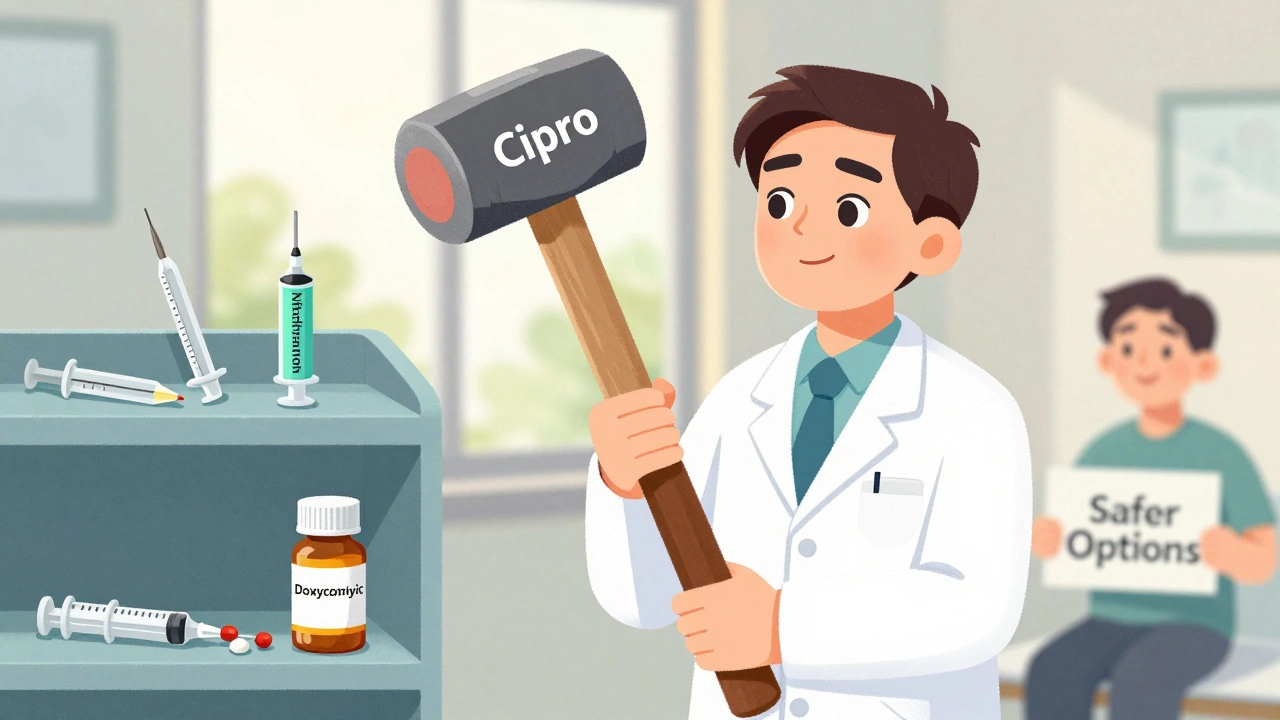
Ciprofloxacin isn’t evil. It’s a tool. But it’s a sledgehammer when you often need a scalpel. In 2025, we know better. For most common infections, there are safer, just-as-effective options. The goal isn’t to kill every last bacterium-it’s to fix the problem without wrecking your body in the process.
Next time you’re handed a Cipro prescription, ask: "Is this really the best choice for me?" The answer might surprise you-and save you from months of unnecessary pain.
Is Cipro still prescribed in the UK in 2025?
Yes, but much less often. UK guidelines from NICE and the NHS now restrict Cipro to serious infections like complicated UTIs, Pseudomonas infections, or when other antibiotics fail. It’s no longer a first-line treatment for simple infections like bladder infections or sinusitis.
What are the most common side effects of Cipro?
The most common side effects include nausea, diarrhea, dizziness, and headaches. More serious ones include tendon rupture (especially in older adults), nerve damage (tingling or burning), and severe stomach infections like C. diff. The FDA warns these can happen even after just one dose.
Can I take amoxicillin instead of Cipro?
For many infections, yes. Amoxicillin works better than Cipro for ear infections, strep throat, and most sinus infections. But it won’t work for Pseudomonas or some resistant UTIs. Your doctor will choose based on the bacteria causing your infection.
Is Cipro better than doxycycline?
Not necessarily. Doxycycline is safer for most people and works well for respiratory infections, Lyme disease, and some skin infections. Cipro is stronger against certain Gram-negative bacteria like E. coli and Pseudomonas. But doxycycline has fewer serious side effects and is often preferred as a first choice.
How long do Cipro side effects last?
Most mild side effects like nausea go away within days of stopping. But serious issues like nerve damage or tendon problems can last months or become permanent. Studies show some patients report symptoms for over a year. If you feel unusual pain or numbness after taking Cipro, see a doctor right away.
Are there natural alternatives to Cipro?
There are no proven natural replacements for antibiotics in serious bacterial infections. Honey, garlic, and cranberry juice may help prevent UTIs but won’t cure an active infection. Never skip antibiotics for a confirmed bacterial infection just because you want a "natural" option-this can lead to dangerous complications.
For most people, the real question isn’t whether Cipro works-it’s whether you really need it at all. In 2025, the safest antibiotic is the one you never have to take.






11 Comments
Cipro is overused and people don't realize how much it messes with your gut and tendons
My mom got tendon rupture on it at 68 and never fully recovered
Now I always ask for nitrofurantoin for UTIs and it works just fine
Doctors still default to Cipro like it's 2005 but we have better options now
Stop being lazy and think about the long term
The real tragedy isn't Cipro itself it's the medical industrial complex that still treats antibiotics like candy
Prescribing fluoroquinolones for sinusitis is like using a flamethrower to light a candle
And the resistance stats are terrifying we're one pandemic away from returning to the pre-antibiotic era
Meanwhile Big Pharma keeps pushing the same old scripts because it's profitable not because it's smart
I took cipro for a bad uti last year and had tingling in my feet for 4 months
My doctor said it was coincidence but i dont believe that anymore
Now i only take antibiotics if i have fever and confirmed bacteria
And i always ask for the simplest option first
Probiotics helped my gut recover after
In india we dont have luxury of choice like usa
Doctors give cipro because its cheap and available
People take it without prescription and then wonder why they get sick again
Resistance is exploding here not because of doctors but because of self medication
Education is needed not restriction
While the concerns regarding fluoroquinolone toxicity are valid and well-documented in peer-reviewed literature, it remains a critical therapeutic agent in specific clinical scenarios such as pseudomonas aeruginosa infections and anthrax prophylaxis
Dismissing its utility entirely is both medically unsound and potentially dangerous
Antibiotic stewardship must be nuanced not ideological
My cousin got Cipro for a UTI and ended up in the hospital with C diff and a ruptured tendon
They said it was rare but she's 32 and now she can't walk right
Why are doctors still giving this poison to people who don't need it
It's not just negligence it's criminal
Someone should sue these hospitals
USA is soft now
Back in my day we took whatever the doctor gave us
Now everyone wants a natural remedy or a gentler antibiotic
Pathetic
Cipro kills infections period
Stop being afraid of medicine
From a pharmacokinetic standpoint the fluoroquinolone class exhibits concentration-dependent bactericidal activity with prolonged post-antibiotic effect
However the off-target mitochondrial toxicity and collagen disruption mechanisms are well characterized in the FDA's 2016 safety communication
Thus the risk-benefit calculus has shifted decisively toward restricted use
Especially in low-risk community-acquired infections
I'm a nurse in Oregon and I've seen this shift firsthand
Our hospital now has an antibiotic stewardship team that reviews every fluoroquinolone order
Most of the time we switch to amoxicillin-clavulanate or nitrofurantoin
Patients are way happier and we see fewer side effects
It's not about being anti-antibiotic it's about being smart about them
Ask your doctor if they've heard of NICE guidelines
They might not know them
Just had my third UTI and my doc gave me fosfomycin
One pill and done
Zero side effects
Why does anyone still take Cipro for this
So easy
So simple
So much better
My sister took Cipro and now she has chronic pain and anxiety
She says it changed her brain
She's been to 12 doctors and no one believes her
They say it's all in her head
But I know what happened
And I'm never letting anyone I love take this again
💔