
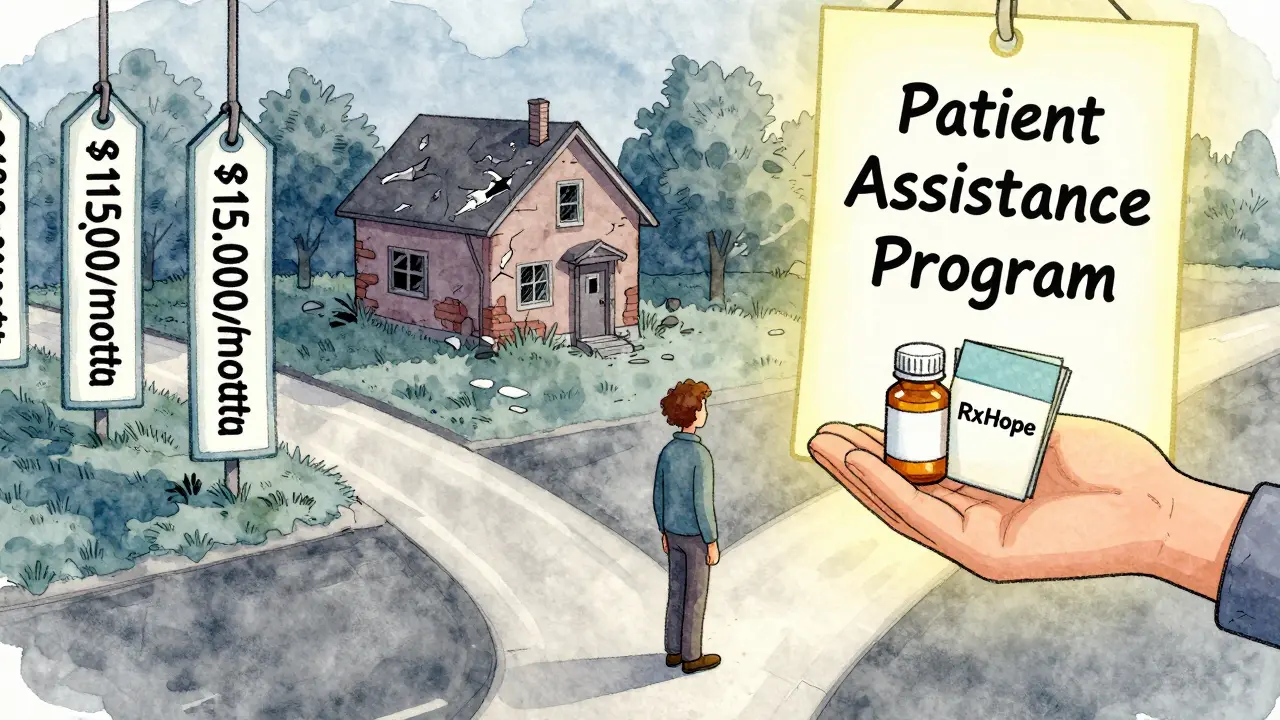
When you need a life-saving medication but there’s no generic version available, the price can be overwhelming. Some drugs cost over $10,000 a month. Without help, choosing between your health and your rent isn’t a choice at all-it’s a trap. That’s where patient assistance programs come in. These programs exist to bridge the gap when pharmaceutical companies set prices that make drugs unreachable for most people. And right now, they’re the only real lifeline for patients who need brand-name medications with no cheaper alternatives.
Why Patient Assistance Programs Matter When No Generic Exists
Most people assume that if a drug is expensive, there’s probably a generic version you can switch to. But for many specialty medications-especially those used to treat rare diseases, cancer, or complex autoimmune conditions-there simply isn’t one. Drugs like Soliris, Spinraza, or Tasigna can cost $500,000 a year. No generic. No discount card that cuts it in half. Just a bill you can’t pay. That’s where patient assistance programs (PAPs) step in. These are run mostly by drug manufacturers, nonprofits, and sometimes state agencies. In 2022 alone, they provided $4.7 billion in aid to over 1.2 million people. The majority of that went to patients needing brand-name drugs with no alternatives. For many, PAPs mean the difference between staying alive and going without treatment.How PAPs Actually Work
Not all assistance is the same. There are three main types:- Full coverage (55% of programs): You pay $0. The drug company sends the medication directly to your pharmacy or home.
- Tiered income-based help (30%): Your out-of-pocket cost drops based on your income. Most programs use 400% of the Federal Poverty Level as the max-$60,000 for one person in 2023.
- Fixed-dollar assistance (15%): You get a set amount, like $500 per month, toward your copay.
- Proof of income (tax returns, pay stubs, or a signed letter from your employer)
- A valid prescription from your doctor
- Proof that you’re uninsured, or that your insurance won’t cover the drug
- A signed form from your healthcare provider confirming the medical need
Who Can Apply-and Who Can’t
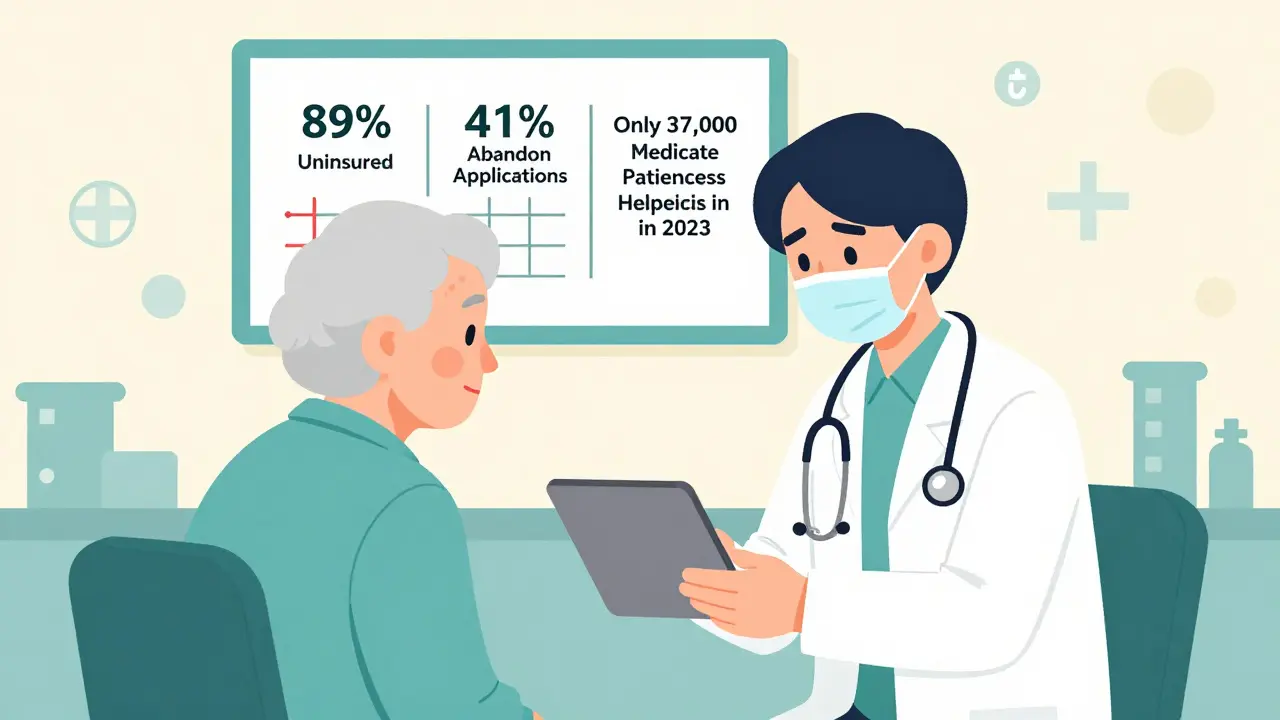
PAPs are designed for people who can’t afford their meds. But eligibility rules vary wildly.- Uninsured patients: These are the primary beneficiaries. About 89% of PAP users fall into this group. If you have no insurance, your chances of approval are highest.
- Insured patients: You can still qualify if your plan doesn’t cover the drug, or if your copay is too high. But here’s the catch: most insurance companies now use accumulator adjustment policies. That means the PAP money doesn’t count toward your deductible or out-of-pocket maximum. So even if your drug costs are covered, you’re still stuck paying thousands before your insurance kicks in.
- Medicare beneficiaries: Since January 2020, federal rules block drug manufacturers from giving copay assistance to Medicare Part D patients. This leaves older adults with no generic options relying on nonprofit PAPs, which have stricter income caps and fewer slots.
Real Stories: The Good, the Bad, and the Ugly
One patient in Alabama, diagnosed with HIV, was paying $15,000 a month for his medication. He had no insurance. Through Gilead’s Advancing Access program, he got the drug for free. He kept his apartment. He kept working. Another, a woman with leukemia in Ohio, enrolled in Novartis’s PAP for Tasigna. Her copay dropped from $1,400 to $0. But her insurer refused to count the PAP toward her deductible. She ended up paying over $20,000 out of pocket before hitting her annual cap. And then there’s the man who spent 11 hours over three weeks just to complete paperwork for his cancer drug. He had to call his doctor’s office five times. He mailed documents twice because the first set got lost. He almost gave up. These aren’t rare cases. A 2023 survey found 68% of PAP users called the application process “overwhelming.”How to Apply Successfully
If you’re trying to get help, here’s how to cut through the noise:- Start with RxHope. This free online tool checks eligibility for 92% of manufacturer PAPs. Just enter your drug name, income, and insurance status. It tells you which programs you qualify for.
- Get your doctor on board. Many programs require a signed form from your provider. Ask your nurse or medical assistant-they’re trained to handle these. At 68% of major hospitals, there’s now a dedicated medication access specialist just for this.
- Organize your documents. Keep copies of your last two tax returns, your most recent pay stub, your prescription, and any denial letters from your insurer. Missing one thing? Your application gets rejected.
- Apply to multiple programs. If one denies you, another might accept. Don’t stop at the first no.
- Ask for help. Organizations like the Patient Advocate Foundation and the Chronic Disease Fund offer free case managers. They’ll walk you through the whole process.
The Hidden Traps: Accumulator Programs and Medicare Rules
The biggest surprise for most patients? Getting approved doesn’t mean you’re safe. Most commercial insurers now use accumulator adjustment. That means your PAP assistance doesn’t count toward your deductible or out-of-pocket maximum. So if your drug costs $12,000 a month and your PAP covers it, you still have to pay $12,000 toward your deductible before your insurance helps. You end up paying more than if you had no help at all. And if you’re on Medicare? Forget manufacturer copay cards. The law blocks them. Your only option is nonprofit PAPs-which often have lower income limits and fewer spots. In 2023, over 180,000 Medicare patients needed help with brand-name drugs. Only 37,000 got it.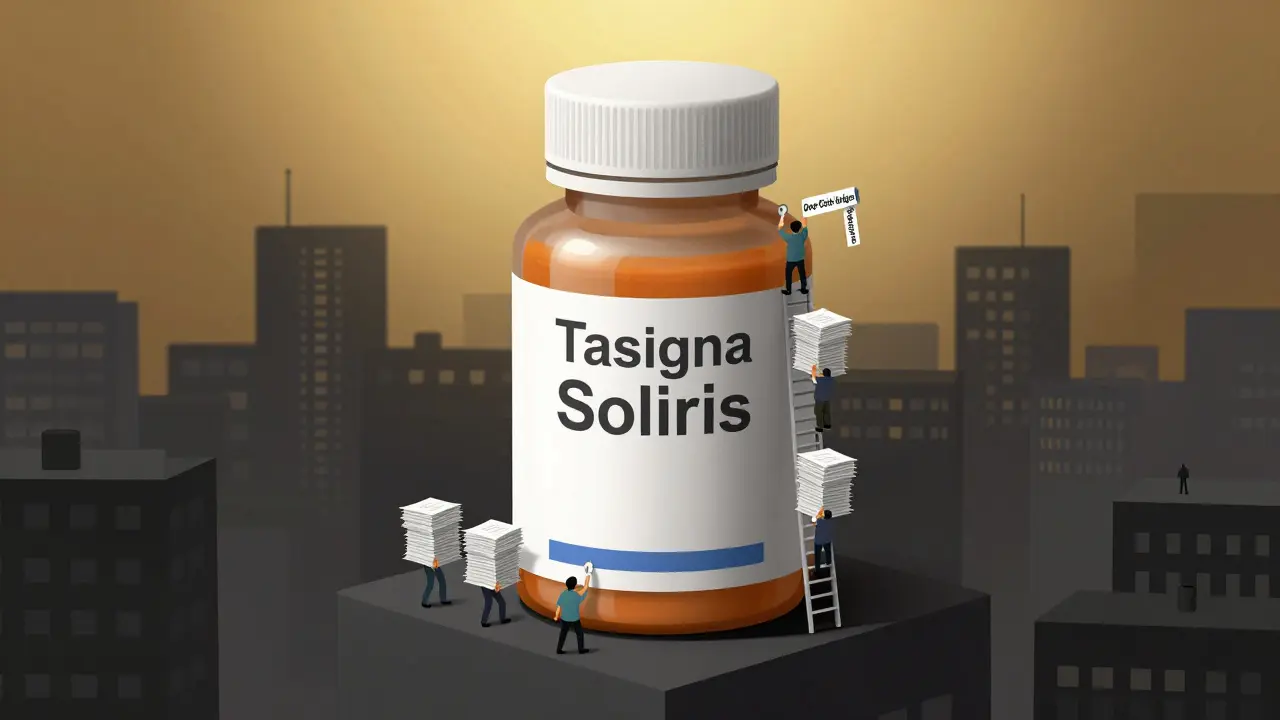
Alternatives to PAPs (And Why They Fall Short)
Some people turn to discount cards like GoodRx. But here’s the truth: for brand-name drugs with no generic, GoodRx offers an average of just 8.3% savings. That’s not enough when the drug costs $15,000 a month. State programs? They exist, but they’re limited. Pennsylvania’s PACE program caps assistance at $400 per drug per month. That’s helpful for a $300 pill. Useless for a $12,000 one. PAPs are still the only option that can bring your cost to $0. But they’re not perfect.What’s Changing in 2024 and Beyond
There’s some progress. Eli Lilly launched “Simple Bridge” in January 2023-cutting their PAP application from 17 steps to just 5. Approval time dropped from 10 days to 48 hours. Epic Systems, the biggest electronic health record provider, is now integrating PAP tools directly into doctors’ systems. By 2025, your doctor might be able to check your eligibility and submit your application with one click. But the big picture is still grim. Drug prices keep rising. PAP costs are projected to grow 18% a year. Manufacturers are under pressure to keep funding them. And without policy changes, these programs will keep serving as a patch-not a solution.Final Thoughts: What You Can Do
If you’re stuck with a brand-name drug and no generic, don’t give up. PAPs aren’t perfect, but they’re the best tool we have right now. Start with RxHope. Talk to your doctor’s office. Ask for a medication access specialist. Fill out every application you can. Save every document. It’s exhausting. It’s complicated. But for many, it’s the only way to survive.Can I use a patient assistance program if I have insurance?
Yes, but only if your insurance doesn’t cover the drug or your out-of-pocket cost is too high. However, many insurers use accumulator adjustment policies, which mean the PAP payment doesn’t count toward your deductible or out-of-pocket maximum. This can leave you paying thousands even after getting help. Always check your plan’s rules before applying.
Why can’t Medicare patients get manufacturer copay assistance?
Federal law banned drug manufacturers from providing copay assistance to Medicare Part D beneficiaries starting January 1, 2020. This was meant to prevent drug companies from inflating prices while using PAPs as a marketing tool. As a result, Medicare patients must rely on nonprofit PAPs, which have stricter income limits and fewer available slots.
What if my PAP application gets denied?
Don’t stop there. About 41% of initial applications are denied, often due to missing documents or income documentation errors. You can appeal. Call the program directly, ask for the reason, fix the issue, and reapply. Many programs allow one appeal. Also, try applying through a different program or nonprofit foundation-they often have different rules.
How long does it take to get approved for a PAP?
Manufacturer-sponsored programs typically approve applications in 7-10 business days. Foundation-run programs take longer-14 to 21 days-because they do more manual reviews. If you’re in urgent need, ask your doctor to request expedited processing. Many programs have emergency protocols for life-threatening conditions.
Is there a limit to how long I can receive PAP help?
Most programs require annual reapplication. You’ll need to resubmit income proof and your doctor’s form every year. Some programs offer multi-year approval if your condition is stable and your income hasn’t changed. But you must stay proactive-missing a renewal deadline means losing your medication.
Can I use GoodRx instead of a PAP for a brand-name drug with no generic?
GoodRx rarely helps for brand-name drugs with no generic. It offers an average discount of just 8.3%, which means a $15,000-a-month drug might drop to $13,750. That’s still unaffordable for most. PAPs are the only option that can reduce your cost to $0. Use GoodRx only if you’re comparing prices before applying for PAPs.
What if I’m just above the income limit for a PAP?
Some programs have flexibility. If your income is slightly over the limit, you may still qualify if you have high medical expenses, dependents, or live in a high-cost area. Call the program directly and explain your situation. Also, check nonprofit foundations-they often use different income thresholds. The Patient Access Network Foundation, for example, considers household size and regional cost of living.
Do I need to reapply every year?
Yes. Almost all PAPs require annual renewal. You’ll need to submit updated income documents and a new doctor’s form. Some programs send reminders, but don’t rely on them. Mark your calendar 60 days before your approval expires. Missing the deadline means you lose access-sometimes for weeks-while you reapply.


11 Comments
PS: RxHope is your new best friend. Bookmark it.